Key Takeaways
-
Braces do not automatically stop you from marching band; most students keep playing through treatment with some planning and patience.
-
Brass players face the longest adjustment, often one to three months, because the mouthpiece pressing against lips can push them onto brackets.
-
Use orthodontic wax over any bracket that rubs your lips or cheeks, and never bend, trim, or force your braces to fit your playing style.
-
Schedule adjustment visits early in the week and avoid appointments right before a game, audition, or competition to allow time for tenderness to fade.
-
Only remove clear aligners for rehearsals if your orthodontist approves, and always store them in their case to protect them and preserve progress.
-
Talk to your band director and orthodontist about your instrument and calendar so treatment can be planned around major performances.
Fall is here, and for many students that means one thing: marching band season. The halftime shows, the long rehearsals, the Friday night lights. Now picture this. You are about to start braces, and your first thought is, “Can I still play my instrument?”
Good news! Orthodontic treatment and marching band can go together just fine. Most students keep marching right through their treatment. Braces may feel strange at first, especially for trumpet, trombone, and clarinet players. But with a little planning and patience, you can keep making music and straighten your smile at the same time.
This guide is for band members, parents, and even adults who play in community groups. We will cover how braces affect different instruments, how long it takes to adjust, and simple ways to stay comfortable. We will also share tips for timing your appointments around big performances. Let’s tune up and get started!

Can You Stay in Marching Band With Braces?
Yes, most students can. Braces may change how your mouth feels when you play, but they do not automatically stop you from being in the band. Many band directors and orthodontists see students adjust well within a few weeks or months.
The biggest factor is your instrument. Some instruments need almost no changes. Others ask a bit more from your lips and teeth. Either way, the key is knowing what to expect so nothing catches you off guard.
If you are curious about the basics of treatment, our guide What Are Braces? Your Friendly Guide to Orthodontic Treatment is a great place to start.
How Braces Affect Different Instruments
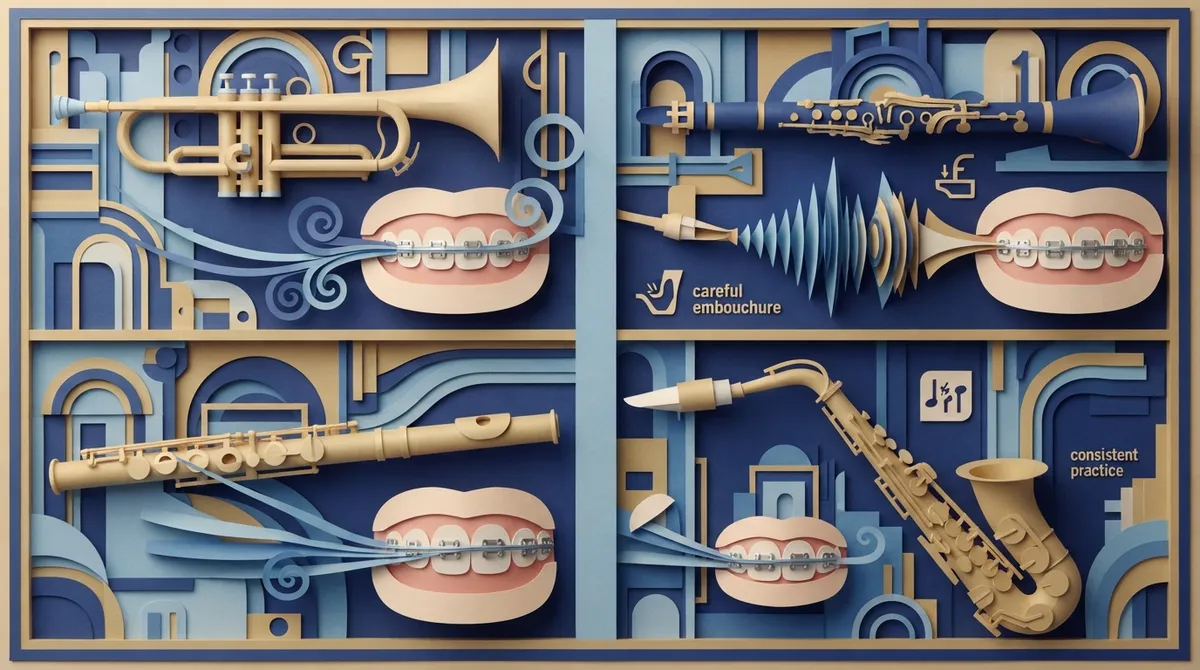
Not every instrument puts the same pressure on your mouth. Here is a simple look at what to expect.
| Instrument Type | Examples | What to Expect With Braces |
|---|---|---|
| Percussion | Snare, bass drum, cymbals, mallets | Little to no change. No mouthpiece is involved. |
| Woodwinds (reed) | Clarinet, saxophone | Mild adjustment. Reed players often adapt sooner. |
| Woodwinds (flute) | Flute, piccolo | Some change in lip position. Usually manageable. |
| Brass | Trumpet, trombone, mellophone, tuba | Longest adjustment. More lip pressure against teeth. |
| Color guard and front ensemble | Flags, keyboards, props | No mouth involvement. No adjustment needed. |
Brass Players
Trumpet, trombone, and other brass players press the mouthpiece against their lips. With braces, that pressure can push the lips against brackets. This can feel sore at first. Some notes, especially high ones, may feel harder for a while.
Woodwind Players
Clarinet and saxophone players use a reed and a mouthpiece, so the lips curl over the teeth. Braces can add a little bulk. Most players find they adjust a bit faster than brass players do. Flute players may need to shift their lip position slightly.
Percussion and Color Guard
If you play drums, mallets, or spin a flag, braces will barely change a thing. You might just need to be careful about water bottles and snacks at rehearsal.
How Long Does It Take to Adjust?
This is the question every band student asks. The honest answer: it depends on you and your instrument.
A 2006 survey of junior and senior high band members, published in the Journal of Clinical Orthodontics, looked at this very topic. It found that many players had to rebuild their embouchure (the way you shape your mouth to play) after getting braces. Reed players, like clarinetists and saxophonists, often adjusted in less than a month. Brass players reported an average adjustment time of one to three months. About 14% of those surveyed said braces had no negative effect on their playing at all.
Keep in mind that this survey is older, and every student is different. Think of those numbers as a helpful guide, not a promise. Your own experience may be faster or slower.
Simple Ways to Stay Comfortable While Playing
A few small habits can make rehearsals much more comfortable. Here are some tried-and-true ideas.
- Use orthodontic wax. Press a small piece over any bracket that rubs your lips or cheeks. It creates a smooth cushion.
- Start with shorter practice sessions. Play in short bursts at first, then build up your stamina over time.
- Rinse often. Swish water after snacks and water breaks so food does not get stuck.
- Stay patient with your tone. Your sound may change for a bit. That is normal, and it improves with practice.
- Talk to your band director. A good director can help you adjust your technique and be flexible during the adjustment period.
One important note: never bend, trim, or force your braces to fit your playing style. If something hurts badly or feels broken, call your orthodontist right away. Never try a painful technique just to push through.
Step-by-Step: Getting Ready for Braces as a Band Member
Planning ahead makes everything smoother. Here is a simple plan you can follow.
- Tell your orthodontist about your instrument. Mention what you play and how often you rehearse. This helps us plan with you in mind.
- Check the band calendar. Look at upcoming football games, parades, auditions, and competitions before choosing your start date.
- Pick a calm window. If you can, start braces when there is no big performance in the next week or two.
- Stock up on supplies. Keep orthodontic wax, a travel toothbrush, and a small mirror in your instrument case.
- Practice gently at home. Try a few easy exercises before heading back to full rehearsals.
- Stay in touch. If something feels off, let your orthodontist know. Small fixes can make a big difference.
Want to know what your first appointment will look like? Check out Your First Visit so you know just what to expect.
Timing Your Appointments Around Performances
New braces and adjustment visits can leave your teeth feeling a little tender for a day or two. That is totally normal. But you do not want to feel sore right before a big show.
Here are some timing tips:
- Schedule adjustments early in the week, not right before a Friday game.
- Avoid appointments the day before a competition or audition.
- Give yourself a few days to adapt to a new fit before a major performance.
This is one reason we love working with busy families. At Brockway Orthodontics, Dr. Brockway takes time to listen to your schedule and your goals, so your treatment fits your life, not the other way around. We are proud to be a trusted orthodontist in Clearwater, Florida for students, parents, and adults alike.
What About Clear Aligners and Retainers?
Some students wonder if clear aligners or removable retainers make band easier. They can feel different from fixed braces, and for some players that is a nice option. But there is an important catch.
Aligners and retainers only work when you wear them as directed. If you take them out for long rehearsals, you can slow your progress. Only remove them for playing if your orthodontist says it is okay. When you do take them out, store them safely in their case. Never wrap them in a napkin or leave them on a band bus seat!
If you like the idea of a more discreet option, take a look at Spark™ Clear Aligners. Not every student is a candidate, so your orthodontist can help you decide. You can also compare options in Braces vs. Clear Aligners for Kids: Which Is Right?
Keeping Your Braces Clean During Band Season
Long rehearsals, game days, and bus rides mean lots of snacking. Healthy habits matter even more when you have braces. Here is a quick checklist.
- Rinse with water after eating or drinking anything sugary.
- Brush after meals when you can, and clean between your teeth as directed.
- Keep a small travel kit in your band bag.
- Wash your mouthpiece regularly, especially if you share a practice room.
- Skip sticky, hard, and chewy snacks that can damage brackets.
Need snack ideas? Our article What Can You Eat With Braces? Your Friendly Food Guide has plenty of band-friendly choices. For daily care, How to Brush Teeth With Braces and Keep Your Smile Healthy is a handy read.
When to Call Your Orthodontist
Most braces discomfort is mild and goes away. But sometimes you need a little help. Reach out to your orthodontist if you notice any of these:
- A sore that does not heal or keeps getting worse
- A loose bracket or band
- A poking wire that is hurting your mouth
- Pain that makes it hard to play, eat, or sleep
For quick tips on what to do, see Emergency vs. Routine Orthodontics: Which Do You Need? Remember, you do not have to tough it out alone. We are here to help.
Tips for Parents of Band Kids
If your child is in band, you play a big role in their success. A few friendly pointers can go a long way.
- Encourage your child to talk openly about discomfort.
- Help them pack a braces kit for rehearsals and trips.
- Remind them that the adjustment period is temporary.
- Share the band schedule with us so we can plan around big events.
Starting early can also help. Learn more about when to begin in Orthodontics for Kids: What Every Parent Should Know, or explore our Adolescent Treatment options for teens. For general oral health guidance, the American Dental Association is a trusted resource, and the Florida Association of Orthodontists shares helpful information about orthodontic care in our state.
Adults in the Band Too
Marching band is not just for teens. Many adults play in community bands, church groups, and alumni ensembles. If that is you, good news: it is never too late for a straighter smile. Adults often adjust quickly because they already have strong playing habits. Learn more about Adult Treatment options that can fit a busy lifestyle.
Why Brockway Orthodontics?
At Brockway Orthodontics, we offer metal braces, ceramic (clear) braces, and Spark™ Clear Aligners. We use modern tools like digital impressions and 3D imaging to plan your care with precision and comfort. In certain cases, we can even offer same-day treatments to fit your busy life. Curious how others feel about us? Visit us on Google and see what our Brockway Orthodontics patients say.
Dr. Brockway loves our Clearwater community and takes time to explain every step, so you and your family always feel informed and comfortable. You can browse all of our services to see what fits your needs.
Final Thoughts: Keep Marching, Keep Smiling
Orthodontic treatment and marching band can absolutely work together. Yes, there may be a few bumps in the road, like sore lips or a wobbly high note. But with a bit of planning, a good sense of humor, and support from your orthodontist and band director, you can keep playing and keep smiling.
Ready to take the first step? Whether you play the tuba, flute, or snare drum, we would love to help you plan treatment around your band schedule. Book your free consultation online today, or contact us with any questions. Let’s get your smile ready for the spotlight!
FAQs
Q: Can you march in a marching band with braces?
A: Yes, you can! Most students keep marching right through their orthodontic treatment. Braces may feel a little odd at first, especially for wind and brass players, but they do not automatically stop you from playing. A little patience and planning go a long way.
Q: How long does it take to adjust to playing an instrument with braces?
A: It varies from student to student. An older survey found that woodwind players, especially reed players, often adjusted in under a month, while brass players took about one to three months. Percussion and color guard members usually need little or no adjustment.
Q: What can I use to stop braces from rubbing while I play?
A: Orthodontic wax is a lifesaver! Just press a small piece over any bracket that rubs your lips or cheeks. If irritation keeps happening, ask your orthodontist about other protective options, and never bend or alter your braces yourself.
Q: Can I take out my clear aligners to play my instrument?
A: Only if your orthodontist says it is okay. Taking aligners out for long rehearsals can slow your progress and interfere with your wear time. If you do remove them, store them safely in their case so they do not get lost or damaged.
Q: Should I schedule braces or adjustments around marching-band performances?
A: It is a smart idea! New braces and adjustments can cause temporary tenderness, so try to book visits when you have a few days before a big game, audition, or competition. Share your band calendar with your orthodontist so we can help you plan.
Our Service Area