Key Takeaways
-
Adult braces fit alongside most workdays: you can keep meetings, presenting, and calls as usual, with changes mainly in appointments, food choices, and extra cleaning time.
-
Adjustment or aligner-change visits are typically every 6 to 10 weeks, so book the next visit before leaving and avoid scheduling big presentations right after a fitting.
-
Expect temporary soreness for a few days after fitting or adjustments; plan soft meals like soup, yogurt, or eggs, and keep orthodontic wax and water at your desk.
-
With fixed braces, avoid hard, sticky, and crunchy foods; with clear aligners, remove trays for meals and drinks other than water, and clean teeth before reinserting them.
-
Keep a desk kit with a travel toothbrush, fluoride toothpaste, interdental brush, and orthodontic wax, and rinse and brush after lunch to protect your teeth and appliances.
-
If a bracket loosens or a wire pokes you at work, cover the sharp spot with wax and contact your orthodontist rather than attempting repairs yourself.
Picture this: you finally decide to straighten your smile, and then your calendar starts flashing. Big meetings. Client lunches. A packed week of deadlines. It’s natural to wonder how adult braces and workplace routines can possibly fit together.
Here’s the good news. They fit together better than most people expect. Adult orthodontics is more common than ever. The American Association of Orthodontists reported an estimated 1.91 million adult patients in active treatment with its U.S. members in 2024, up from 1.64 million in 2022. So if you’re a working professional thinking about braces or aligners, you’re in very good company.
With a little planning, you can keep your career on track and your smile on its way. In this guide, we’ll walk through appointments, soreness, lunch breaks, cleaning at the office, and what to do when something unexpected happens. Think of it as a friendly cheat sheet for your nine-to-five.

Can You Work Normally With Adult Braces?
Yes, in most cases you can. Most adults need only modest changes to their routines. You’ll still talk, present, type, and take calls like always. The biggest differences come from short appointments, a few food choices, and a little extra cleaning time.
Adults can begin orthodontic treatment at many ages, as long as their teeth and gums are healthy enough. An orthodontist should check your mouth first and explain which options suit you. If you’re curious about what’s possible, our guide on facts that prove adults can get braces is a great place to start.
What Changes and What Stays the Same
- Stays the same: your job duties, your meetings, your commute, and your confidence at the table.
- Changes a little: lunch choices, a short cleaning routine, and the occasional appointment during work hours.
- Changes briefly: mild soreness for a few days after fitting or adjustments.
Braces or Aligners: Which Fits Your Workday?
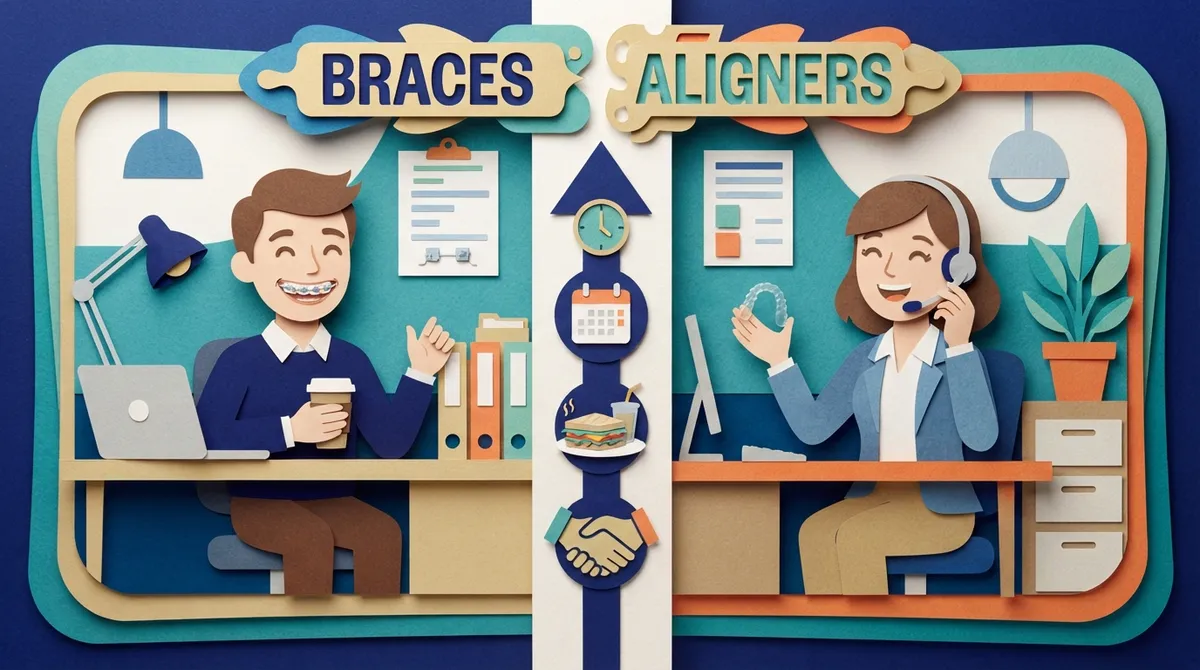
Your daily routine will look different depending on the option you choose. Fixed braces stay on your teeth all day. Clear aligners come out for meals and go back in afterward. Neither is “better” for everyone. It comes down to your bite needs, your habits, and your schedule.
At Brockway Orthodontics in Clearwater, Florida, Dr. Brockway offers metal braces, ceramic (clear) braces, and Spark™ Clear Aligners, so you can choose what suits your job and lifestyle. Spark™ Clear Aligners are a more affordable option for many adults. Here’s a quick look at how the choices compare at work.
| Feature | Metal Braces | Ceramic (Clear) Braces | Spark™ Clear Aligners |
|---|---|---|---|
| Visibility | Most noticeable | Blend with teeth | Nearly invisible |
| Eating at work | Avoid hard, sticky foods | Avoid hard, sticky foods | Remove for meals |
| Daily cleaning | Brush and clean around brackets | Brush and clean around brackets | Clean teeth and aligners |
| Main habit to build | Food and hygiene care | Food and hygiene care | Wearing trays as prescribed |
Still deciding? Our comparison of braces vs. clear aligners in Clearwater can help you weigh the pros and cons. You might also like metal vs. clear braces for adults.
Planning Around Orthodontic Appointments
Let’s talk calendars. This is the part most busy professionals worry about, and it’s easier than it sounds.
The American Association of Orthodontists says adjustment or aligner-change appointments are generally scheduled about every 6 to 10 weeks. The NHS describes brace adjustments as typically every 6 to 8 weeks. Your schedule depends on your treatment plan and appliance. Many adjustment visits are short. The fitting appointment and the removal appointment can take longer.
Smart Scheduling Tips
- Book ahead. Ask for your next visit before you leave, so you can pick a time that works around key meetings.
- Choose low-stress windows. Early morning or late afternoon slots often cause the least disruption.
- Block your calendar. Treat the visit like any other meeting, and add travel time.
- Plan your first day well. Avoid scheduling a big presentation right after your fitting appointment.
- Give notice early. A quick heads-up to your manager helps, especially for longer visits.
Want to know more about visit frequency? Take a look at how often braces are adjusted. If you’d like to see how orthodontists keep your plan on track, our post on why orthodontic checkups matter explains it nicely.
Soreness After Fitting or Adjustments
Let’s be honest. Your teeth may feel tender for a bit. Temporary soreness or pressure is common after braces are fitted or adjusted. It’s a sign that your teeth are starting to move, and it usually settles down.
A little planning goes a long way. Here’s how to make those first few days easier:
- Plan softer meals, like soup, yogurt, pasta, or scrambled eggs.
- Keep a water bottle at your desk.
- Carry orthodontic wax in your bag or desk drawer for any brackets that rub your cheeks.
- Avoid scheduling a big client dinner the evening after an adjustment.
If you have persistent or severe pain, contact your orthodontist. For more on what’s normal, read 6 truths about braces pain and how to ease tight braces after adjustments.
Lunch Breaks and Client Meals
Food is where most adults feel the biggest change. The goal is simple: protect your brackets and wires while still enjoying your meals.
For Fixed Braces
Avoid or modify hard, sticky, crunchy, and chewy foods. They can damage brackets or wires. At work, choose manageable options. Think soft meals, cut-up fruit, and bite-sized sandwiches. Never bite straight into hard foods like a whole apple or a crusty roll.
| Work-Friendly Choices | Better to Skip or Modify |
|---|---|
| Soup, pasta, rice bowls | Hard pretzels and chips |
| Cut-up fruit and soft veggies | Whole apples and raw carrots (cut them up instead) |
| Bite-sized sandwiches | Crusty bread and bagels |
| Yogurt, cheese, eggs | Caramel, taffy, and gum |
For more ideas, see our friendly food guide for braces. And if that popcorn bowl in the break room is calling your name, check whether you can eat popcorn with braces first.
For Clear Aligners
Aligners follow a different routine. Remove them for meals and for drinks other than water. Clean your teeth before putting them back in. Follow the wear schedule your orthodontist gives you. A small travel case in your bag or desk keeps your trays safe during lunch.
Coffee fans, take note. Sipping coffee with aligners in can stain them and trap liquid against your teeth. Our post on how to enjoy coffee and clear aligner care together has easy tips. If you want a full routine for the office, see how to care for your aligners during a busy workday.
Cleaning Your Teeth and Braces at Work
Good hygiene matters even more with braces. Poor cleaning around appliances can raise the risk of decay, gum problems, and lasting enamel marks. The good news is that a short routine does the job.
A Simple Office Cleaning Kit
- A travel toothbrush
- Fluoride toothpaste
- An interdental brush for cleaning around brackets and under wires
- Orthodontic wax
- A small mirror, if you like
Your Midday Routine
- Swish water around your mouth right after eating.
- Head to the restroom, if you can, and brush carefully with fluoride toothpaste.
- Use the interdental brush to clean around brackets and under the wires.
- Do a quick mirror check for stuck food before your next meeting.
If brushing at work isn’t possible, rinse well with water and brush when you can. Always follow your orthodontist’s specific hygiene advice. For a deeper dive, read how to brush teeth with braces and 7 brushing mistakes that wreck braces.
Don’t Skip Your Regular Dental Visits
Here’s a point many adults miss. Orthodontic visits don’t replace your regular dental check-ups. You need both. Healthy teeth and gums keep treatment on track. For a helpful look at the balance, see daily care vs. dental visits and which protects adult braces.
Missed orthodontic appointments or ignoring appliance instructions can also delay your results. Think of your plan as a partnership. You do the daily care. We guide the big picture.
Handling Braces Emergencies at the Office
Surprises happen. A bracket pops loose during a meeting, or a wire starts poking your cheek. Don’t panic. Most situations are manageable until you can be seen.
Contact your orthodontist about a broken or loose appliance, unusual or persistent pain, or significant gum redness, swelling, or soreness. Don’t try major repairs yourself. In the meantime, a bit of orthodontic wax can cover a sharp spot and keep you comfortable.
Not sure whether it counts as urgent? Our guide on broken brackets vs. poking wires breaks it down. You can also review orthodontic emergency fixes to try before panicking.
How Long Will Treatment Take?
Timing varies for every adult. NHS Inform describes 18 to 24 months as a common timeframe for good results when patients follow care instructions. Your own plan may be shorter or longer, depending on your bite and your goals.
After your braces or aligners come off, you’ll need a retainer to keep your smile in place. Retainers are a long-term habit, so it helps to learn the basics early. Check out how to care for your dental retainer and how long you need to wear retainers after braces.
Building a Braces-Friendly Work Routine
Let’s pull it all together. A few small habits can make your whole experience smoother.
- Keep a desk kit. Toothbrush, paste, wax, interdental brush, and an aligner case.
- Pack smart lunches. Soft, bite-sized foods save you stress.
- Plan around your calendar. Book visits well ahead and avoid pairing them with big events.
- Follow your wear schedule. This matters most if you use aligners.
- Stay in touch with your orthodontist. Ask questions early and often.
Money matters too. If you’re budgeting around your career, our guides on using dental insurance to help pay for braces and braces monthly payment plans can help you plan with confidence.
Why Adults Choose Brockway Orthodontics
Working adults need care that respects their time. Dr. Brockway takes the time to listen to your goals and explain your options in clear, friendly terms. The practice uses modern tools, including digital impressions instead of messy molds and 3D imaging for precise planning. In certain cases, same-day treatments can help you start without juggling several visits.
You can also see what patients say about their experience. Visit us on Google — Brockway Orthodontics to read reviews from people in our Clearwater community. If you’d like to know what a first visit looks like, take a peek at your first orthodontist appointment. For trusted background on oral health, the American Dental Association is a helpful resource, and the Florida Association of Orthodontists shares useful information about orthodontic care in our state. You can also learn from the NHS guide to braces.
Ready to Start Without Disrupting Your Career?
Adult braces and workplace routines can work together beautifully. With smart scheduling, a few food swaps, and a simple cleaning kit, you can keep doing great work while your smile improves. Every adult’s needs are different, so the best next step is a conversation about your goals and your schedule.
Ready to talk it through? Book your appointment online and let Dr. Brockway and our friendly team build a plan that fits your busy life. Prefer to ask a question first? Contact us anytime. We can’t wait to help you smile with confidence at work and beyond.
FAQs
Q: Can I work normally after getting adult braces?
A: Yes, most adults go right back to their normal work routine. You may feel mild soreness for a few days after fitting, so it helps to plan softer meals and avoid big presentations that first day. Keep water and orthodontic wax handy at your desk.
Q: How often will I need orthodontist appointments?
A: Adjustment or aligner-change visits are generally scheduled about every 6 to 10 weeks, depending on your treatment plan. Many adjustment visits are short, while fitting and removal appointments may take longer. Booking ahead makes it easy to work around your calendar.
Q: How can I clean my teeth and braces during a workday?
A: Rinse with water after eating, then brush with fluoride toothpaste when you can. An interdental brush helps clean around brackets and under wires. If brushing isn’t possible, rinse well and brush as soon as you can.
Q: What should I do if a bracket comes loose or a wire pokes me at work?
A: Stay calm and cover any sharp spot with orthodontic wax for comfort. Then contact your orthodontist to get it checked. Please don’t try major repairs on your own.
Q: Can adults choose clear aligners instead of fixed braces?
A: Often, yes. Many adults are good candidates for clear aligners, though it depends on your bite and goals. Dr. Brockway can review your options and help you pick what fits your life and schedule.
Our Service Area