Key Takeaways
-
Braces are fixed and require careful cleaning around brackets and wires plus avoiding hard, sticky, or chewy foods, while aligners are removable and require wearing them about 20–22 hours daily.
-
Aligners only work when worn as prescribed, so patients who tend to forget or snack often should honestly consider whether they can stay disciplined with wear time.
-
Remove aligners for all meals and any drink other than water, and always brush and floss before reinserting them to keep food and sugar from getting trapped.
-
Never wrap aligners in a napkin; store them in their case to avoid losing them, and contact your orthodontist right away if a tray is lost or damaged.
-
Brush after meals and floss daily with braces, paying extra attention to the spots around brackets where plaque hides, since neglect can cause stained or irritated teeth.
-
Both braces and aligners require daily brushing and flossing, orthodontic visits roughly every 6–10 weeks, dental cleanings at least every six months, and a retainer after treatment to keep teeth in place.
Picking between braces and clear aligners feels like a big decision, and it is! But here’s something many people overlook: the choice isn’t just about how your smile looks along the way. It’s also about what you will be doing every single day. Think of it like adopting a pet. A cat and a dog are both wonderful, but they ask different things of you.
That’s why comparing responsibilities with braces and aligners is such a smart first step. Braces are fixed to your teeth, so the “work” is mostly about careful cleaning and watching what you eat. Aligners come out, so the “work” is mostly about discipline, wearing them long enough and keeping them safe. Both paths lead to a straighter, healthier smile, and both need a team effort between you and your orthodontist.
In this friendly guide, we’ll walk through the daily habits, food rules, cleaning routines, and follow-up visits for each option. By the end, you’ll know which set of responsibilities feels like the best fit for your life, whether you’re a parent, a teen, or a busy professional.

Why Responsibilities Matter as Much as Results
Great orthodontic results don’t come from the appliance alone. They come from the appliance plus good habits. The American Association of Orthodontists (AAO) says both braces and clear aligners need daily oral hygiene, regular dental checkups, orthodontic follow-up, and retainers after treatment ends.
The AAO also says your orthodontist should recommend an appliance based on your bite, your goals, and your circumstances, not looks alone. That means the best choice is the one you can truly stick with. A treatment you follow carefully will beat a “perfect” option you struggle to manage.
At Brockway Orthodontics, Dr. Brockway takes time to talk through your daily life before suggesting a plan. That way, the choice fits your routine, not the other way around.
The Big Picture: Fixed vs. Removable
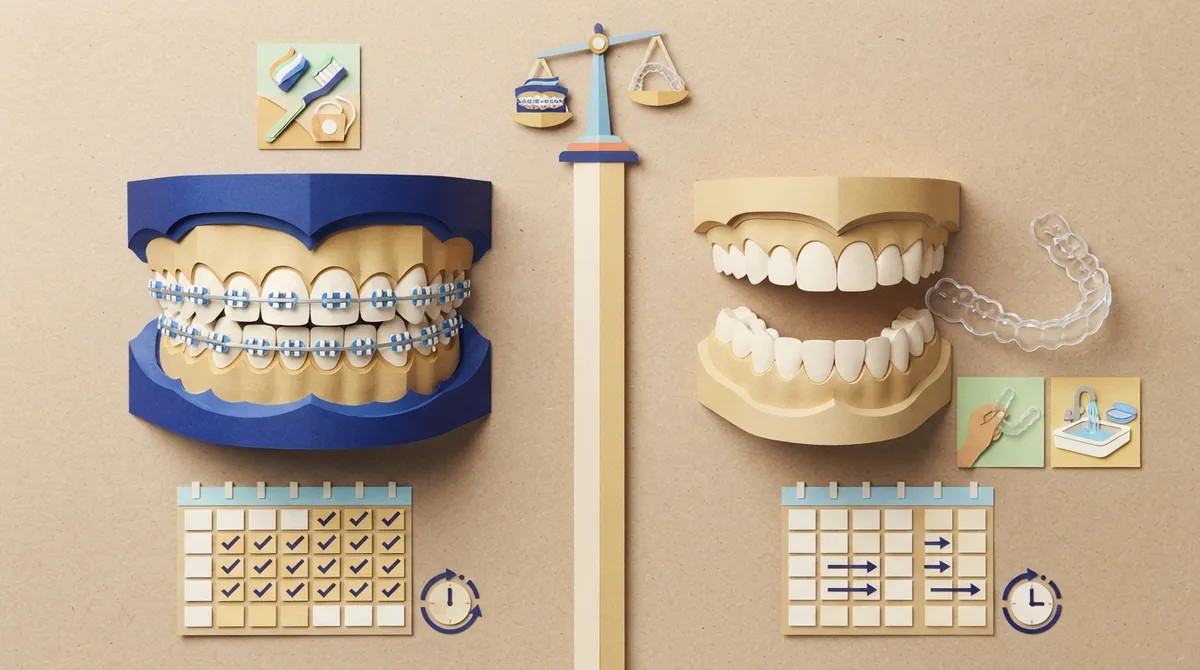
Here’s the simplest way to think about it. Braces are fixed. They stay on your teeth around the clock. Aligners are removable. You take them out to eat and clean your teeth.
Each setup shifts the work to a different place:
- Braces: You can’t forget to “put them in,” but you must clean around hardware and avoid foods that can break it.
- Aligners: You can eat almost anything, but you must wear them nearly all day and keep track of them.
Neither is “easier” in every way. They’re just different. Let’s break each one down.
Side-by-Side Comparison of Daily Responsibilities
This quick table shows how the main tasks stack up. Always follow your own orthodontist’s instructions, since every treatment plan is a little different.
| Responsibility | Braces | Clear Aligners |
|---|---|---|
| Wear time | Always on (fixed to teeth) | About 20–22+ hours daily, or as prescribed |
| Eating | Avoid hard, sticky, crunchy, or chewy foods | Remove trays for meals and non-water drinks |
| Brushing | Brush carefully around brackets and wires | Brush teeth before putting trays back in |
| Flossing | Daily, with extra care around wires | Daily, with trays out |
| Appliance care | Protect brackets and wires from damage | Clean trays and store them in a case |
| Main risk | Broken brackets or loose wires | Lost, damaged, or under-worn trays |
| Retainers afterward | Yes | Yes |
How to Manage Your Responsibilities With Braces
If braces are on your radar, here’s how to handle the daily work. Learn more about the basics on our All About Braces page.
Step-by-Step Daily Routine With Braces
- Brush after meals and snacks. The AAO suggests brushing for about two minutes after meals or snacks and before bed.
- Angle your brush. Clean above and below each bracket, then brush along the gumline.
- Floss once a day. Plaque and food can collect around brackets and wires, so don’t skip this step.
- Check your braces. Look in the mirror for loose brackets or poking wires.
- Follow elastic instructions. If your orthodontist prescribes rubber bands, wear them exactly as directed.
Need more brushing tips? Our guide on how to brush teeth with braces walks you through it.
What to Eat (and Skip) With Braces
Because braces can’t come off, your food choices matter. Hard, sticky, crunchy, or chewy foods can bend wires or pop brackets loose. Common culprits include popcorn, hard candy, caramel, and ice.
The good news? Plenty of foods are braces-friendly. Soft fruits, pasta, yogurt, and tender meats are all fair game. Check out our friendly food guide for braces for ideas, or our list of foods to avoid with braces.
The Biggest Braces Responsibility
If we had to pick one, it’s cleaning around hardware. Brackets and wires create lots of tiny spots where plaque hides. Missing those spots can lead to stained or irritated teeth. Slow, careful brushing is your best friend here.
How to Manage Your Responsibilities With Clear Aligners
Aligners are popular because they’re discreet and removable. But that freedom comes with a promise: you have to wear them. Explore options like Spark™ Clear Aligners, a more affordable option that many patients love.
Step-by-Step Daily Routine With Aligners
- Wear them as prescribed. AAO guidance commonly points to at least 22 hours a day, and another AAO resource gives a typical range of 20–22 hours. Your orthodontist will tell you the exact schedule.
- Take them out to eat. Remove trays for meals and any drink other than water.
- Brush and floss before reinserting. Clean teeth first so food and sugar don’t get trapped under the trays.
- Rinse and clean your trays. Keep them fresh so they stay clear and comfortable.
- Store them in the case. Never wrap them in a napkin. That’s one of the most common ways trays end up in the trash!
Want to protect your trays and teeth? Read about clear aligner food mistakes to avoid.
Why Wear Time Is Everything
With aligners, the treatment only works when the trays are in your mouth. Wearing them less than prescribed can slow progress or throw your plan off track. If you tend to forget things or snack all day, that’s worth thinking about honestly.
A helpful tip: set phone reminders, and build a routine. Pop your trays out for meals, brush, and pop them right back in. Making it automatic is the secret.
The Biggest Aligner Responsibility
For aligners, it’s self-discipline and organization. You’re in charge of wearing them, cleaning them, and keeping them safe. Lost or damaged trays should be reported to your orthodontist right away.
Responsibilities Both Options Share
Here’s the part that surprises people: braces and aligners have a lot in common. No matter which you choose, you’ll need to:
- Brush and floss every day. Healthy gums and teeth make treatment smoother.
- Keep your orthodontic appointments. The AAO says visits are often scheduled about every 6–10 weeks, though timing depends on your plan.
- Keep seeing your general dentist. Orthodontic visits don’t replace dental exams. The AAO advises professional cleanings at least every six months, or more often if your dentist recommends it.
- Follow your orthodontist’s instructions. This includes elastics or other prescribed appliances.
- Wear your retainer afterward. Retainers help hold your teeth in their new spots.
Don’t Forget the Retainer Responsibility
Finishing active treatment is exciting, but it’s not the finish line. Teeth naturally want to drift back, so retainers keep your hard work in place. This applies whether you had braces or aligners.
Your orthodontist will choose the type of retainer and set your wear schedule. Learn more on our Retainers page and in our guide on how to wear a retainer after braces. Even if you’re comfortable with the daily habits now, treat your retainer as a lifelong friend.
How to Decide Which Responsibilities Fit Your Life
Ready to figure out your match? Try this simple self-check. There are no wrong answers, just honest ones.
- Rate your consistency. Can you reliably wear trays 20–22 hours a day? If yes, aligners may suit you. If you’d rather not think about it, braces do the work automatically.
- Look at your eating habits. Do you love crunchy or chewy snacks? Aligners give more food freedom. If you don’t mind menu changes, braces are fine.
- Think about your cleaning style. Are you patient with detailed brushing around hardware? Or would you rather remove the appliance to clean?
- Consider your age and routine. Younger kids may do better with a fixed appliance, while motivated teens and adults often manage aligners well.
- Talk to an expert. Your bite and goals matter most, and only an exam can show what’s possible.
Tips for Different Patients
For Parents of Kids and Teens
If you’re a parent, ask yourself honestly how your child handles responsibility. Braces take the “remember to wear it” worry off your plate. Aligners can work beautifully for responsible teens, but expect to give gentle reminders. See our guide on braces vs. clear aligners for kids for more help, and learn about adolescent treatment.
For Teens and Young Adults
Big events like graduation or prom can make a discreet option tempting. Just remember that aligners only work if they’re in. Be honest with yourself about school lunches, sports, and busy days.
For Busy Professionals and Adults
Work lunches, meetings, and travel can make removing trays feel awkward, but aligners also let you eat normally and brush before big presentations. Our adult treatment options are designed to fit demanding schedules.
For Relapse Patients and Health-Conscious Patients
If you’ve had treatment before, your retainer habits matter more than ever this time around. And if oral health is a top priority, either option works when you stay on top of cleaning and dental checkups.
What to Do When Things Go Wrong
Even the most careful patients hit bumps. Here’s a quick guide so you’re never caught off guard.
- Broken or loose bracket: Call your orthodontist. Don’t wait for your next visit.
- Poking wire: Use orthodontic wax as a short-term comfort fix, then call us.
- Lost or damaged aligner: Contact your orthodontist right away for guidance.
- Severe or lasting pain: Reach out promptly.
Our article on emergency vs. routine orthodontics can help you tell what’s urgent and what can wait.
Cost, Comfort, and Commitment: A Quick Reality Check
Responsibilities connect to your wallet and your comfort, too. Lost trays or broken brackets can add extra visits or time to your plan. Careful habits help you finish on schedule.
If budget is on your mind, we offer flexible options. Explore our financing and insurance information so you can plan with confidence. For a deeper side-by-side look at options, our post on clear aligners vs. braces is a great next read.
Why Choose Brockway Orthodontics in Clearwater
At Brockway Orthodontics, we love helping Clearwater families find the right fit. We offer metal braces, ceramic (clear) braces, and Spark™ Clear Aligners, so you get honest guidance instead of a one-size-fits-all answer.
Dr. Brockway listens to your concerns and explains your options in plain, friendly language. We use modern tools like digital impressions and 3D imaging, and in some cases we can offer same-day treatment. Curious what other families think? See what patients say by visiting us on Google for Brockway Orthodontics. You can also learn more about orthodontic standards from the Florida Association of Orthodontists and general oral health advice from the American Dental Association.
Final Thoughts: Choose the Habits You Can Live With
When you boil it down, comparing responsibilities with braces and aligners comes to one question: which set of habits feels natural for you? Braces ask for careful cleaning and smart food choices. Aligners ask for steady wear time and good organization. Both ask for brushing, flossing, checkups, and a lifelong retainer.
The best choice is the one you’ll follow with a smile. Not sure which one that is? We’ll figure it out together, with no pressure and plenty of friendly answers. Book your free consultation online and let’s map out a plan that fits your life. Prefer to chat first? You can contact our team anytime.
FAQs
Q: How many hours a day do I need to wear clear aligners?
A: Most patients wear aligners about 20–22 hours a day, and some AAO guidance suggests at least 22 hours. Your orthodontist will give you the exact schedule for your plan, so follow that closely for the best results.
Q: What foods should I avoid with braces?
A: Skip hard, sticky, crunchy, and chewy foods like popcorn, hard candy, caramel, and ice. These can bend wires or pop brackets loose. Soft fruits, pasta, and yogurt are much safer choices.
Q: Which requires more responsibility: braces or clear aligners?
A: It really depends on you! Braces need careful cleaning and food choices, while aligners need steady wear time and good organization. Neither is simply easier, so pick the one that matches your habits.
Q: Do I need a retainer after braces or clear aligners?
A: Yes, retainers are generally needed after both. They help keep your teeth in their new positions, and your orthodontist will choose the type and wear schedule that’s right for you.
Q: What should I do if a bracket breaks or I lose an aligner?
A: Contact your orthodontist right away instead of waiting for your next visit. We can tell you what to do next and help keep your treatment on track.
Our Service Area