Key Takeaways
-
One missed retainer night is usually not an emergency, but teeth can drift faster early in retention, so get back on schedule the same day.
-
If your retainer fits fully and feels comfortable after a missed night, wear it as your orthodontist directed; mild snugness that eases is usually fine to monitor.
-
Never force a retainer that won't seat or causes pain; stop and call your orthodontist, since forcing can injure gums and teeth or crack the appliance.
-
A missing or broken retainer should be reported to your orthodontist promptly, because delay gives teeth more time to shift and home repairs can ruin the fit.
-
Consistent wear matters: in a 2025 study of 120 children, relapse reached 61.1% with poor compliance versus 16.3% with consistent wear.
-
Build a routine to avoid forgetting, such as keeping your case by your toothbrush, setting a nightly reminder, and packing it when you travel.
It happens to almost everyone. You finish a long day, flop onto the couch, and suddenly realize your retainer is still sitting on the bathroom counter. Or maybe it stayed in your gym bag, your backpack, or a hotel room two states away. Take a breath. You are not alone, and one missed night is rarely a disaster.
Still, it is smart to know what happens when you forget your retainer. Your teeth are not stuck in concrete after braces or aligners. They are held in place by bone and gum tissue that need time to settle. A retainer keeps them steady while that happens.
In this friendly guide, we will walk through what really goes on in your mouth when a retainer stays out. You will learn how to tell a harmless slip from a real problem, what to do tonight, and when to call your orthodontist. Whether you are a parent helping a teen, a young adult juggling a busy schedule, or an adult who finished treatment years ago, you will find clear, calm answers here.
Why Your Teeth Want to Move After Treatment
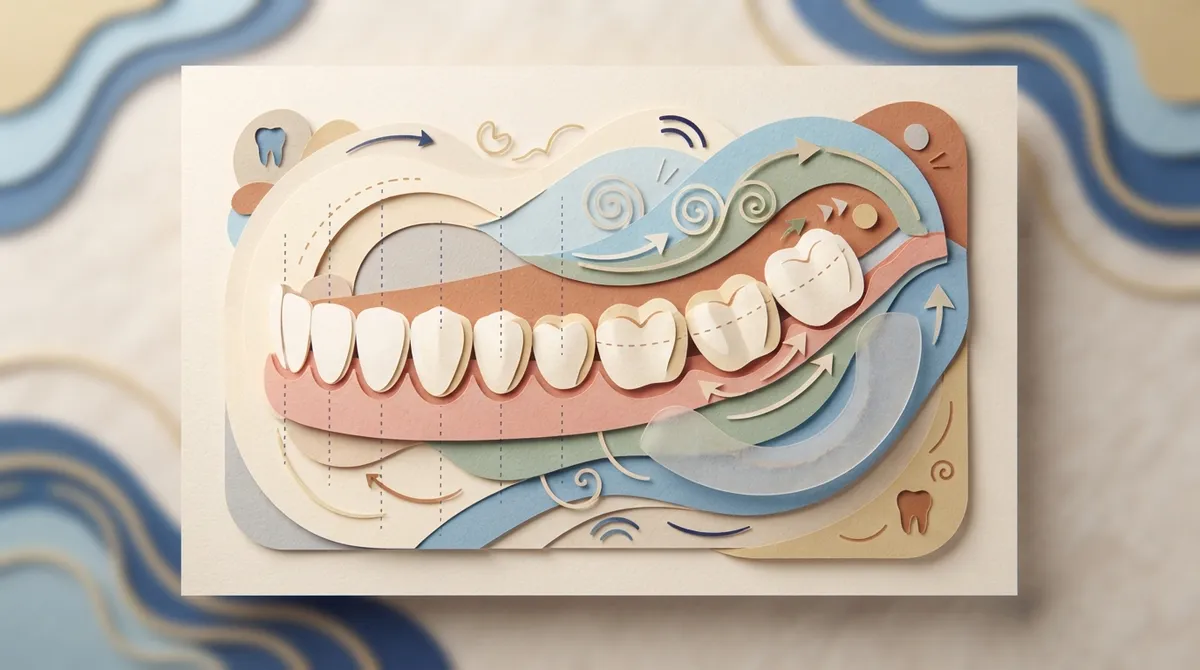
Teeth sit in a living system. They are anchored by a ligament and surrounded by bone and gum fibers. When braces or aligners move teeth, those tissues rebuild around the new positions. That rebuilding takes months to firm up.
Even after the tissues settle, teeth can still drift. Chewing, aging, grinding, and tongue habits all play a part. This gradual drift back toward earlier positions is called orthodontic relapse. According to the American Association of Orthodontists, retainers help maintain your results, but some natural tooth movement can still happen over time.
That is why most orthodontists recommend long-term retainer wear. The exact schedule is different for each person. Your plan depends on your starting bite, how far your teeth moved, your age, and the type of retainer you have.
The Short Version
- Your teeth are held by living tissue, not cement.
- New positions need time to stabilize.
- Natural drift can continue for years.
- A retainer is your daily insurance policy.

So, What Happens When You Forget Your Retainer for One Night?
Here is the reassuring news. Forgetting your retainer once, or for a very short time, does not guarantee that your teeth will move in a noticeable way. The amount of movement varies from person to person. It depends on how long the retainer stays out, how far along you are in the retention stage, and how your own teeth tend to behave.
That said, the AAO notes that even a few days without a retainer may allow significant shifting for some people. This is clinical guidance, not a promise for everyone. Some patients can skip a night with no problem at all. Others may feel a difference sooner, especially early in retention.
The simple takeaway is this: one missed night is usually not an emergency, but it is also not a habit worth building.
What You Might Notice the Next Day
After a missed night, put your retainer back in and pay attention to how it feels. A little snugness can be a sign that your teeth moved slightly. That does not always mean something is wrong. If the retainer still fits fully and feels comfortable, wear it as your orthodontist directed.
If it feels very tight, painful, or will not sit all the way down, that is a different story. We will cover that in a moment.
How Quickly Can Teeth Shift Without a Retainer?
There is no single timeline that fits everyone. Teeth can start to move within days for some people, while others stay steady for much longer. Several things change the picture:
- Time in treatment: The first months after braces or aligners are the most sensitive.
- Your starting problem: Teeth that were very crowded, rotated, or gapped often want to drift back.
- Your retention stage: Full-time wear early on, nighttime wear later.
- Your habits: Clenching, grinding, or tongue pressure can push teeth.
- Your age and growth: Teens still growing may change faster.
Research backs up how much consistency matters. A 2025 prospective clinical study of 120 children aged 10 to 16 found measurable relapse in 28.3% of patients overall. Among those who wore their retainers consistently, relapse showed up in 16.3%. Among those with poor compliance, it reached 61.1%. This was one study in a specific group of young patients, so it is not a prediction for every person. But the pattern is clear: steady wear protects your smile.
Quick Guide: Match Your Situation to Your Next Step
Not every forgotten retainer is the same. Use this table to find your best next move. It is a general guide, so always follow the instructions your own orthodontist gave you.
| Your Situation | What It Usually Means | What To Do |
|---|---|---|
| Forgot one night, retainer fits fine | Little or no movement, most likely | Wear it as directed and get back on schedule |
| Retainer feels snug but not painful | Possible slight movement | Wear it as directed and watch how it feels |
| Retainer feels painfully tight | Teeth may have shifted | Do not force it. Call your orthodontist |
| Retainer will not seat fully | Noticeable movement or a warped retainer | Stop and call your orthodontist for an assessment |
| Retainer is cracked, bent, or broken | Appliance may no longer fit or protect | Call right away about repair or replacement |
| Retainer missing for weeks or longer | Meaningful shifting is more likely | Book a visit to check your teeth and options |
What To Do Right Now If You Forgot Your Retainer
Let us make this easy. Here is a simple step-by-step plan for tonight and tomorrow.
- Do not panic. One missed wear is a small slip, not a treatment emergency.
- Find your retainer and check it. Look for cracks, bends, or warping before you put it in.
- Try it in gently. It should slide on without a fight. If it fits fully and feels okay, you can wear it as directed.
- Notice any tightness. A snug feeling can signal slight movement. Mild snugness that eases is usually fine to monitor.
- Stop if it hurts or will not seat. Take it out and call your orthodontist.
- Get back on schedule. Follow your own wear plan, not a generic one you found online.
Should You Wear a Tight Retainer?
This is one of the most common questions we hear. The answer depends on how it feels.
If the retainer goes on fully and the tightness is mild, wearing it as directed is usually okay. A snug fit can simply mean your teeth drifted a tiny bit, and the retainer is gently guiding them back. The AAO says a snug fit can signal slight movement, and that wearing a fitting retainer as directed is reasonable.
But there is a clear line. If the tightness is painful, or the retainer does not click fully into place, do not push through it. Pain is your body telling you something is off.
Why You Should Never Force a Retainer
It might be tempting to press harder, bite down, or use your fingers to wrestle the retainer into place. Please do not. Forcing a retainer that will not fit can injure your gums and teeth. It can also crack or bend the appliance, which makes things worse.
If your retainer will not seat, causes significant pain, or looks damaged, the safest move is to stop and call your orthodontist. We explain this more in our article on why you should not force an ill-fitting retainer. If your retainer suddenly feels different, you may also like our guide on why a retainer can feel tight all of a sudden.
What If the Retainer Is Lost or Broken?
A missing or broken retainer is a bigger deal than a forgotten one, because you have nothing to protect your teeth while you wait. Contact your orthodontist promptly. The AAO advises calling about repair or replacement, since delay can allow further tooth movement.
Do not try to glue, bend, or fix a broken retainer at home. Home repairs can leave sharp edges or change the shape, and then the retainer no longer fits your teeth correctly.
If this has happened to you, these resources can help:
- I Lost My Retainer: What to Do Next
- 8 Smart Steps to Take When Your Retainer Breaks
- How to Budget for Retainer Price After Braces
Do Different Retainers Change the Answer?
Yes, a little. The type of retainer you have affects how a forgotten wear plays out.
Removable Retainers
Clear plastic and wire-style removable retainers are the ones most often forgotten. They are easy to leave behind, which is exactly why a routine matters. If you wear one, our guide on plastic retainers is a handy read.
Fixed (Bonded) Retainers
A thin wire bonded behind your teeth cannot be forgotten, because it stays put. That is a real perk for people who struggle with remembering. It still needs care, and it can break or come loose. You can compare the two styles in Fixed vs. Removable Retainers: Which One Wins?
| Feature | Removable Retainer | Fixed Retainer |
|---|---|---|
| Easy to forget? | Yes | No, it stays in place |
| Easy to lose? | Yes | No |
| Cleaning | Take out and clean daily | Brush and floss around it carefully |
| Main risk | Inconsistent wear | Wire can break or detach |
Neither choice is perfect for everyone. Your orthodontist can help you pick what fits your life and your teeth.
Wear Schedules Are Not One-Size-Fits-All
You may have heard that retainers are worn full time at first and then only at night. That is a common pattern, but your plan should come from your own orthodontist. Some patients wear a removable retainer all day for a period, then move to nights. Others follow a different rhythm.
Because of this, please avoid copying a friend’s schedule or a random internet tip. If you are unsure whether you are wearing yours the right way, ask. Our article on why retainer schedules differ between patients explains the reasons, and how long you need to wear retainers after braces covers the long-term picture.
Tips to Stop Forgetting Your Retainer
A little system goes a long way. Here are simple habits that work for busy families, teens, and working adults alike.
- Tie it to a habit. Put your retainer case next to your toothbrush so brushing and retainer time go together.
- Use a bright case. A colorful case is harder to leave behind and easier to spot.
- Set a phone reminder. A nightly alarm takes five seconds to set up.
- Keep a backup spot. Leave your case on the nightstand, not in the bathroom.
- Pack it when you travel. Add it to your packing list so it never gets left in a hotel.
- Never wrap it in a napkin. This is how many retainers end up in the trash.
Parents can help younger patients build the habit too. Our guide on how parents can help kids build appliance care habits has easy ideas, and helping teens keep track of retainers offers more. If you travel often, take a look at 8 retainer care mistakes to avoid while traveling.
Will You Need Braces or Aligners Again?
This is the worry behind most forgotten-retainer questions, so let us be honest and kind about it. If your teeth only moved a little, your orthodontist may be able to help with an adjusted or replacement retainer. If your teeth have shifted a lot, a retainer alone may not bring them back to where they were.
In that case, your orthodontist can look at your teeth and talk through options. That might mean a new retainer, a short round of aligners, or more involved treatment. The right answer depends on how far things moved and what you want for your smile.
Many adults come back after years of skipped retainer wear and feel embarrassed. There is no need. Relapse is common, and it is fixable. Our articles on why teeth can shift years after braces and orthodontic relapse warning signs can help you spot changes early.
When to Call Your Orthodontist
Reach out to your orthodontic team if you notice any of these:
- Your retainer will not seat fully.
- Tightness is painful or does not ease.
- The retainer is cracked, warped, or broken.
- You lost your retainer.
- You have gone weeks or longer without wearing it.
- You see new gaps, crowding, or a change in your bite.
A quick visit can answer the biggest question: is your existing retainer still a good fit, or do you need a replacement or more care? Waiting only gives teeth more time to drift.
Brockway Orthodontics Is Here to Help
At Brockway Orthodontics in Clearwater, Florida, Dr. Brockway and her team see forgotten, lost, and ill-fitting retainers all the time, and we never judge. We would much rather hear from you early than have you worry alone. Our practice uses modern tools like digital impressions and 3D imaging, which can make planning a replacement comfortable and precise. In some cases, we can even offer same-day options so you do not have to wait. You can read what neighbors say about us by choosing to visit us on Google — Brockway Orthodontics.
For general guidance on keeping your whole mouth healthy, the American Dental Association is a trusted resource, and the Florida Association of Orthodontists shares helpful information about orthodontic care in our state. You can also read the American Association of Orthodontists’ own retainer FAQs to see how they describe wear and care.
The Bottom Line on Forgetting Your Retainer
Here is what to remember about what happens when you forget your retainer. One missed wear is usually fine if your retainer still fits and feels comfortable. The longer a retainer stays out, the more likely your teeth are to drift. Never force a retainer that will not fit, and call your orthodontist if it hurts, will not seat, or is damaged. Most importantly, a small slip is easy to fix when you speak up early.
If your retainer feels different, is missing, or you simply want peace of mind, we would love to take a look. Book an appointment online and let Dr. Brockway check your smile, or contact us with any questions. Your smile is worth protecting, and we are happy to help you keep it exactly where you want it.
FAQs
Q: What should I do if I forgot to wear my retainer for one night?
A: Don’t worry, one missed night is usually not an emergency! Check that your retainer isn’t damaged, then try it in gently. If it fits fully and feels comfortable, wear it as your orthodontist directed and get right back on your normal routine.
Q: Can I force my retainer back onto my teeth if it feels tight?
A: Please don’t. Forcing a retainer that won’t fit can hurt your gums and teeth or crack the appliance. If it won’t seat fully or causes real pain, take it out and call your orthodontist for a quick check.
Q: How long should I wear my retainer after braces or aligners?
A: Many orthodontists recommend long-term wear, but the exact schedule is different for every patient. Some people wear a removable retainer full-time at first and then only at night. Follow the plan your own orthodontist gave you, and ask if you’re unsure.
Q: Will I need braces or aligners again if my teeth have shifted?
A: Not always! If your teeth moved only a little, an adjusted or replacement retainer may be enough. If they shifted a lot, your orthodontist can look at your smile and talk through options, which might include a short round of treatment.
Q: What should I do if I lost or broke my retainer?
A: Call your orthodontist as soon as you can about repair or replacement. Waiting gives your teeth more time to drift, and fixing a broken retainer at home can change its shape, so it’s best to let the experts handle it.
Our Service Area