Key Takeaways
-
Braces and clear aligners are both valid options; the right choice depends on your bite, age, and lifestyle, so an in-person exam is the best way to decide.
-
Braces handle complex cases like significant crowding, rotated teeth, and bite corrections, and they work around the clock without relying on patient compliance.
-
Clear aligners are removable and nearly invisible, but they only succeed if you wear the trays as prescribed each day, so they suit consistent patients with mild-to-moderate cases.
-
The AAO recommends a first orthodontic checkup by age 7, though this evaluation usually just monitors jaw growth and tooth eruption rather than starting treatment.
-
Typical braces cases take about 12 to 24 months according to the AAO, and adjustment visits usually occur every 4 to 12 weeks.
-
Wearing your retainer as directed after treatment is essential, since teeth can shift without it, and long-term retainer use is often recommended.
If you live in Pinellas County, you already know our community loves being outdoors, showing up for school events, and smiling for the camera. So it makes sense that a lot of families and adults are asking the same big question: what is the best way to get a straighter, healthier smile? When it comes to Pinellas County orthodontic treatment, the two most popular paths are traditional braces and clear aligners.
Here is the good news. Neither one is a bad choice. Each has its own strengths, and the right pick depends on your teeth, your bite, your age, and your lifestyle. With about 948,563 people calling Pinellas County home as of 2025 (per the U.S. Census Bureau), there are plenty of smiles in our community, and plenty of different needs.
In this friendly guide, we will compare braces and aligners side by side, walk through who each option suits best, and share what to expect from the first visit to the retainer phase. Think of it like chatting with a friend who happens to know a lot about teeth. Let’s dive in!

What Orthodontic Treatment Actually Does
Orthodontic treatment corrects misaligned teeth and bite problems, which the dental world calls malocclusion. That includes crowding, gaps, overbites, underbites, and crossbites. It is about more than looks. A well-aligned bite can make teeth easier to clean and help everything work together comfortably.
At a consultation, an orthodontist typically looks at your tooth position, your bite, your jaw relationships, and your goals. From there, they decide whether treatment is needed and which approach fits best. No two smiles are exactly alike, so no two plans should be either.
The Main Options at a Glance
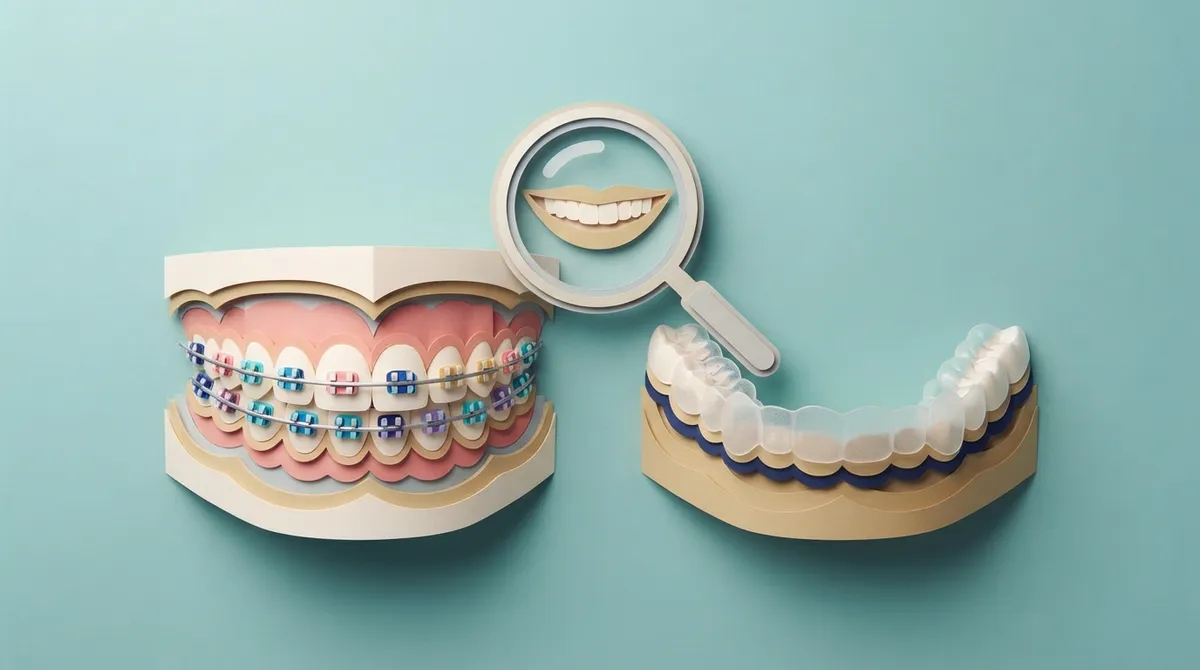
- Traditional metal braces: Fixed brackets and wires that can handle a wide range of alignment and bite concerns.
- Ceramic (clear) braces: Fixed braces with tooth-colored brackets that blend in more.
- Clear aligners: Removable, nearly invisible trays that gradually shift teeth, often suited to mild-to-moderate cases.
Curious how these compare in more detail? Our guide on braces vs. clear aligners goes even deeper.
Traditional Braces: The Tried-and-True Choice
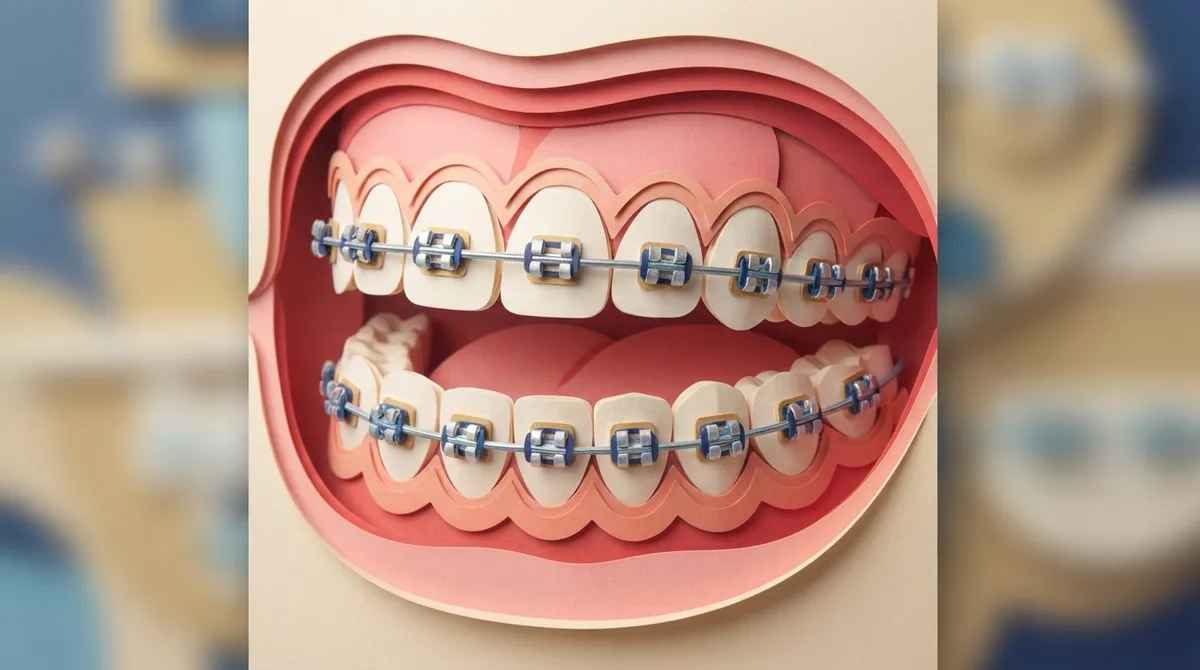
Braces have been straightening smiles for a long time, and for good reason. Because they are fixed to your teeth, they work around the clock. You cannot forget to wear them, and that makes them a dependable option for many patients.
Where Braces Shine
Braces can address a broad range of alignment and bite concerns. They are often a strong fit for more complex cases, such as significant crowding, rotated teeth, or bite corrections that need extra control. If your orthodontist says your case is tricky, braces are often the answer.
Modern braces are also smaller and more comfortable than the ones your parents may remember. And yes, you can pick colors, which teens often love. If you are weighing metal against tooth-colored brackets, take a look at metal vs. ceramic braces.
What to Know About Braces
- You will need to avoid certain sticky or hard foods.
- Brushing and flossing take a little more time and care.
- Adjustment visits usually happen every 4 to 12 weeks, depending on your treatment stage, according to the American Association of Orthodontists (AAO).
Good habits make a huge difference here. If you want a refresher, check out these brushing mistakes that wreck braces and how to fix them.
Clear Aligners: The Discreet, Flexible Option
Clear aligners are custom-made trays that you swap out every so often as your teeth move. They are popular with teens heading into big life moments and with busy adult professionals who want a low-profile way to improve their smile.
Where Aligners Shine
Aligners are removable, so you can take them out to eat and to brush and floss as usual. They are also smooth, which many people find more comfortable. For the right case, they offer a discreet path to a straighter smile without the look of metal.
At Brockway Orthodontics, we offer Spark™ Clear Aligners, a more affordable alternative to Invisalign. If you are curious how trays do their work, read how removable aligners straighten teeth.
What to Know About Aligners
- Aligners are not right for every patient. Some bite problems need braces.
- You must wear them for the prescribed number of hours each day.
- You need to keep track of each set so your treatment stays on schedule.
The biggest difference? With aligners, you are the driver. Success depends on how consistently you wear them. If you are not sure you can stick with that, braces may be the safer bet.
Braces vs. Aligners: Side-by-Side Comparison
| Factor | Traditional Braces | Clear Aligners |
|---|---|---|
| Appearance | Visible (metal or ceramic options) | Nearly invisible |
| Removable? | No, fixed to teeth | Yes, taken out to eat and clean |
| Best for | A broad range of cases, including complex bites | Many mild-to-moderate cases |
| Patient responsibility | Follow food and hygiene rules, attend visits | Wear trays as prescribed, track each set |
| Food restrictions | Yes, some foods to avoid | Fewer, since trays come out |
| Cleaning | Brush and floss around hardware | Brush teeth normally, clean trays |
| Typical visits | Adjustments every 4 to 12 weeks | Periodic check-ins to monitor progress |
Notice there is no single “winner” in every row. That is the whole point. The best option is the one that fits your case and your life. For a cost-focused look, see clear aligners vs. braces cost.
Which Option Fits Which Person?
Let’s match each treatment to the kinds of people who often walk through our doors.
Parents of Kids and Teens
If you are a parent making health decisions for a child between 7 and 16, you want something that works and that your child will actually stick with. Braces are great for kids who might not be perfect about wearing removable trays. Aligners can work well for responsible teens with mild-to-moderate concerns. Many parents appreciate that braces take compliance off the table.
If you are weighing this for your teenager, our article on mistakes parents make choosing braces or aligners for teens is a handy read.
Teens and Young Adults
Graduations, proms, and first jobs have a way of making us care about our smiles. Teens and young adults often love how discreet aligners look. Others prefer the colorful fun of braces. Either way, you deserve a plan that makes you feel confident.
Adult Professionals
Busy careers leave little room for disruption. Aligners can be a smart fit if you want a low-profile option and you are good at staying consistent. Ceramic braces are another subtle choice if your bite needs fixed appliances. And yes, it is never too late. Explore facts that prove adults can get braces.
Relapse Patients
Had braces years ago and noticed your teeth drifting? You are not alone. Teeth can shift when retainers are not worn as directed. Retreatment is very possible, and a personalized evaluation will show whether aligners or braces make more sense this time around.
When Should Treatment Begin?
The AAO recommends that children get an orthodontic checkup by age 7. Now, that does not mean treatment starts at 7. An early evaluation simply lets the orthodontist monitor jaw growth and how permanent teeth are coming in. Many kids are told to simply come back for checkups, and that is perfectly normal.
Curious about timing? We break it down in age 7 vs. waiting: when should a child see an orthodontist.
How Long Does Treatment Take?
Every smile is different, so every timeline is too. The AAO reports that many braces cases take about 12 to 24 months, though some are shorter and some run longer. Aligner timelines vary as well, depending on how much movement is needed and how well the trays are worn.
A few things influence your timeline:
- The complexity of your bite and tooth position.
- Your age and how your jaw is growing.
- How closely you follow care instructions.
- Whether you attend your scheduled visits.
Want a closer look at timing? Try 7 timelines that answer how long braces really take.
The Step Most People Forget: Retention
Here is something we cannot stress enough. Getting your teeth straight is only half the journey. Keeping them straight is the other half. After active treatment, retainers help limit shifting. They can be fixed or removable, and your orthodontist will give you a wear schedule tailored to you.
Long-term retainer use is often recommended. Think of your retainer as a little insurance policy for your investment. If you want to understand your options, read fixed vs. removable retainers, and learn how to care for your dental retainer.
What About Cost and Insurance?
Let’s be honest, cost matters. Pricing depends on your case, the type of treatment, and how long it takes. The available research does not establish county-specific price averages, so the only way to know your real number is a personal exam. The good news is that many practices offer payment plans, and dental insurance may help cover part of the cost.
These resources can help you plan:
- How to use dental insurance to help pay for braces
- Braces monthly payment plans
- How treatment length affects orthodontic costs
How to Choose an Orthodontist in Pinellas County
With so many options in our area, picking the right provider matters just as much as picking the right appliance. Here is a simple checklist to guide you:
- Check credentials and experience. Look for specialist training in orthodontics. You can also browse the Florida Association of Orthodontists for helpful information.
- Ask about treatment options. A good office will explain both braces and aligners honestly.
- Look at the consultation process. You should feel heard, not rushed.
- Consider location and hours. Easy access makes keeping appointments simpler.
- Review payment and insurance policies. Clear pricing prevents surprises.
- Ask about follow-up and retention care. Your care should not end the day the braces come off.
For more guidance, see 15 tips for finding the best orthodontic care near me.
Why Families Choose Brockway Orthodontics
If you are looking for a caring, modern practice in Clearwater, Brockway Orthodontics is here for you. Dr. Brockway is more than a qualified orthodontist. She takes the time to listen to your concerns and dreams for your smile, so you feel comfortable and informed from start to finish.
We offer metal braces, ceramic (clear) braces, and Spark™ Clear Aligners for kids, teens, and adults. Our office uses digital impressions instead of messy molds, plus 3D imaging to plan your care precisely. In certain cases, we can even offer same-day treatments for busy families. Want to hear from patients? See what our Brockway Orthodontics patients say on Google.
Not sure where to start? Read about what to expect at your first orthodontist appointment.
The Bottom Line: Which One Wins?
Here is the honest answer. Braces win for complex bites and for patients who prefer a set-it-and-forget-it approach. Aligners win for discretion and flexibility when your case is a good match and you can stay consistent. The real winner is the plan that fits your teeth, your goals, and your lifestyle.
The only way to know for sure is an in-person exam. If you are ready to take the first step toward your best smile, we would love to meet you. Book your free consultation online or contact our friendly team with any questions. Your new smile story starts with a simple hello!
FAQs
Q: When should my child have their first orthodontic evaluation?
A: The American Association of Orthodontists recommends a first checkup by age 7. Don’t worry, that doesn’t mean braces start right away! Often the orthodontist just keeps an eye on growth and tooth eruption until the time is right.
Q: Are braces or clear aligners better for my teeth?
A: It really depends on your bite and your goals. Braces can handle a broad range of cases, while aligners often suit mild-to-moderate ones. An in-person exam is the best way to find your perfect match.
Q: How long does orthodontic treatment usually take?
A: Many braces cases take about 12 to 24 months, according to the AAO, though some are shorter or longer. Your timeline depends on your bite, your age, and how closely you follow your care plan.
Q: Does dental insurance cover braces or clear aligners?
A: Some dental plans include orthodontic benefits, but coverage varies a lot from plan to plan. Our friendly team can help you check your benefits and talk through payment plans so there are no surprises.
Q: How long do I need to wear a retainer after treatment?
A: Your orthodontist will give you a wear schedule made just for you. Many patients are encouraged to wear retainers long term, because it’s the best way to keep your new smile exactly where you want it.
Our Service Area