Key Takeaways
-
Orthodontic rubber bands (elastics) add a gentle pull that braces alone can't create, helping your upper and lower teeth fit together into a better bite.
-
Elastics only move teeth while they're in your mouth, so inconsistent wear can make correction less predictable and delay treatment; follow your orthodontist's wear schedule.
-
Never change band size, pattern, or number of bands yourself, since extra or misplaced force can slow progress or stress your teeth and jaws.
-
Replace elastics as directed, usually daily, because they lose stretch with use; a tired band no longer pulls as it should.
-
Keep spare bands at home, school, work, and in your bag so a broken or lost band doesn't create a gap in wear; replace it immediately.
-
Ask your orthodontist to confirm your exact wear time, replacement schedule, and hook pattern, and bring bands to visits if you're unsure you're doing it right.
Let’s be honest: those tiny rubber bands that come home in a little bag can feel like a mystery. They’re small, they snap, and they seem to disappear at the worst times. So what orthodontic rubber bands do for your smile, and why does your orthodontist care so much about them?
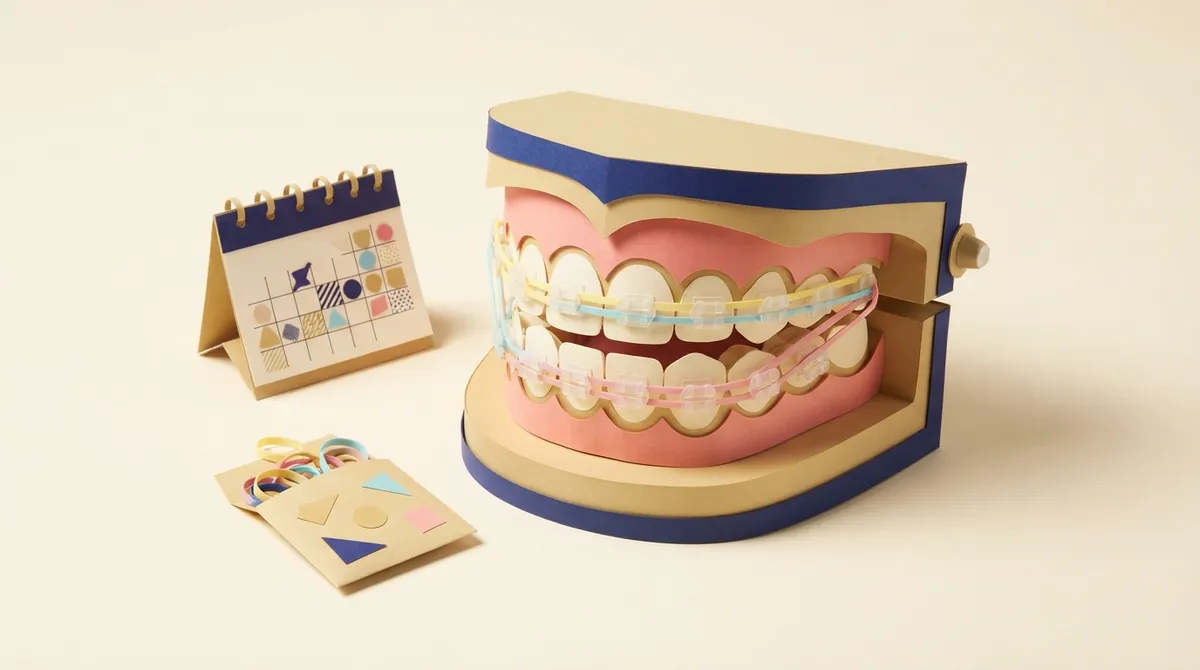
Here’s the short version. Orthodontic rubber bands, also called elastics, are removable bands that hook onto your braces. They add a gentle pull that brackets and wires can’t create alone. That pull helps your upper and lower teeth fit together the way they should.
Whether you’re a parent helping a nervous kid, a teen with a big event coming up, or an adult juggling work and braces, one thing is true for all of us. Elastics only work when they’re worn the right way. Small slip-ups can quietly add weeks or even months to treatment.
In this guide, we’ll explain what rubber bands do, how they work, and the three common mistakes to avoid. Think of this as a friendly chat, not a lecture. You’ve got this!
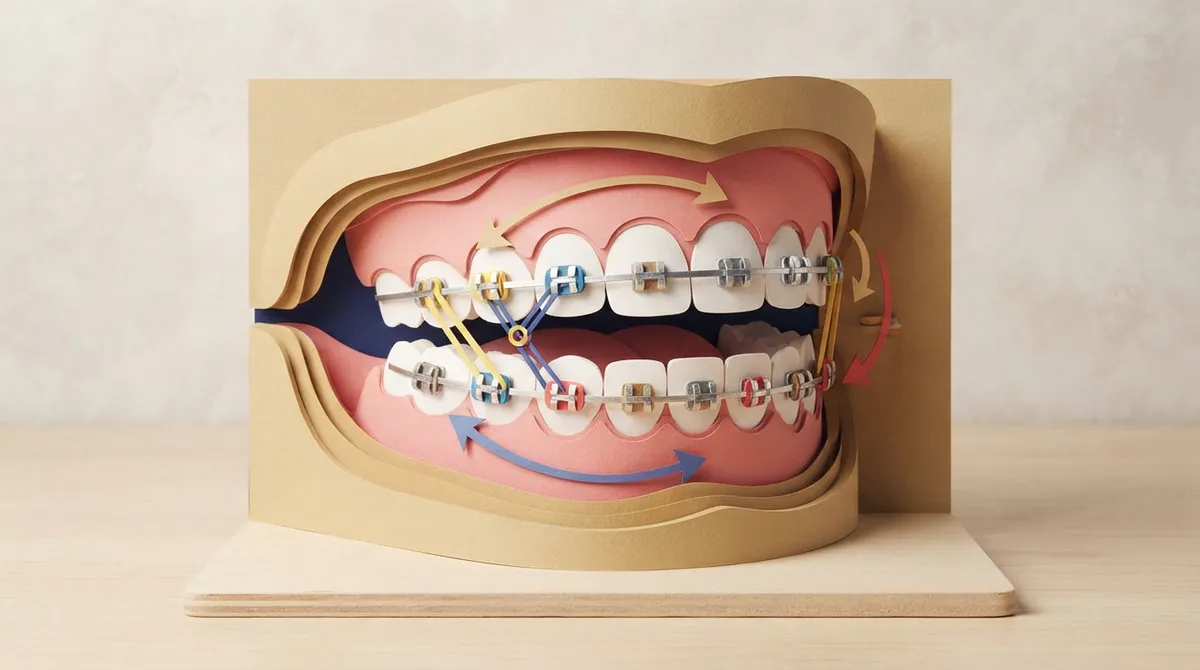
What Orthodontic Rubber Bands Actually Do
Braces are great at moving individual teeth. Brackets and archwires guide each tooth into place, like cars following lanes on a road. But braces alone don’t always fix how your upper and lower teeth meet. That meeting point is called your bite.
That’s where elastics come in. According to the American Association of Orthodontists, elastics attach to hooks on selected brackets and add force in a direction the braces can’t provide on their own. Your orthodontist picks exactly where they attach and which pattern to use.
Here’s what that means in everyday terms:
- They help correct your bite. Elastics guide the upper and lower teeth toward a better fit.
- They guide specific teeth. Some patterns move selected teeth in one direction.
- They work with your braces. Wires and brackets do the main moving, while elastics add the extra pull.
- They’re customized. No two treatment plans use the exact same setup.
Think of elastics as a teammate for your braces. The wires do the steering, and the rubber bands help pull everything into the right position.
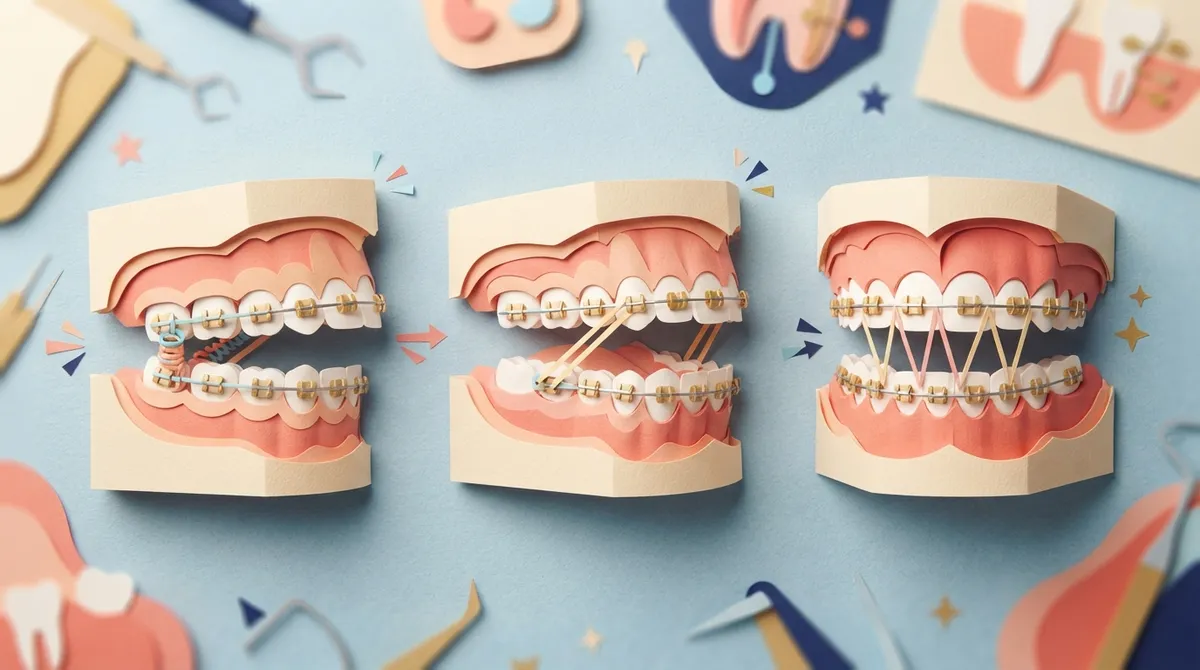
How Rubber Bands Help With Common Bite Problems
Many patients wear elastics to improve a bite relationship. The exact pattern depends on your needs, so your orthodontist’s directions always come first. Here’s a general look at common situations.
| Bite Concern | What It Means | How Elastics May Help |
|---|---|---|
| Overbite | Upper front teeth sit too far over the lower teeth | Bands connect upper and lower teeth to guide the bite into better balance |
| Underbite | Lower teeth sit in front of the upper teeth | Bands are arranged in a different pattern to guide the bite the other way |
| Open bite or crossbite | Teeth don’t meet properly when the mouth closes | Specific band patterns may help certain teeth settle into place |
| Tooth guidance | A tooth needs to move in one specific direction | Bands may be used within one jaw for targeted movement |
Notice the words “may help.” Every mouth is different. Your orthodontist chooses the pattern, size, and wear schedule that fit your bite. If you’re curious about how braces tackle bite issues, our guide on how braces fix a deep overbite is a great next read.
Mistake #1: Wearing Them Only Part of the Time
This is the big one, and we see it with kids, teens, and adults alike. Elastics are easy to forget. They come off for lunch, get tucked in a pocket, and sometimes never make it back in.
Here’s why that matters. Elastics only move teeth while they’re in your mouth. When you take them out for hours, the pull stops. Inconsistent wear can make bite correction less predictable or delay your treatment.
The AAO advises patients to follow their orthodontist’s wear instructions. It doesn’t give one universal hour count, because every plan is different. A 2026 narrative review of orthodontic elastics notes that clinical literature often links roughly 20 to 22 hours of daily wear with more predictable correction. That’s a research finding, not a prescription for everyone. Your orthodontist’s directions always win.
A few friendly tips to stay on track:
- Link it to a habit. Put new bands in right after brushing in the morning and after meals.
- Keep spares everywhere. Stash a few in your backpack, car, desk, and purse.
- Set a phone reminder. A quick alert after lunch can save you weeks.
- Use a mirror check. Glance at your bands when you brush to confirm they’re in place.
Parents, a little teamwork goes a long way. A gentle “Do you have your bands in?” after dinner helps more than you’d think. For more ideas, check out these ways parents can support teens with braces.
Mistake #2: Doubling Up or Changing the Pattern Yourself
It’s a natural thought: “If one band helps, won’t two work faster?” We totally get it, especially when you’re excited to finish treatment. But wearing extra bands, or hooking them in a different pattern than prescribed, is not a shortcut.
Too much force or force in the wrong direction can slow progress. It may also put unwanted pressure on your teeth or jaws. Your orthodontist chose a specific size and pattern on purpose, and changing it can send teeth the wrong way.
Here’s a quick do and don’t list:
- Do use the exact size and type your orthodontist gave you.
- Do hook them on the exact teeth you were shown.
- Don’t add a second band “for extra power.”
- Don’t switch to a different size you found in a drawer.
- Don’t change the pattern because it feels easier.
If your band pattern feels confusing or uncomfortable, that’s a sign to call, not to experiment. Our team is always happy to walk you through it again. At Brockway Orthodontics, we’d much rather answer a quick question than see a plan slow down.
Mistake #3: Never Replacing Worn-Out Bands
Elastics lose their stretch over time. A band that felt snug in the morning may be much weaker by bedtime. A tired band simply doesn’t pull as it should.
The AAO guidance says to replace elastics daily or as directed. Some clinical literature discusses even more frequent changes to keep the force steady. The same 2026 review mentions light, continuous forces of about 70 to 120 grams and at least twice-daily replacement in some treatment settings. These are review-level findings, not a rule for every patient. So instructions can differ from one person to the next.
The takeaway? Ask your orthodontist exactly how often to change yours, and write it down. A few simple habits help:
- Change them on schedule. Swap in fresh bands as often as you were told, even if they look fine.
- Never reuse a stretched band. If it looks loose, floppy, or discolored, replace it.
- Always carry extras. A broken band shouldn’t turn into an all-day gap in wear.
Should You Wear Elastics While Eating and Brushing?
Great question, and it’s one we hear a lot. Many prescriptions call for near-full-time wear, with removal for meals and brushing. But your plan might be a little different.
In general, patients put on and take off their own elastics. Here’s a simple daily rhythm that many families find easy:
- Take bands out before you eat or brush.
- Brush and floss your teeth and braces well.
- Put fresh bands in when you finish.
- Check your mirror to make sure they’re hooked correctly.
Taking bands out for meals protects them from stretching or snapping. It also keeps food from getting trapped. Clean teeth matter just as much as band wear, so if brushing feels tricky, our tips on how to brush teeth with braces can help.
Quick Guide: Wear Time, Replacement, and Spares
Here’s a handy summary you can screenshot. Always follow your own orthodontist’s directions, since this is general information only.
| Topic | General Guidance | Why It Matters |
|---|---|---|
| Wear time | Often near-full-time; follow your plan exactly | Teeth move only while the bands pull |
| Replacement | Daily or as directed; some plans call for more often | Bands lose tension with use |
| Band size | Use only the type given to you | The wrong size changes the force |
| Spare bands | Keep extras at home, school, and work | Prevents gaps in wear |
| Eating and brushing | Usually removed, then replaced right after | Protects bands and keeps teeth clean |
What If a Band Breaks or You Run Out?
It happens to everyone, so please don’t stress! Bands snap, fly across the kitchen, and vanish into couch cushions. Here’s what to do:
- Replace it right away with a fresh band from your spare stash.
- Don’t wait until bedtime. Missing hours adds up.
- Call us if you run out. We’ll get you more so you don’t go without.
- Tell us about breakage patterns. If a band keeps snapping in the same spot, we may need to check the hook or adjust something.
You should also reach out if you notice a change in your bite, if the pattern feels unclear, or if you can’t follow the instructions for any reason. Honest communication helps us fix problems early. If something feels urgent, such as a poking wire or a broken bracket, see our guide on orthodontic emergency fixes to try before panicking.
How to Tell If You’re Wearing Elastics Correctly
Not sure you’re doing it right? Run through this friendly checklist:
- Your bands hook onto the exact teeth your orthodontist showed you.
- You’re using only the size and type you were given.
- You change them as often as directed.
- You wear them for the full time prescribed.
- You have spare bands within arm’s reach.
- You can close your mouth comfortably without struggling.
It’s also normal to feel mild soreness when you first start elastics or switch patterns. That usually eases up. If you want to know more, our article on truths about braces pain breaks down what’s normal and what’s not.
Not sure whether you’re doing it right? Bring your bands to your next visit and ask us to check. That’s what we’re here for! Regular visits also help us catch small issues early, which is why orthodontic checkups matter so much.
A Note for Parents, Teens, and Adults
Parents: Kids and teens are busy, and bands are easy to forget. Try a simple routine, like a fresh pair after breakfast and after dinner. Celebrate small wins. A little encouragement beats nagging every time.
Teens and young adults: Got a graduation, a dance, or a big trip coming up? Consistent band wear is one of the best ways to stay on schedule. It’s totally worth it when you see that finished smile.
Adults: Busy workdays make it tempting to skip bands during meetings or travel. Keep a small case in your bag and set quiet phone reminders. Your bite correction depends on steady wear just as much as a teen’s does. If you’re weighing options, you might enjoy reading about clear aligners vs braces to see which fits your lifestyle.
Anyone retreating after relapse: Elastics may be part of your updated plan. The same rules apply: wear them as prescribed, and keep spares handy.
Why Personalized Care Makes the Difference
Elastics are a small tool with a big job. Choosing the right pattern, size, and wear schedule takes training and careful attention to your unique bite. That’s why DIY adjustments just don’t work well.
At Brockway Orthodontics, Dr. Brockway takes time to explain every step of your plan. She listens to your goals and shows you exactly how to place your bands, so you feel confident at home. We use modern technology, including digital impressions and 3D imaging, to plan treatment precisely. Families across Clearwater trust us because we treat every patient like part of our community. Curious what neighbors say? Read what patients share when you visit us on Google — Brockway Orthodontics.
You can also learn more about the whole treatment journey in our article on what to expect with braces at every step. For general oral health guidance, the American Dental Association offers helpful resources too.
Ready to Make Your Elastics Work for You?
Orthodontic rubber bands may be tiny, but they pack real power. They help correct your bite, guide teeth into place, and keep your treatment moving. The three mistakes to remember are wearing them inconsistently, doubling up or changing patterns, and forgetting to replace tired bands.
Stay consistent, stick to your plan, and don’t be shy about asking questions. Every great smile starts with small, steady habits.
Have questions about your elastics, or thinking about starting treatment? Book your free consultation online and let’s chat about your smile goals. Prefer to talk first? Contact us anytime. We can’t wait to meet you!
FAQs
Q: What do rubber bands on braces do?
A: They’re small removable elastics that hook onto your braces and add a gentle pull that wires alone can’t give. Their main job is to help your upper and lower teeth fit together properly, and your orthodontist picks the exact pattern for you.
Q: How many hours a day should I wear my braces rubber bands?
A: It depends on your treatment plan, so always follow your orthodontist’s instructions. Many prescriptions call for near-full-time wear, and some research links about 20 to 22 hours a day with more predictable results, but that’s not a rule for everyone.
Q: How often should I change the rubber bands on my braces?
A: Most guidance says to replace them daily or as directed, since bands lose their stretch with use. Some plans call for more frequent changes, so ask your orthodontist exactly what’s right for you.
Q: Can wearing extra rubber bands make braces work faster?
A: Nope, and we know it’s tempting! Extra bands or a different pattern can apply unwanted force, which may slow your progress or put stress on your teeth and jaws. Stick with the size and pattern you were given.
Q: What should I do if a rubber band breaks or I run out?
A: Put in a fresh spare band right away so you don’t lose wear time. If you’re out of bands or can’t follow your instructions, give our office a call and we’ll help you get back on track.
Our Service Area