Key Takeaways
-
Rinse vigorously with water for 20 to 30 seconds first, since this often clears loose food without any tools.
-
Use a soft toothbrush and a tiny interdental brush slid gently under the wire, never forcing it into a tight gap.
-
Floss under the archwire with a floss threader, then slide the floss up and down along the side of each tooth.
-
Never use toothpicks, pins, or fingernails, and never pull or bend the wire, since these can cut gums or loosen brackets.
-
Stop digging and call your orthodontist if food won't come out, or if a bracket or wire feels loose, bent, or painful.
-
Brush after meals when possible, floss at least once a day, and keep a small braces kit handy to prevent food from getting trapped.
We have all been there. You are enjoying a snack, and suddenly a tiny piece of food is wedged right under your wire. It feels huge, and it is all you can think about. If you have braces, you are not alone, and the good news is that you can fix this at home with the right tools and a gentle touch.
Learning how to remove food stuck in braces is a skill every patient picks up quickly. Brackets, wires, and tight spaces between teeth are perfect hiding spots for crumbs, seeds, and stringy bits. Parents, teens, and adults all deal with it, whether you are in middle school or midway through a busy work week.
In this guide, we walk you through the safest steps, the best tools, and the habits that keep your smile healthy. We also share when to stop and call your orthodontist. Let’s get that stubborn snack out and get you back to smiling.

Why Food Gets Stuck in Braces So Easily
Braces add lots of new surfaces to your teeth. Each bracket has small edges, and the archwire creates a narrow gap that traps food. Foods like popcorn hulls, chips, rice, and leafy greens love to hide there.
Food usually collects in a few common spots:
- Around the brackets: Tiny crumbs settle along the edges and the gumline.
- Under the archwire: Stringy or fibrous foods slip beneath the wire.
- Between teeth: The wire makes it harder to floss the old way.
- Behind the back molars: Bands and tubes catch bits that are hard to see.
Removing trapped food is not only about comfort. The American Association of Orthodontists (AAO) notes that food and plaque left around braces can contribute to cavities, swollen gums, bad breath, and even permanent white marks on teeth. So a quick, gentle cleanup really does protect your results.
The Gentle Step-by-Step Method to Remove Food Stuck in Braces
The safest approach is to start simple and only move to the next step if you need to. Here is the order that works best for most patients.
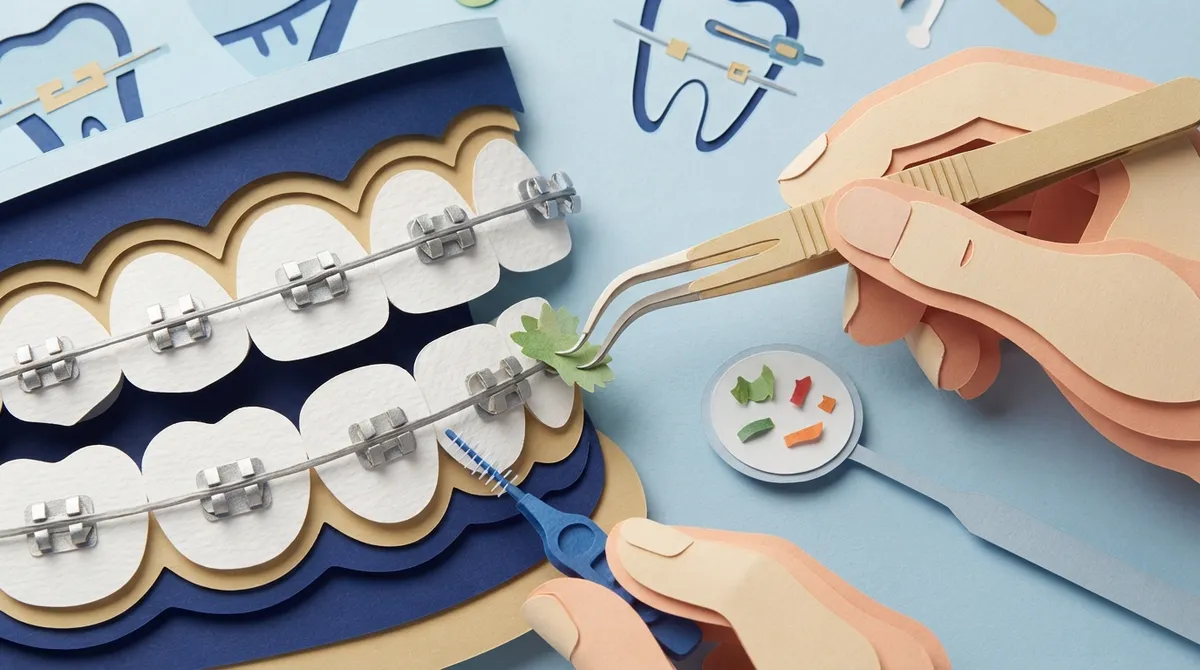
- Rinse and swish first. Take a big sip of water and swish it hard around your mouth for 20 to 30 seconds. Push the water through your teeth like a tiny pressure wash. Often this alone clears loose bits.
- Check in a mirror. Good lighting helps. Look at the area to see exactly where the food is stuck. This keeps you from poking around blindly.
- Use a soft toothbrush. Brush gently around the brackets and along the gumline. Angle the bristles toward the gums and then toward the edges of the teeth. Do not scrub hard or try to force food out.
- Try an interdental brush. This tiny brush looks like a little pipe cleaner. Slide it gently under the wire and around the bracket. Never force it into a tight gap.
- Floss with a threader. For food caught between teeth, pass floss under the archwire with a floss threader or use orthodontic floss. Slide it up and down along the sides of each tooth.
- Finish with a final rinse. Swish water again to wash away anything you loosened.
Take your time. Most stuck food comes out in under two minutes when you stay calm and gentle. If you want a deeper walkthrough of daily technique, our guide on how to brush teeth with braces covers each step in detail.
The Best Tools for Removing Food From Braces
You do not need a bathroom full of gadgets. A few smart tools do most of the work. Here is a quick comparison to help you choose.
| Tool | Best For | How to Use It | Tip |
|---|---|---|---|
| Soft-bristled toothbrush | Brackets and gumline | Brush gently in small circles | Replace it every 3 months or sooner if bristles fray |
| Interdental brush | Under the wire and around brackets | Slide in gently, then wiggle slightly | Pick a size that fits without forcing |
| Floss with a threader | Food between teeth | Thread under the wire, then floss each side of the tooth | Use a fresh section for each gap |
| Orthodontic floss | Easy threading | Use the stiff end to pass under the wire | Great for beginners and kids |
| Water flosser | Rinsing loose debris | Aim at the gumline on a comfortable setting | An extra helper, not a replacement for brushing and flossing |
A water flosser can be a fun addition, especially for teens who find string floss tricky. It helps rinse away loose debris around braces. Just remember that it supports your routine and does not replace brushing and flossing. Always follow the device instructions and start on a lower setting.
What Not to Use When Food Is Stuck
When something is bugging you, it is tempting to grab whatever is nearby. Please resist! The wrong tool can hurt your mouth or damage your braces.
- Toothpicks: They can splinter, poke your gums, or bend a wire.
- Pins, knives, or metal picks: Sharp objects can cut your gums and scratch teeth.
- Your fingernails: They can scratch your gums and introduce germs.
- Pulling or bending the wire: This can loosen a bracket or shift your treatment.
Think of your braces like a precise system. Every wire and bracket is placed on purpose, so gentle care protects the work you have already done. If you want to know what else can cause trouble, our article on orthodontic bracket mistakes that slow your progress is a helpful read.
How to Floss With Braces and a Floss Threader
Flossing with braces feels awkward at first, and that is completely normal. After a week or two, it gets much easier. Flossing is also part of your routine daily care, not just an emergency fix. The AAO advises flossing at least once a day and brushing after meals when possible.
Here is a simple way to floss with a threader:
- Cut about 18 inches of floss and thread one end through the loop of the floss threader.
- Slide the threader gently under the archwire between two teeth.
- Pull the floss through until you can hold both ends.
- Wrap the floss in a gentle C shape around one tooth and slide it up and down along the side.
- Do the same on the neighboring tooth, then pull the floss out sideways.
- Move to the next gap and repeat with a clean section of floss.
Be patient with the gumline. If your gums bleed a little at first, keep flossing gently every day. Healthy gums usually stop bleeding as plaque goes away. If bleeding continues or your gums look very swollen, let us know at your next visit. For extra tips, check out our easy steps for flossing with braces.
Tips for Parents Helping Kids and Teens
If you are a parent, you know kids do not always love the cleanup part of braces. A few friendly tricks make life easier for everyone.
- Make a braces kit. Pack a travel toothbrush, floss threaders, and a small mirror in a pouch for the backpack.
- Rinse after lunch. A quick water swish in the school bathroom stops food from sitting all day.
- Turn it into a habit. Pair brushing with something they already do, like their favorite show or music.
- Praise the effort. A little encouragement goes a long way with teens.
Our tips on helping kids build appliance care habits offer more ideas that really work. And if lunchtime is a trouble spot, try these braces-friendly school lunch ideas.
Tips for Busy Adults and Young Professionals
If you are juggling meetings, deadlines, and a social life, you may not love excusing yourself to deal with a piece of spinach. A little planning helps you stay confident.
- Keep a small kit in your desk or bag with a travel brush, interdental brush, and floss threaders.
- Rinse with water after coffee, snacks, or lunch.
- Check your smile in a mirror before a big call or meeting.
- Choose softer, braces-friendly foods when you know you will be on the go.
We also share practical ideas in our post on braces hygiene mistakes at work and easy fixes.
Foods That Love to Get Stuck (and Smarter Swaps)
Some foods are just more likely to cause trouble. You do not have to give up your favorites forever, but knowing the common culprits helps you plan.
| Sticky Culprit | Why It Gets Stuck | Smarter Swap |
|---|---|---|
| Popcorn | Hulls slip under wires and gums | Soft cheese and crackers |
| Chewy caramel | Sticks to brackets and can pull them loose | Smooth chocolate that melts |
| Raw leafy greens | Stringy bits wrap around brackets | Cooked or chopped greens |
| Corn on the cob | Kernels wedge into small gaps | Corn cut off the cob |
| Tough bread crusts | Tear into fibers that catch on wires | Soft rolls or sandwich bread |
For more ideas, our guide on what you can eat with braces is full of tasty options. You can also explore braces-friendly snacks that are easy to pack.
When to Stop and Call Your Orthodontist
Most stuck food comes out with gentle cleaning. But there are times when the best move is to stop and ask for help. Please contact your orthodontist if:
- The food will not come out after careful, gentle cleaning.
- A bracket or wire feels loose, bent, or out of place.
- You feel sharp pain, or your gums become very swollen or sore.
- A wire is poking into your cheek or gums.
Do not keep digging if the food will not budge. Extra force can make a small problem bigger. If you are unsure whether it counts as urgent, our guide on when you need an emergency orthodontist appointment can help you decide. For a loose or broken piece, read about the right loose bracket fix before your visit.
A professional can remove the food, check your appliance, and make sure everything is working as it should. That is far better than guessing at home with the wrong tool.
Building a Daily Routine That Prevents Food Traps
The best way to deal with stuck food is to make it happen less often. A simple daily routine keeps your teeth and braces cleaner and your treatment on track.
- Brush after meals when possible. If you cannot brush, rinse well with water.
- Floss once a day. Use a threader or orthodontic floss.
- Use an interdental brush. Clean around each bracket and under the wire.
- Add a water flosser if you like. It is a helpful extra, not a replacement.
- Keep your checkups. Regular visits help catch small issues early.
Many patients also ask whether a power brush helps. Our post on electric toothbrush with braces mistakes to stop making explains how to use one wisely. If you want to avoid common slip-ups, read about brushing mistakes that wreck braces.
Cleaning Up Quickly When You Are Away From Home
Food gets stuck at the worst times, like at a restaurant, in class, or on a road trip. Here is a quick plan for when you cannot get to your bathroom sink.
- Take a sip of water and swish it around your mouth for 20 to 30 seconds.
- Find a restroom mirror and look for the stuck spot.
- Use your travel interdental brush or a floss threader if you have them.
- Rinse again and give your teeth a quick check.
Packing a small kit makes this easy. For school outings and overnight trips, our guide on how to pack an orthodontic care kit lists everything you need.
How Brockway Orthodontics Helps Clearwater Families
At Brockway Orthodontics, we believe a great smile starts with great habits. Dr. Brockway and our team love teaching patients how to care for braces in a friendly, easy-to-understand way. We offer metal braces, ceramic (clear) braces, and Spark™ Clear Aligners for kids, teens, and adults across Clearwater, Florida.
If you ever feel unsure about a stuck piece of food or a bracket that does not feel right, we are here to help. We would rather you ask than struggle at home. You can also see what our patients say by visiting our Brockway Orthodontics location on Google.
For general oral health guidance, the American Dental Association is a trusted resource, and the Florida Association of Orthodontists shares helpful information for local families.
Final Thoughts: Stay Calm, Stay Gentle
Knowing how to remove food stuck in braces takes the stress out of snack time. Start with a good rinse, then use a soft brush, an interdental brush, or floss with a threader. Skip the toothpicks and sharp tools, and never pull on your wires. If the food stays put or something feels loose, bent, or painful, stop and call your orthodontist.
With a little practice, you will clear trapped food in no time and keep your smile healthy all the way to the big reveal. Have questions about your braces or want to explore treatment for your family? Book your appointment online or contact our friendly team today. We cannot wait to help you smile with confidence.
FAQs
Q: How do you get food out from under the wire on braces?
A: Start by rinsing and swishing water to loosen it. Then slide a small interdental brush gently under the wire, or pass floss under it with a threader. Go slowly and never force anything into a tight space.
Q: Can I use a toothpick to remove food stuck in braces?
A: We recommend skipping toothpicks. They can splinter, poke your gums, or bend a wire. A soft toothbrush, interdental brush, or floss with a threader is much safer and just as effective.
Q: Can a water flosser remove food stuck in braces?
A: A water flosser can help rinse away loose debris around brackets and wires. It works best as an extra helper, not a replacement for brushing and flossing. Use a comfortable setting and follow the device instructions.
Q: When should I call my orthodontist about food stuck in my braces?
A: Call if the food will not come out after gentle cleaning, or if a bracket or wire feels loose, bent, or painful. Stop trying to dislodge it yourself in those cases. Your orthodontist can safely remove it and check your braces.
Q: How often should I brush and floss while wearing braces?
A: The American Association of Orthodontists advises brushing after meals when possible and flossing at least once a day. If you cannot brush, rinse well with water. A steady routine helps prevent cavities, swollen gums, and white marks on your teeth.
Our Service Area