Key Takeaways
-
No orthodontist can promise a finished smile by a fixed event date; timelines depend on your bite, teeth, oral health, and how well you follow your plan.
-
Many braces cases take about 12 to 24 months (AAO), while FDA cites roughly 6 to 18 months for clear aligners, but these are general ranges, not personal predictions.
-
Aligners must generally be worn about 20 to 22 hours a day, and setup (scans, planning, manufacturing) can take several weeks before treatment even starts.
-
Start with an early consultation as soon as possible, since treatment finishing within under 3 months before an event is often limited to comfort planning and scheduling.
-
Ask your orthodontist to schedule adjustments away from event week, since new braces or aligners can cause temporary soreness.
-
Never stop treatment early or skip your retainer for an event; stopping early can compromise results and let teeth shift.
You have a wedding, graduation, or big reunion on the calendar, and you want your best smile in the photos. Great news: that’s a wonderful reason to start orthodontic care. Here’s the honest part, though. Setting realistic orthodontic timelines for special events means knowing that no one can promise a finished smile by a fixed date.
Many people assume clear aligners are always faster than braces. Others think braces are the only way to hit a deadline. The truth sits in the middle. Your timeline depends on your bite, your teeth, your oral health, and how well you follow your plan.
In this friendly guide, we compare braces and aligners side by side for event planning. You’ll learn what each option can do, how long things typically take, and how to plan your appointments around the big day. Think of it as a roadmap to help you walk into your event feeling calm and confident.
Why Event Deadlines Need a Realistic Plan
Orthodontic treatment is personal. Two people with similar-looking smiles can need very different amounts of time. The reason is simple: what you see on the surface is only part of the story. Bite problems, jaw position, and root movement all affect the schedule.
According to the American Association of Orthodontists (AAO), many braces cases take about 12 to 24 months. Mild alignment concerns may take less time, while complex bite or jaw problems can take years. The FDA gives a broad range of about 6 to 18 months for clear aligners and an average of about two years for braces.
Those numbers are general ranges, not guarantees for you. That’s why the best first step is an early exam with an orthodontist who can estimate your own timeline.
Event-Ready Goals vs. Healthy-Bite Goals
A short-term cosmetic goal may differ from the time needed for a healthy, stable bite. You might want straighter front teeth for photos, while your orthodontist is also thinking about how your teeth fit together long term.
A good orthodontist will explain what can safely be achieved by your event date. Sometimes a staged or limited plan makes sense. Other times, the smartest move is to start now and enjoy the event as a milestone along the way.
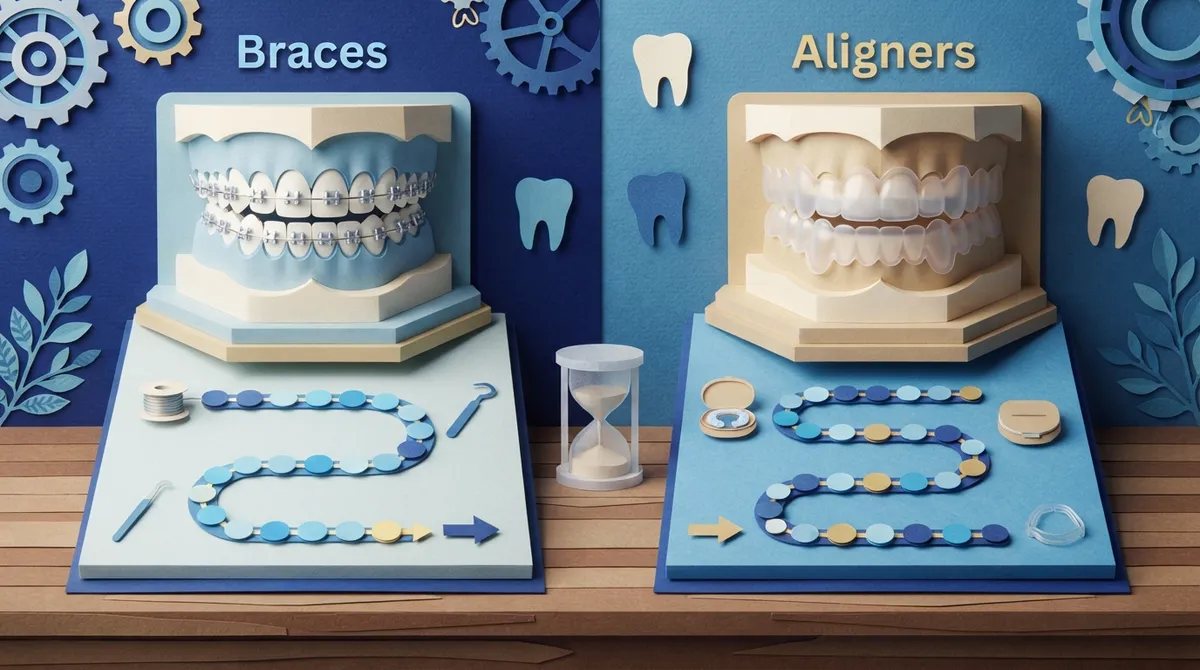
Braces vs. Aligners: A Side-by-Side Look
Both options can create beautiful results. They simply work differently, and each has strengths when a calendar is involved. Here is a quick comparison.
| Factor | Braces | Clear Aligners |
|---|---|---|
| General timeframe | Many cases take about 12 to 24 months (AAO); FDA cites about two years on average | FDA cites about 6 to 18 months, depending on the correction needed |
| Setup time | Often start soon after planning | Scans, planning, and manufacturing can take several weeks; AAO notes up to six weeks in some offices |
| Role of the patient | Fixed in place, so wear time is built in | Must be worn about 20 to 22 hours a day, or as directed |
| Good for | Many bite types, including more complex cases | Suitable cases, often milder to moderate alignment concerns |
| Event-week flexibility | Can’t remove them, so schedule adjustments wisely | Removable, but only as your orthodontist directs |
Notice what this table does not say. It does not say aligners are automatically faster. The two ranges above are not direct predictions for any one person. Your case decides the winner, not the brand of appliance.
The Case for Braces When a Date Is Looming
Braces are bonded to your teeth, so they work around the clock. There’s no wear-time guesswork. For busy people, that can be a relief.
Where Braces Shine
- Built-in consistency: Braces work all day, every day, even if life gets hectic.
- Wide case range: They can address many bite and alignment problems, including complex ones.
- Fewer daily decisions: You don’t need to remember to put anything back in.
Things to Plan Around
New braces can cause temporary soreness. Loose brackets can also pop up and interrupt your schedule. If your event is close, ask your orthodontist when to schedule adjustments so you’re not feeling tender on the big day.
Curious about the day-to-day experience? Our guide on 6 truths about braces pain every patient should know can help you feel prepared.
The Case for Clear Aligners When a Date Is Looming
Clear aligners are popular with teens, young adults, and busy professionals. They’re discreet, and you can take them out for meals and brushing. That flexibility is a big reason people love them.
Where Aligners Shine
- Discreet look: They’re nearly invisible, which many people prefer in photos and meetings.
- Removable design: You can eat and clean your teeth without working around brackets.
- Digital planning: You can preview the plan before you begin.
Things to Plan Around
Aligners only work when they’re in your mouth. They generally need to be worn about 20 to 22 hours per day, or as your orthodontist directs. Inconsistent wear can delay progress, and a lost tray can slow things down too.
There’s also setup time. Scans, planning, manufacturing, and delivery can take several weeks before you even start. If you want to learn how the process works, see how removable aligners straighten teeth.
At Brockway Orthodontics in Clearwater, we offer Spark™ Clear Aligners, a more affordable alternative to Invisalign, along with metal and ceramic braces. Dr. Brockway will help you pick the option that fits both your smile and your schedule.
How Far in Advance Should You Start?
The honest answer: as early as you possibly can. A consultation should happen well before your event so you have time to plan, adjust, and ask questions. Don’t assume full treatment can be finished by your date.
Here’s a simple way to think about it, using general ranges only. Your own estimate will come from your exam.
| Time Before Event | What Is Often Realistic |
|---|---|
| Less than 3 months | Limited changes at best; focus on a consultation, comfort planning, and event-week scheduling |
| 3 to 12 months | Visible progress may be possible for some mild cases, but a finished result is not guaranteed |
| 12 to 24 months | Many braces cases fall in this range; a better window for completing treatment |
| More than 24 months | Comfortable window for most cases, including more complex ones |
Keep in mind that these are broad examples. Mild alignment concerns can move faster, while complex bites can take longer than any chart shows.
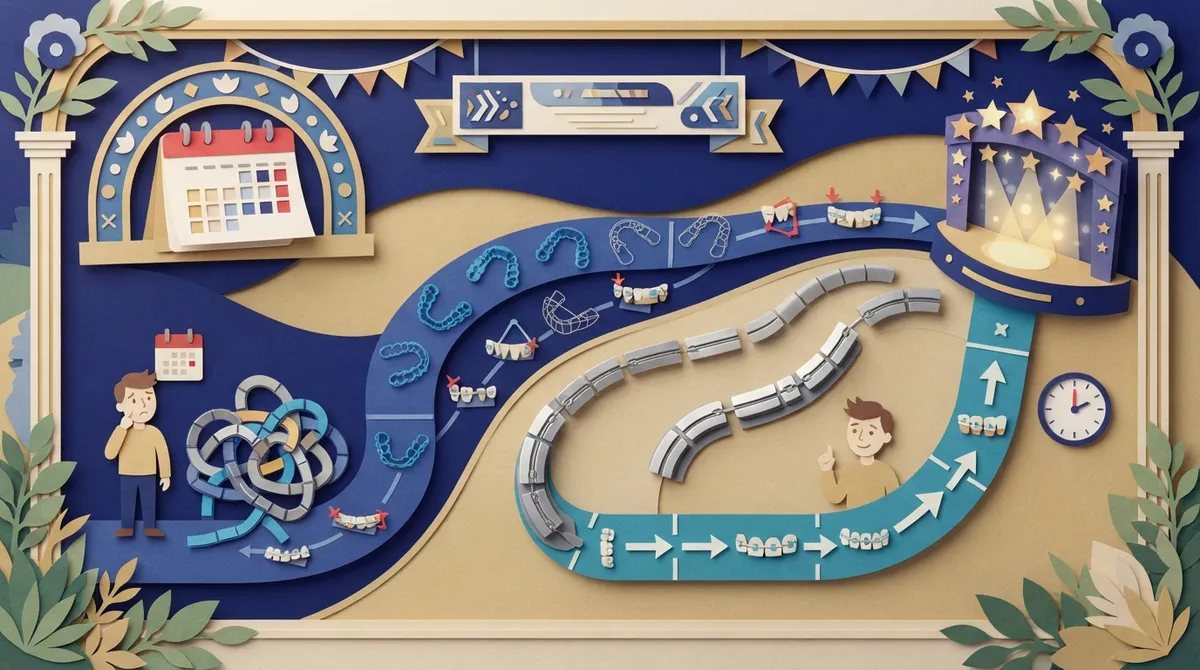
Your Step-by-Step Event Planning Timeline
Use this simple roadmap to stay organized. It works whether you choose braces or aligners.
- Book an early consultation. Bring your event date and share your goals. You can book an appointment online to get started.
- Ask for a personal estimate. Ask what is realistic by your date and what the likely milestones are.
- Choose your appliance together. Your orthodontist will weigh your bite, your lifestyle, and your timeline.
- Allow for setup time. Aligners may take several weeks to arrive after scanning and planning.
- Keep every check-in. Visits are commonly scheduled every 6 to 10 weeks, though the interval varies by patient.
- Plan event-week appointments. Move adjustments or new-tray changes away from the big day when possible.
- Make a backup plan. Talk through what happens if treatment is still in progress at your event.
Want to know what that first visit looks like? Read your first orthodontist appointment: what to expect in 2026.
What Can Slow Your Timeline Down
Knowing the common speed bumps helps you avoid them. Small habits add up over a year or two.
- Inconsistent aligner wear: Skipping hours means teeth move more slowly.
- Missed appointments: Gaps between visits can push your schedule back.
- Loose brackets or lost aligners: These interrupt progress until they’re fixed or replaced.
- Dental or gum problems: Cavities and gum concerns may need attention first.
- Case complexity: Bigger bite or jaw problems simply need more time.
If you want a deeper look at timing, see 12 factors that shape your braces timeline.
Special-Event Do’s and Don’ts
Event excitement can tempt people to take shortcuts. Please don’t. A few smart choices protect your results.
Do This
- Talk to your orthodontist about your event date, photos, and comfort.
- Ask whether adjustments should be scheduled away from the event week.
- Follow comfort-care advice if you feel soreness after a new appliance.
Skip This
- Don’t stop treatment early just for the event.
- Don’t remove braces or leave aligners out for long stretches without your orthodontist’s advice.
- Don’t skip your retainer once active treatment ends.
Stopping early can compromise your result, and teeth can shift. Retainers are needed after active treatment to maintain results. Our guide on why retainers matter after braces explains why.
Already in Treatment? Here’s How to Prep
If you’re already wearing braces or aligners, you’re ahead of the game. A few simple moves can make your event week smoother.
- Call early: Ask your orthodontist to plan visits around your date.
- Keep your appliance clean: Fresh, tidy braces or aligners look better in photos.
- Ask about comfort: Soreness is usually temporary, but planning helps.
- Keep wearing your aligners: Wear them as directed, even in the weeks before the event.
If you’d like a simple routine for daily care, check out how to clean your braces properly for a healthy smile.
Which One Wins for Your Event?
Here’s the fun truth: neither one wins every time. The better choice depends on your bite and your habits. Braces tend to suit people who want a hands-off approach or who have more complex needs. Aligners tend to suit people with suitable cases who can stay disciplined with wear time.
If you’re torn, our comparison on braces vs. clear aligners: which works faster goes deeper. You can also read how to plan orthodontic treatment before a wedding for more event-specific tips.
For general information about dental and orthodontic care, the American Dental Association is a trusted resource, and the Florida Association of Orthodontists offers helpful state-level information.
Ready to Plan Your Smile Around Your Big Day?
The best time to start is today. A calm, honest conversation with an orthodontist gives you a clear picture of what’s possible and what a smart backup plan looks like. Dr. Brockway takes the time to listen to your goals and explain your options in a friendly, easy-to-understand way. See what families say about us when you visit us on Google — Brockway Orthodontics.
Whether you’re getting ready for a wedding, graduation, or reunion, we’re here to help you build a plan that fits your life. Book your appointment online or contact our Clearwater team to get started. Your future smile is closer than you think.
FAQs
Q: How far in advance should I start braces before my wedding?
A: As early as you can! Many braces cases take about 12 to 24 months, so an early consultation gives you the best shot at a realistic plan. Your orthodontist can give you a personal estimate after an exam, but a finished smile by a fixed date can’t be promised.
Q: Are clear aligners faster than braces for a special-event deadline?
A: Not automatically. The FDA gives a broad range of about 6 to 18 months for aligners, but that doesn’t mean aligners are faster for you. Setup time, wear habits, and the type of correction needed all play a part.
Q: Can I take my aligners out for wedding photos or the reception?
A: Please check with your orthodontist first. Aligners generally need to be worn about 20 to 22 hours a day, and leaving them out can slow your progress. Your orthodontist can suggest a smart plan for the event day.
Q: Can braces be removed temporarily for an important event?
A: No, and you shouldn’t try to remove them yourself. Taking braces off early can compromise your results, and teeth may shift. Talk to your orthodontist about scheduling adjustments away from your event week instead.
Q: Will braces or a new aligner hurt right before my event?
A: New braces and new aligners can cause temporary soreness. The good news is that planning ahead helps! Ask your orthodontist to schedule adjustments away from the event week, and follow their comfort-care advice.
Our Service Area