Key Takeaways
-
Start orthodontic planning as soon as your wedding date is set, since many braces cases take 12 to 24 months and clear aligner cases about 6 to 18 months.
-
Ask your orthodontist for a realistic timeline in writing, including appointment dates, expected finish time, and the retainer plan, and avoid any guarantee of a result by a fixed date.
-
Get a dental cleaning and check-up before treatment starts, and finish any needed dental work, since healthy teeth and gums make treatment safer.
-
Neither braces nor clear aligners are automatically faster; aligners are less visible and removable, but they require about 20 to 22 hours of daily wear to progress.
-
Don't remove braces or aligners just for the wedding without your orthodontist's approval, since stopping early can leave teeth unfinished or cause them to drift.
-
Avoid major appliance changes right before the wedding and keep orthodontic wax and soft foods handy, since adjustments are often scheduled every 6 to 10 weeks and can cause temporary soreness.
Congratulations on your engagement! Between choosing flowers, tasting cake, and finalizing the guest list, it’s no surprise that your smile is on your mind too. Maybe you want straighter teeth in the photos. Maybe you’re the parent of the bride or groom. Or maybe you’re a teen or young adult with a big family wedding coming up.
Here’s the friendly truth: orthodontic treatment planning before a wedding works best when it starts with your clinical needs and your event date together. It isn’t about promising a perfect result by a fixed deadline. It’s about knowing what is realistic and building a smart plan around it.
In this guide, we’ll walk you through each step. You’ll learn when to start, how braces and clear aligners compare, and how to schedule visits so you’re comfortable on the big day. We’ll also cover retainers and what to do if time is short. Let’s get your smile wedding-ready the right way.

Why Wedding Timing Matters for Orthodontic Care
A wedding date feels fixed. Teeth, however, move on their own schedule. Every mouth is different, and the way your teeth and bite fit together decides how long treatment takes.
The American Association of Orthodontists (AAO) says many braces cases take about 12 to 24 months. Mild alignment concerns may take less time. Complex bite problems can take longer. The FDA’s consumer guidance gives a broad range too: clear aligner treatment may take about 6 to 18 months, while braces average about two years. These are general estimates, not personal predictions.
That’s why the earlier you start, the more options you have. A short-term cosmetic goal may not match the time needed for full treatment. An orthodontist has to examine your teeth and bite before estimating what can safely be done by your event.
How to Plan Orthodontic Treatment Before a Wedding: Step by Step
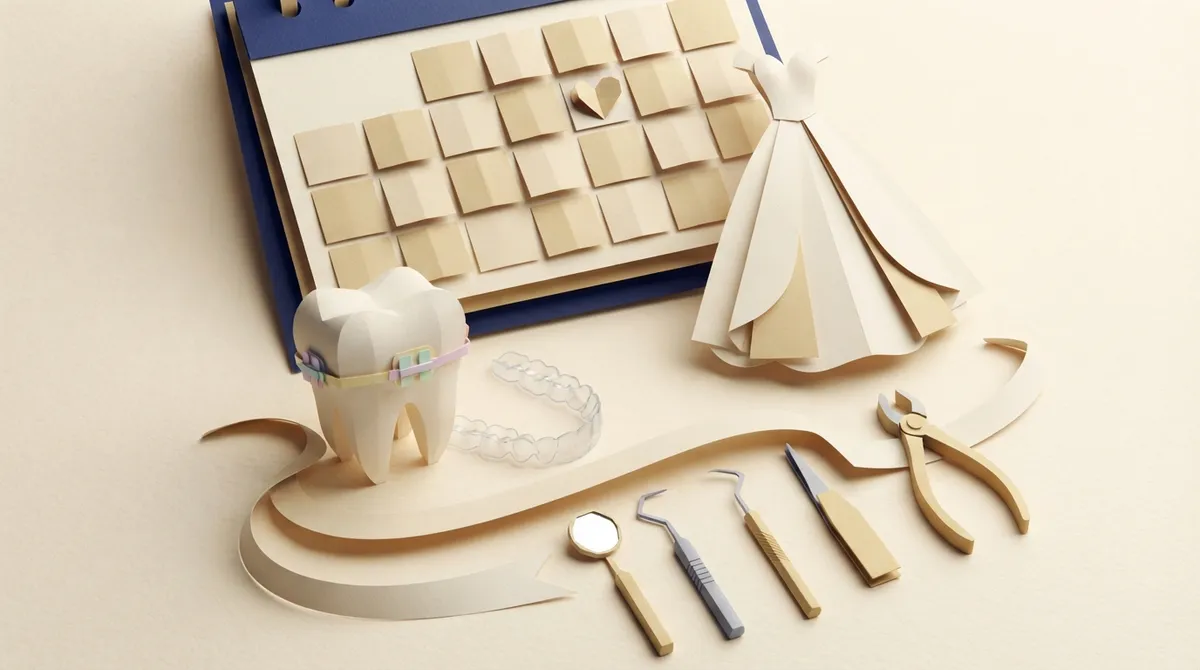
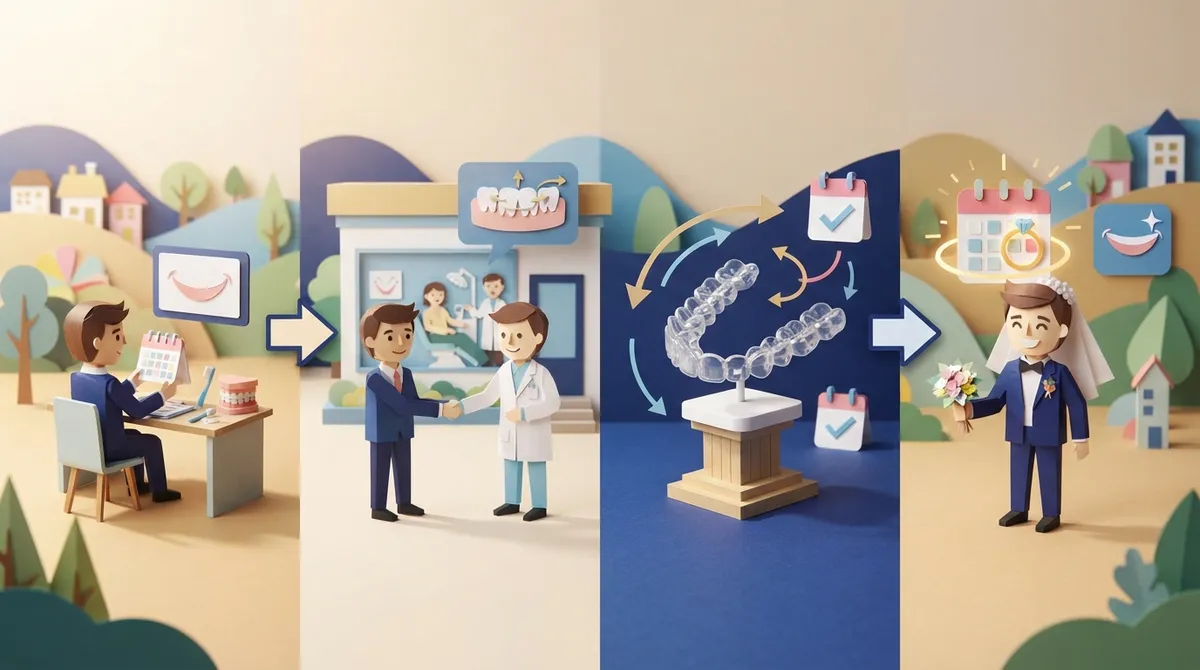
Think of this as your smile timeline. Follow these steps in order, and you’ll avoid most of the stress.
- Count back from your wedding date. Write down the date, then note any events before it, like showers, engagement photos, and the rehearsal dinner.
- Book a consultation as early as possible. Ideally, do this well before the wedding. Your orthodontist needs to look at your teeth and bite first.
- Get a dental cleaning and check-up. The AAO advises this before treatment starts. Healthy teeth and gums make treatment safer.
- Compare your treatment options. Ask about braces, ceramic braces, and clear aligners, and which ones suit your case.
- Ask for a realistic timeline in writing. Include appointment dates, expected finish time, and the retainer plan.
- Plan around the big week. Avoid scheduling a major appliance change right before the wedding if you can.
Not sure what a first visit looks like? Our guide on how to prepare for your orthodontist consultation covers questions to bring and what to expect.
How Early Should You Start?
There’s no magic number for everyone. Still, a good rule is to start as soon as you can once the date is set. More lead time gives your orthodontist room to plan treatment without rushing.
Here is a simple way to think about it. These are general guides only, and your own plan may differ.
| Time Until Wedding | What It Usually Means | Best Next Step |
|---|---|---|
| 18 to 24+ months | Often enough time for many full treatment plans, including braces | Book a consultation now and discuss all options |
| 9 to 18 months | May fit mild to moderate alignment cases, depending on your bite | Get an exam quickly and ask what is realistic |
| Under 9 months | Full treatment may not finish in time; focus may shift to progress and comfort | Ask what can be safely done and how to time visits |
Remember, treatment length depends on your bite, the tooth movements needed, the appliance, and how well you follow the plan. To learn more about timing, see how fast orthodontic treatment can really work.
Braces vs. Clear Aligners for a Wedding Timeline
This is the question we hear most. Which one is better for a wedding? The honest answer is that it depends on your teeth and your goals. Neither is automatically faster.
Clear Aligners
Clear aligners are less noticeable in photos. They are also removable for meals and brushing. That can feel easier during wedding events with lots of food and toasts.
However, aligners are not right for every case. They generally need to be worn about 20 to 22 hours a day. If you skip wear time, progress slows down. Scans, appliance production, and delivery also take time. The AAO notes that aligner delivery alone may take 4 to 6 weeks in some cases.
Brockway Orthodontics offers Spark™ Clear Aligners, a more affordable alternative to Invisalign. You can also read how removable aligners straighten teeth to see how they work.
Braces
Braces come in a few styles: metal, tooth-colored ceramic, and lingual (attached behind the teeth). They differ in how visible they are, how they feel, and cost. Your orthodontist can tell you which are appropriate for your needs.
Braces work around the clock, so there is no tray to forget. For bite problems or more complex movement, they are often the stronger tool. Learn more in metal vs ceramic braces.
Side-by-Side Comparison
| Feature | Clear Aligners | Braces |
|---|---|---|
| Visibility in photos | Less noticeable | Varies: metal, ceramic, or lingual |
| Removable for meals | Yes | No |
| Daily wear needed | About 20 to 22 hours | Always on |
| Suitable for all cases | No | Wide range of cases |
| Depends on your habits | Very much | Less so |
Still deciding? Our braces vs. clear aligners speed comparison can help you weigh the choice.
Can You Take Aligners Out for the Wedding?
This is a very common question. Aligners are removable, so it’s tempting to leave them out for photos and the reception. A little flexibility for the ceremony and photos may be possible, but only if your orthodontist says it’s okay for your case.
Leaving them out too much can slow progress. Even a short break in a tightly planned stage may matter. Ask your orthodontist for a clear plan, such as how long you can safely go without them on the day. Then follow it closely.
Plan Around Appointments and Discomfort
Nobody wants a sore mouth while saying vows. Planning your visits can help.
Braces adjustments and aligner check-ins are commonly scheduled about every 6 to 10 weeks. Schedules vary by treatment. New appliances or adjustments can cause temporary soreness. For many people, it fades within a few days.
Here are a few simple ways to stay comfortable:
- Avoid a major appliance change in the days right before your wedding.
- Ask your orthodontist when your last adjustment should be.
- Keep orthodontic wax handy for any rubbing from brackets or wires.
- Stock soft foods for the day after a visit.
- Call the office early if something feels off.
Curious about soreness? Read 6 truths about braces pain for friendly reassurance.
Keep Your Everyday Dental Care on Track
A beautiful smile starts with healthy teeth and gums. The AAO advises a dental cleaning and check-up before orthodontic treatment. It also recommends finishing needed dental work before aligner scans, and keeping up regular dental visits during treatment.
If you’re planning teeth whitening for the wedding, ask your orthodontist about the best timing. Our article on teeth whitening and braces explains what to know. For daily care, check out these tips on how to brush teeth with braces. The American Dental Association also offers helpful guidance on everyday oral health.
Finishing Close to the Wedding? Don’t Forget the Retainer
Here’s something many engaged couples don’t expect. After active treatment, you’ll normally need a retainer. Retainers help hold your new smile in place.
Do not assume braces or aligners can simply be stopped or removed just for the wedding. Taking them off early may leave your teeth unfinished or let them drift. Ask your orthodontist about safe options for your case and the retention plan that follows.
To learn more, explore which retainer options fit you best. Once you have one, care for it the right way so it lasts.
What If Your Wedding Is Coming Up Soon?
If time is short, don’t panic. You still have good options, and the first one is simply to be honest with your orthodontist. Share your date and ask what is achievable.
Sometimes the plan is to start treatment now and keep going after the wedding, with a look that is comfortable for your big day. In other cases, a smaller goal can be set. Your orthodontist can tell you what is safe and what isn’t. Be wary of any promise of a guaranteed result by a set date.
If you’re a teen, a young adult, or a parent planning for a family wedding, the same steps apply. Early planning always gives you more choice and less stress.
Wedding Smile Checklist
- Book a consultation as soon as your date is set
- Get a dental cleaning and check-up
- Choose braces or aligners with your orthodontist
- Ask for a written timeline and retainer plan
- Avoid big appliance changes right before the wedding
- Keep brushing, flossing, and attending dental visits
- Wear aligners as directed, about 20 to 22 hours a day
- Plan to wear your retainer after treatment
Why Choose Brockway Orthodontics
At Brockway Orthodontics, we love helping families get ready for life’s big moments. Dr. Brockway takes the time to listen to your goals and walk you through every option in a friendly, easy-to-understand way. We offer metal braces, ceramic (clear) braces, and Spark™ Clear Aligners for patients of all ages. Modern tools like digital impressions and 3D imaging help us plan your care with comfort and precision.
Want to see what our patients say? Read reviews and visit our Brockway Orthodontics location on Google. You can also find us on Facebook, and you may like learning about our consultation options before you come in.
Start Your Wedding Smile Plan Today
The best wedding smile plan starts with a conversation. The sooner you meet with an orthodontist, the more options you’ll have and the less rushed you’ll feel. Your wedding is a once-in-a-lifetime day, and your smile can be part of what makes you feel confident and happy.
Ready to get started? Book your consultation online with Brockway Orthodontics, and let’s build a plan that fits your date, your comfort, and your smile. If you have questions first, you can contact our friendly team anytime.
FAQs
Q: How far in advance of my wedding should I start orthodontic treatment?
A: Start as early as you can, ideally well before the wedding. Many braces cases take about 12 to 24 months, and clear aligner cases may take about 6 to 18 months. An early exam lets your orthodontist give you a realistic timeline.
Q: Can I straighten my teeth before my wedding in six months?
A: It depends on your teeth and bite. Mild alignment concerns may move faster, but a short-term goal may not match the time needed for full treatment. Your orthodontist can tell you what is safe and realistic after an exam.
Q: Are clear aligners or braces better for a wedding timeline?
A: Neither one is automatically faster. Aligners are less noticeable in photos and removable for meals, but they are not right for every case and need about 20 to 22 hours of daily wear. Braces work all the time and can handle a wide range of cases.
Q: Can I have my braces removed temporarily for my wedding?
A: It’s best not to assume that. Stopping or removing braces early may leave treatment unfinished or let teeth shift. Talk to your orthodontist about safe, case-specific options and your retainer plan.
Q: How can I avoid soreness right before the wedding?
A: Plan your appointments ahead of time and avoid a major appliance change just before the big day. Adjustments are commonly scheduled every 6 to 10 weeks, so ask your orthodontist when your last visit should be. Keep orthodontic wax and soft foods on hand just in case.
Our Service Area