Key Takeaways
-
Choose orthodontic treatment by how well it fits your daily life, since every option can work but only if you can follow it consistently.
-
Clear aligners generally need about 20 to 22 hours of wear per day and removal for meals and drinks other than water, so they suit people who are disciplined.
-
Fixed braces stay on continuously, removing memory-based wear demands, but hard, sticky, or crunchy foods can damage brackets and wires.
-
Braces make brushing and flossing harder because food gets caught around brackets and wires, while aligners come out so you can clean teeth more easily.
-
Expect visits every 6 to 10 weeks, and ask your orthodontist about visit timing up front if your work or family calendar is packed.
-
Treatment is not finished at debanding or tray removal, so plan for retention with a retainer you will realistically wear long term.
Let’s be honest: nobody starts orthodontic treatment hoping to rearrange their entire life. You have school drop-offs, work deadlines, soccer practice, lunch on the go, and maybe a standing coffee habit you refuse to give up. So when you ask, “which orthodontic treatment fits my routine?” you are asking exactly the right question.
The best treatment is not just the one that straightens teeth. It is the one you can actually live with, day after day, for the whole time it takes. That means looking at your meals, your brushing habits, your memory, and your calendar, along with your teeth.
In this guide, we will walk you through a simple, friendly process to match your daily life with the right option. You will learn how braces and clear aligners differ in real-life use, what each one asks of you, and how to talk it through with an orthodontist. Whether you are a parent planning for a teen, a busy professional, or an adult returning for a second round, you will leave with a clear plan.

Why Your Routine Matters as Much as Your Teeth
Every orthodontic option can work well. What changes is how much it asks of you. The best choice depends on the diagnosis and how complex your tooth and bite problems are, and also on your ability to follow the treatment plan. An orthodontist needs to examine you to know what is clinically suitable. Looks or convenience alone cannot decide it.
Think of it like picking a gym plan. A great program only helps if you show up. In the same way, an orthodontic plan only works if it matches how you really live.
Here are the daily-life questions worth asking yourself before you choose:
- Do I tend to forget things, or am I very organized?
- Do I snack and sip drinks throughout the day?
- Can I brush and floss after meals, even at work or school?
- Can I attend regular appointments?
- Would I prefer a “set it and forget it” option or one I manage myself?
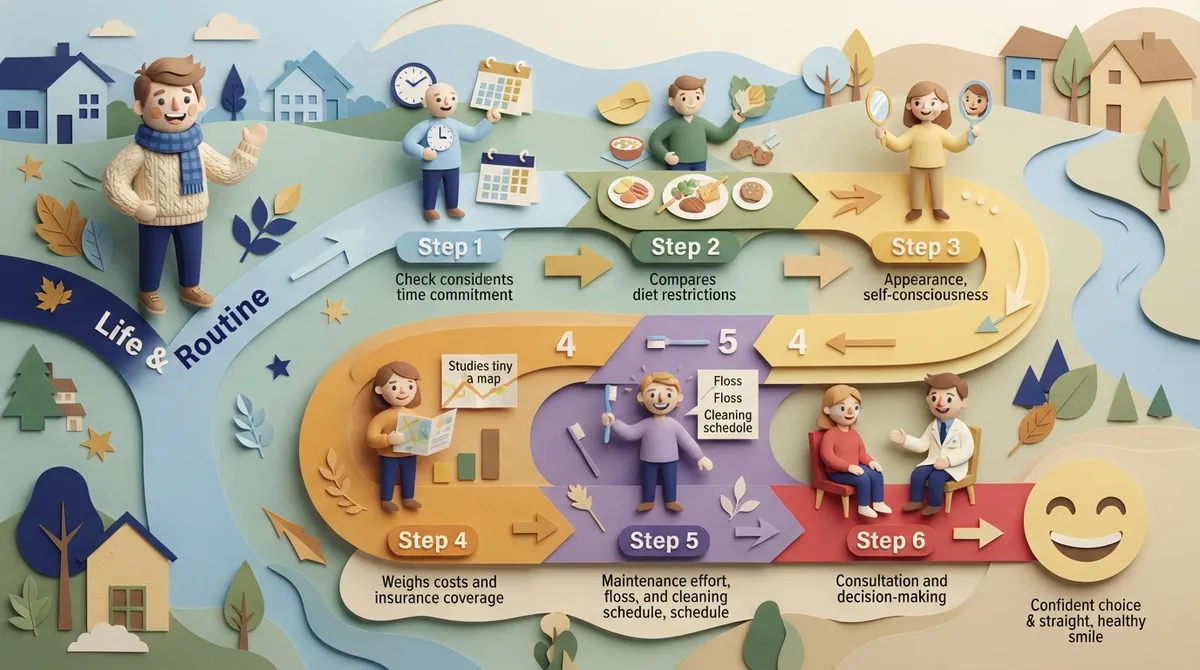
How to Find the Treatment That Fits Your Routine: 6 Steps
Use this simple process to match your lifestyle to your options. It works well for adults, teens, and parents deciding for kids.
- Get a clinical exam first. Your bite and tooth movements decide what is possible.
- Audit your eating habits. Note how often you eat, snack, and drink.
- Check your memory and discipline. Be honest about whether you will wear removable trays all day.
- Review your hygiene routine. Decide how much cleaning effort feels realistic.
- Look at your schedule. Think about how often you can visit the office.
- Talk it through with your orthodontist. Share your lifestyle so the plan fits you.
Let’s go through each step in more detail.
Step 1: Start With a Proper Exam
Before you fall in love with any option, find out what your teeth need. Some bite problems respond well to clear aligners. Others may need the steady, built-in control of braces. A 2024 systematic review of clear-aligner accuracy and stability found evidence of effectiveness especially for mild crowding and front tooth movements. It also noted variable accuracy and limited long-term follow-up, and the small evidence base limits broad conclusions.
In plain words, aligners can be a great fit for many people, but they are not the answer for every smile. An in-person exam gives you honest guidance. If you are curious about the first visit, our guide on what to expect at the orthodontist can help you prepare.
Step 2: Take a Look at Your Eating Habits
Your meal pattern says a lot about which option will feel easy. With clear aligners, you take the trays out to eat. You also remove them for any drink other than water. That is a plus for people who want to eat anything they like. It can feel like a hassle if you graze all day, since you will brush or rinse before putting the trays back in.
With braces, you never take anything out, so meals are simple. The trade-off is food choices. Hard, sticky, or crunchy foods can damage brackets and wires. If you love popcorn, caramel, or chewing ice, braces will ask for some changes. Parents of active kids may like our list of braces-friendly snacks for sports practice.
Step 3: Be Honest About Your Memory and Discipline
This is the big one. Clear aligners are usually prescribed for about 20 to 22 hours of wear per day, though your orthodontist sets the exact plan. That means the trays are in almost all the time, including while you sleep. Wear time is what moves teeth, so inconsistent wear can interfere with progress.
If you are a planner who loves routines, this may feel easy. If you lose your keys weekly, a removable tray can be tricky. Fixed braces stay on the teeth, so they do not depend on remembering to put anything back in. For some teens and busy parents, that built-in consistency is a real relief.
Step 4: Plan Your Cleaning Routine
Good oral health matters with either choice, but the work looks different.
Braces make cleaning more challenging because food can get caught around brackets and wires. Brushing and flossing take extra care and a bit more time. If you want to sharpen your technique, see these brushing mistakes that wreck braces.
Aligners must be removed so you can brush and floss thoroughly, which many people find easier. The catch is that sugary or acidic drinks trapped under trays can raise the risk of staining and tooth decay. You also need to clean your teeth before putting the trays back in and store them in a case when they are out. For a simple routine, read how to clean aligners the right way, every day.
Step 5: Look at Your Calendar
Appointment schedules vary by treatment and by person. NHS guidance says fixed braces are commonly checked every 6 to 8 weeks. The American Association of Orthodontists notes that visits to adjust braces or pick up new aligners are often scheduled every 6 to 10 weeks. Your own orthodontist will give you the right schedule for your plan.
If your work travel or family calendar is packed, ask about visit timing up front. Our post on comparing orthodontic appointment schedules can help you plan ahead.
Step 6: Share Your Real Life With Your Orthodontist
The most useful thing you can do is be honest. Tell your orthodontist about your job, your sports, your travel, your snacking, and your worries. A good plan is built around you. At Brockway Orthodontics in Clearwater, Dr. Brockway takes time to listen to your goals and daily life so that you feel comfortable and informed from the very start.
Clear Aligners vs. Braces: A Quick Routine Comparison
Here is a side-by-side look at how each option fits daily life.
| Routine Factor | Clear Aligners | Fixed Braces |
|---|---|---|
| Wear commitment | About 20 to 22 hours a day, as prescribed | Always on, nothing to remember |
| Eating | Remove trays for meals | Avoid hard, sticky, crunchy foods |
| Drinks | Water only with trays in | No special drink rules |
| Brushing and flossing | Remove trays, so cleaning is easier | Takes extra time and care |
| Reliability needed | High self-discipline | Lower, since appliance stays on |
| Tray or appliance care | Clean trays, store in a case | Keep brackets and wires clean |
| Office visits | Often every 6 to 10 weeks | Commonly every 6 to 8 weeks |
Neither column is “better.” Each simply asks for different habits. If you want a deeper comparison, see braces vs. clear aligners: which Clearwater choice wins.
Which Treatment Fits Which Lifestyle?
Every person is different, but some patterns come up often. Use these as a starting point, not a final answer.
Busy Professionals
If you have client meetings and want a discreet look, clear aligners can be appealing. You can take them out for a big presentation or a work lunch. The key is being reliable about wear time and keeping a case handy. If you travel often, keep a travel toothbrush in your bag so you can clean up before putting trays back in. For more on this, read how to fit clear aligners into a busy adult schedule.
Teens and Young Adults
Teens often juggle sports, band, social events, and a lot of snacking. Clear aligners offer a nearly invisible look, but they rely on the teen remembering to wear and clean them. Braces take that job off their plate. Some teens like braces because there is nothing to lose in a lunch tray or leave in a gym bag. Parents may find our guide on how parents and teens can decide useful.
Parents of Younger Kids
If your child is young, a first step is often an evaluation to see whether any early care is helpful. Not every child needs treatment right away, and an exam tells you what is needed and when. Our article on when your child should first see an orthodontist explains the timing.
Adults Returning After Relapse
If your teeth have shifted since your last treatment, you are in good company. Many adults come back for a second round. A few small tooth movements may suit aligners, while larger changes may need a different plan. Your orthodontist can show you what changed and what will fix it. Either way, retention afterward is essential.
Health-Conscious Patients
If you care a lot about your gums and overall mouth health, think about how each option supports your cleaning routine. Some people prefer removable trays because they make brushing and flossing feel more normal. Others prefer braces because there is no tray holding drinks against teeth. Share any gum concerns with your orthodontist so your plan protects your oral health.
Habits That Help Whichever Option You Choose
A few simple habits make any treatment smoother.
- Keep a cleaning kit handy. Pack a travel toothbrush, floss, and a case in your bag or car.
- Set phone reminders. Use alarms for tray wear, cleaning, or elastics.
- Stay consistent. Small daily habits add up to steady progress.
- Keep every appointment you can. Regular visits keep your plan on track.
- Call early with problems. A loose bracket or cracked tray is easier to fix quickly.
If something goes wrong, do not panic. Our guide on orthodontic emergency fixes to try before panicking can help you stay calm until you reach the office.
Do Not Forget About Retention
Here is something that surprises many people: finishing braces or aligners is not the end. Teeth can drift back, so treatment is followed by retention to help them stay put. The retainer type and wear schedule are individualized, and retention is an ongoing part of orthodontic care.
This matters for your routine, too. Some people prefer a removable retainer worn at night. Others like a fixed retainer that stays in place. Think about which one you would stick with for years. Our post on fixed vs. removable retainers breaks down the pros and cons, and how to care for your dental retainer shows you how to protect it.
What About Cost and Budget?
Your routine is not just about time. It is also about your budget. Treatment length, complexity, and your chosen appliance can all affect cost. Ask for a clear written breakdown and talk through payment options so there are no surprises. You may also like our guide on clear aligners vs. braces cost for a closer look.
The Options at Brockway Orthodontics
At Brockway Orthodontics, we offer Spark™ Clear Aligners, metal braces, and ceramic (clear) braces, so there is a path for many kinds of routines. Dr. Brockway is an orthodontist in Clearwater, Florida, who truly listens to your goals and lifestyle. Our modern tools, like digital impressions instead of messy molds and 3D imaging, help us plan your care precisely. In certain cases, we can even offer same-day treatments for families with packed schedules. If you want to hear from real patients, you can visit us on Google and read Brockway Orthodontics reviews.
For general information on orthodontic care and finding qualified providers, the Florida Association of Orthodontists and the American Dental Association are helpful, trustworthy resources.
Ready to Find Your Fit?
Choosing orthodontic treatment does not have to feel overwhelming. Start with an exam, be honest about your daily habits, and pick the option that matches how you really live. The right plan should feel manageable, not like a daily struggle.
Ready to talk through your options with a team that cares? Book your appointment online and let’s build a plan that fits your routine. Have questions first? Just contact us and we will be happy to help.
FAQs
Q: Which orthodontic treatment is best for a busy lifestyle?
A: It depends on you! If you are very organized and want to eat freely, clear aligners can work well. If you worry about forgetting trays, braces stay on the teeth, so there is nothing to remember. An orthodontist can help you decide based on your teeth and your schedule.
Q: How many hours a day do I need to wear clear aligners?
A: Clear aligners are typically prescribed for about 20 to 22 hours a day, though your orthodontist sets the exact plan. You take them out to eat, drink anything other than water, and clean your teeth. Consistent wear is what keeps your progress on track.
Q: How often will I need orthodontic appointments?
A: It varies by treatment and by person. Fixed braces are commonly checked every 6 to 8 weeks, and the American Association of Orthodontists notes visits are often every 6 to 10 weeks. Your orthodontist will give you the schedule that fits your plan.
Q: Are braces harder to keep clean than clear aligners?
A: Braces can be a bit trickier because food gets caught around brackets and wires, so brushing and flossing take extra care. Aligners come out for cleaning, which many people find easier. Just remember that sugary or acidic drinks trapped under aligners can raise the risk of staining and decay.
Q: How long do I need to wear a retainer after orthodontic treatment?
A: Retention is an ongoing part of orthodontic care, and the retainer type and wear schedule are individualized. Your orthodontist will tell you how often to wear it and for how long. Following that plan helps your teeth stay in their new spots.
Our Service Area