Key Takeaways
-
Braces treatment has seven stages: consultation, records and planning, preparation, braces fitting, regular adjustments, braces removal, and retention with a retainer.
-
Most people wear braces for about 12 to 24 months, according to the American Association of Orthodontists, though timelines vary with bite complexity and care.
-
Adjustment visits typically occur every 6 to 8 weeks, and missed appointments or broken appliances can extend total treatment time.
-
Mild soreness after fitting or tightening usually lasts about 3 to 5 days and can be managed with soft foods and approved pain relief.
-
Retention is essential: teeth can drift back over time, so wearing your retainer as directed protects your results long-term.
-
Avoid hard, sticky, and chewy foods, brush after meals, and floss daily to protect brackets and keep teeth healthy during treatment.
Thinking about braces can feel a little like standing at the bottom of a hill. You know the view at the top is going to be amazing, but you want to know what the climb looks like first. That is completely normal, and it is exactly why we put this guide together.
The stages of braces treatment follow a clear path. You start with a consultation, move into planning, get your braces fitted, visit for regular adjustments, and finish with braces removal and a retainer. Most people wear braces for about 12 to 24 months, according to the American Association of Orthodontists, though every smile is different.
Whether you are a parent planning for a child, a teen counting down to a big event, or an adult ready for a change, knowing each step helps you feel calm and ready. Let’s walk through the whole journey together, one friendly step at a time.
The Big Picture: Two Main Phases of Braces Treatment
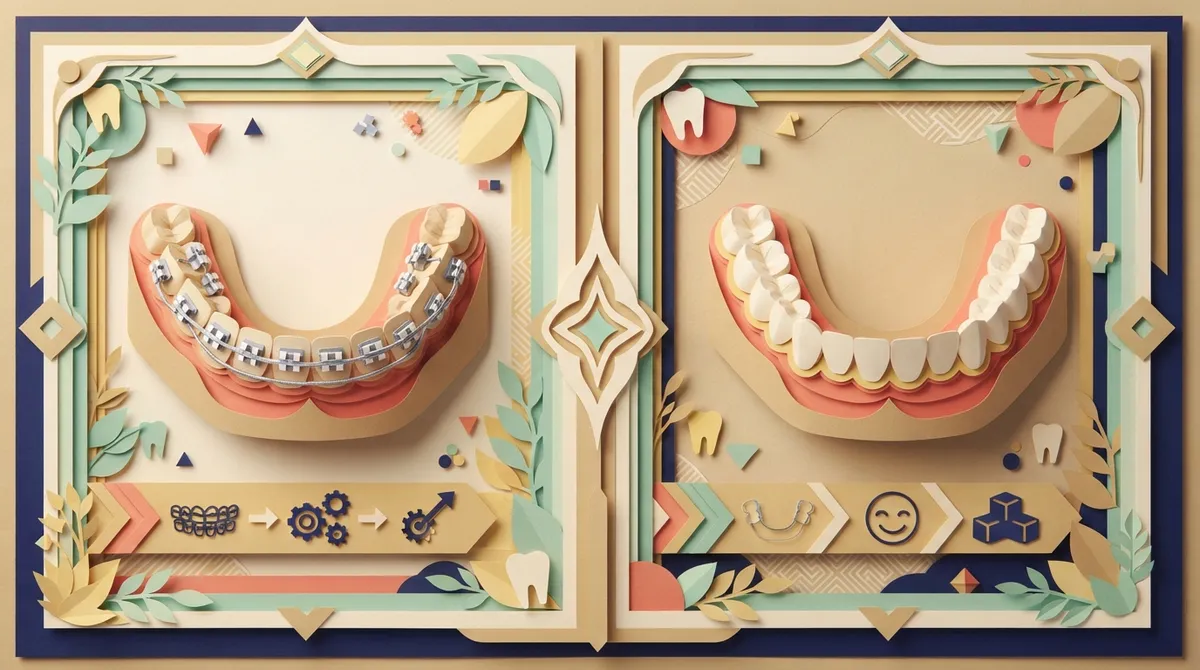
Before we dive into the details, it helps to see the overall shape of treatment. Braces care has two broad phases, and both matter equally.
- Active treatment: This is when your teeth move and your bite improves. Braces, wires, and sometimes elastics do the work.
- Retention: This is when you wear a retainer so your new smile stays put.
Many people think the story ends when the braces come off. In truth, retention is just as important as the braces themselves, because teeth can drift back over time. We will cover that in detail below.
Quick Overview: The Stages at a Glance
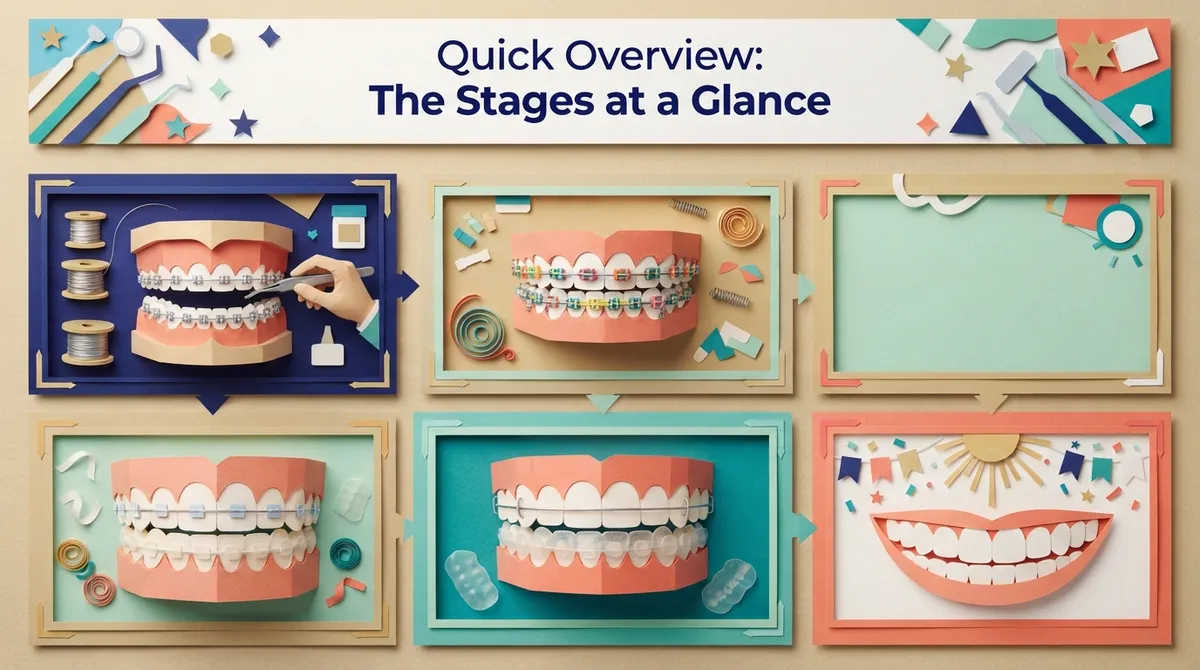
Here is a simple snapshot of the typical timeline. Remember, your own plan will be personalized to your teeth and your goals.
| Stage | What Happens | Typical Timing |
|---|---|---|
| 1. Consultation | Exam, questions, and a first look at your options | One visit |
| 2. Records and planning | Photos, X-rays, scans, and a custom treatment plan | Same visit or a short follow-up |
| 3. Preparation | Any needed dental care before braces are placed | Varies by patient |
| 4. Braces fitting | Brackets and archwires are placed | One appointment |
| 5. Adjustments | Regular progress checks and wire changes | Roughly every 4 to 12 weeks |
| 6. Braces removal | Braces come off and teeth are polished | One appointment |
| 7. Retention | Retainers hold your new smile in place | Long-term |
Stage 1: The Orthodontic Consultation
Every great smile story starts with a conversation. At your first visit, your orthodontist looks at your teeth, jaws, and bite. They also listen to your goals and concerns.
This is your time to ask anything. Do you worry about how braces will look? Are you curious about clear aligners or ceramic braces? Bring your questions, because there are no silly ones here.
If you want to know exactly what the first appointment feels like, our Your First Visit page walks you through it. You can also read more about what to expect from your orthodontic consultation before you come in.
Stage 2: Records and Treatment Planning
Next comes the detective work. Your orthodontist gathers information so they can design a plan made just for you. This often includes:
- Photographs of your face and teeth
- X-rays to see tooth roots, jaw position, and teeth that have not come in yet
- Digital scans or impressions to make a precise model of your teeth
- A bite and jaw assessment to spot overbites, underbites, crossbites, or crowding
With this information, your orthodontist explains the diagnosis, the recommended appliance, and how long treatment may take. At Brockway Orthodontics, modern tools like digital impressions replace messy molds, so this step is more comfortable than many people expect.
Stage 3: Getting Ready for Braces
Before braces go on, your mouth should be healthy. Sometimes this means a little preparation first.
- A dental check-up to treat any cavities or gum concerns
- A professional cleaning so your teeth are fresh and ready
- In selected cases, a plan for extractions if there is not enough room for all your teeth
- Sometimes a spacer or other small appliance to prepare for certain parts of treatment
Not everyone needs extra steps here. Your orthodontist will tell you clearly if preparation is part of your plan. For kids who are still growing, early treatment may also be an option that guides jaw and tooth development before full braces begin.
Stage 4: Getting Your Braces Fitted
This is the exciting day when your treatment truly begins. For fixed braces, the process is simpler than most people imagine.
- Your teeth are cleaned and dried.
- Small brackets are attached to the front of each tooth with a dental bonding material.
- A thin archwire is threaded through the brackets.
- Small ties or built-in clips hold the wire in place.
- You choose colors for your bands if you want a little fun.
The archwire applies gentle, steady pressure. That pressure slowly guides your teeth into better positions. Some patients also receive elastics or other helpers to correct the bite.
Most appointments take a bit of time, but the process is not painful. You may feel pressure afterward, which brings us to a very common question.
Will Braces Hurt?
Mild soreness is normal. Most people feel it for about three to five days after braces are fitted or adjusted. Soft foods, a cool drink, and over-the-counter pain relief approved by your care team usually do the trick.
If you are worried about discomfort, our guide on whether braces hurt gives friendly, realistic answers. And for the early days, 14 things to expect during your first week with braces can help you feel prepared.
Choosing Your Type of Braces
Braces are not one size fits all. At Brockway Orthodontics, you can choose from several options, each with its own perks.
| Option | Best For | Key Benefit |
|---|---|---|
| Metal braces | Teens, kids, and adults who want dependable results | Strong, reliable, and often budget friendly |
| Ceramic (clear) braces | Teens and adults who want a more discreet look | Tooth-colored brackets blend in |
| Spark™ Clear Aligners | Teens and adults who want a nearly invisible option | Removable, comfortable, and an affordable alternative to Invisalign |
Not sure which path fits your life? Our comparison on traditional braces vs. clear aligners can help you decide, and the All About Braces page covers the basics.
Stage 5: Regular Adjustments and Progress Checks
This stage is where most of the magic happens, and it takes the longest. Throughout active treatment, you will return for check-ups so your orthodontist can track progress and fine-tune your plan.
How often will you visit? Sources vary. The AAO describes adjustment visits at roughly every 4 to 12 weeks, while the NHS says appointments are typically every 6 to 8 weeks. Many patients land right around the 6 to 8 week mark, though your plan may differ.
What Happens at an Adjustment Visit
- Your orthodontist checks how your teeth are moving
- The archwire may be changed or adjusted to keep movement going
- Elastics are replaced or added if your bite needs extra help
- Any broken brackets or loose wires are repaired
- Your brushing and flossing are reviewed so your teeth stay healthy
These visits are usually quick. Soreness after a tightening is common but short lived. If you want to know more, the braces tightening process is explained step by step on our blog.
Taking Care of Your Braces at Home
What you do between visits matters just as much as what happens in the chair. A few smart habits keep your treatment on track.
- Brush after meals and before bed, paying attention around brackets
- Floss daily, using floss threaders or water flossers if needed
- Skip hard, sticky, and chewy foods that can break brackets
- Wear your elastics exactly as directed
- Keep all your scheduled appointments
Need a food refresher? Check out foods to avoid with braces and our friendly food guide for tasty options that are braces friendly. For daily cleaning, this guide on how to brush teeth with braces makes it simple.
What About Braces Emergencies?
Sometimes a wire pokes or a bracket pops off. Do not panic. Most issues are not true emergencies, and a quick call to your orthodontic team usually sorts things out. Our article on emergency vs. routine orthodontics explains the difference.
How Long Does Each Stage Take?
The honest answer is that it depends. Treatment length changes based on how complex your bite is, your age and growth, how well you follow instructions, and whether appliances break.
Here is what trusted sources say:
- The AAO says most people wear braces for about 12 to 24 months.
- The NHS says fixed braces commonly last 1 to 2 years.
- Some NHS hospital guidance describes a wider range of about 1 to 4 years for more complex cases.
- Other NHS patient guides report typical treatment of 18 to 24 months, with around 20 scheduled visits.
Missed appointments and poor appliance care can stretch things out, so consistency is your best friend. Want a deeper timeline? Our friendly timeline guide breaks it down further.
Stage 6: Braces Removal Day
This is the moment everyone waits for. When your orthodontist decides your teeth and bite are in the right place, it is time for the braces to come off.
Here is what usually happens:
- Your orthodontist gently removes the brackets and wires.
- Leftover bonding material is polished from your teeth.
- Your teeth are cleaned.
- New scans or impressions are taken for your retainers.
Removal is generally quick and comfortable. Your teeth may feel a little different at first, and that is totally normal. You can learn more about how long it takes to remove braces before the big day.
Stage 7: Retention and Keeping Your Smile
Now for the stage that protects all your hard work. Retainers hold your teeth in their new spots while the bone and gums settle around them.
Retainers come in a few styles:
- Removable retainers: Clear plastic or wire styles you take in and out
- Fixed retainers: A thin wire bonded behind your teeth
Your orthodontist will give you personalized wear instructions. Many patients wear retainers full time at first, then switch to nights only. Because teeth can shift over time, long-term retainer use is commonly recommended.
For complete details, visit our retainers page and read how to wear a retainer after braces. If something goes wrong, what to do if your retainer breaks has you covered.
Stages of Treatment for Different Patients
The core steps stay the same, but your experience may look a little different depending on your age and goals.
For Kids and Teens
Younger patients are often still growing, which can actually help treatment. Orthodontists can guide jaw development and make room for incoming teeth. Parents can explore adolescent treatment and learn what every parent should know about orthodontics for kids.
For Adults
It is never too late for a great smile. Adults often care about looking polished at work, so discreet choices like ceramic braces or clear aligners are popular. Learn more about adult treatment and see 8 truths about whether you’re too old for braces.
For Retreatment Patients
If your teeth shifted after earlier braces, you are not alone. Relapse is common when retainers are not worn consistently. The good news is that retreatment often follows the same stages, and many cases are simpler the second time around.
Making the Most of Your Braces Journey
A little preparation goes a long way. Here are simple ways to keep your treatment smooth.
- Show up to every appointment, since missed visits can extend treatment
- Keep up your regular dental check-ups during orthodontic care
- Follow your orthodontist’s instructions for elastics and appliances
- Ask questions early if something feels off
- Ask about financing and insurance so cost never feels like a surprise
For even more practical advice, see how to get the most out of your orthodontics care.
Why Families Trust Brockway Orthodontics
Choosing the right orthodontist makes every stage feel easier. Dr. Brockway brings extensive training and a genuine caring approach to every patient. She listens to your goals, explains each step in simple terms, and makes sure you feel comfortable from start to finish.
Our Clearwater practice offers metal braces, ceramic braces, and Spark™ Clear Aligners for kids, teens, and adults. We use modern technology like digital impressions and 3D imaging, and in certain cases we can offer same-day treatment to fit your busy schedule. You can peek at our office to see where your journey will begin, and read stories from happy patients on our patient reviews page. You can also visit us on Google — Brockway Orthodontics to see what our Clearwater neighbors are saying.
To learn more about the standards behind quality care, the American Dental Association and the Florida Association of Orthodontists are great resources for patients.
Ready to Start Your Braces Journey?
Now you know the stages of braces treatment from the first hello to the final retainer. It is a journey with clear steps, and you do not have to walk it alone. Every adjustment, every careful brush, and every appointment brings you closer to a smile you will love.
Ready to take the first step? Book your appointment online and let’s talk about your smile goals. Prefer to chat first? Contact us and our friendly team will be happy to help.
FAQs
Q: What are the stages of braces treatment?
A: The main stages are a consultation, records and planning, any needed preparation, braces fitting, regular adjustments, braces removal, and retention with a retainer. Each stage builds on the last, so your smile moves from planning to lasting results step by step.
Q: How long does braces treatment usually take?
A: Most people wear braces for about 12 to 24 months, though simpler cases can be shorter and complex cases can take longer. Keeping your appointments and caring for your braces well helps you stay on schedule.
Q: How often do you need orthodontist appointments with braces?
A: Adjustment visits typically happen every 6 to 8 weeks, though some plans range from about 4 to 12 weeks. Your orthodontist will set the right schedule for your teeth and your type of braces.
Q: Do braces hurt after they are fitted or tightened?
A: Mild soreness is common and usually lasts about 3 to 5 days after fitting or an adjustment. Soft foods and approved pain relief help, and you should call your orthodontic team if the pain is severe or does not go away.
Q: What happens after braces are removed?
A: Your teeth are polished and cleaned, and you receive retainers to keep your new smile in place. Your orthodontist will give you personal wear instructions, and long-term retainer use is commonly recommended because teeth can shift over time.
Our Service Area