Key Takeaways
-
A straight smile and a healthy bite are different: alignment describes how teeth look, while occlusion describes how upper and lower teeth and jaws meet when you close your mouth.
-
Jaw size or position mismatches are a major hidden cause, such as a crossbite where narrow upper jaws let upper back teeth land inside the lower teeth.
-
Back teeth often meet unevenly even when front teeth look flawless, so problems may only surface as chewing trouble or odd wear patterns on molars.
-
Deep bites, open bites, and overjet can hide behind neat-looking front teeth because the problem is vertical overlap or forward positioning, which front-on photos rarely reveal.
-
Childhood habits like thumb sucking, facial injuries, early baby tooth loss, and skipping retainers after orthodontic treatment can change how teeth fit over time.
-
A proper bite check includes a clinical exam of jaw movement, photos, digital scans or models, and X-rays when needed, since a mirror cannot show how teeth meet.
You look in the mirror, and your smile looks great. Your front teeth line up nicely. No gaps, no crooked edges. So why does your dentist keep mentioning your bite?
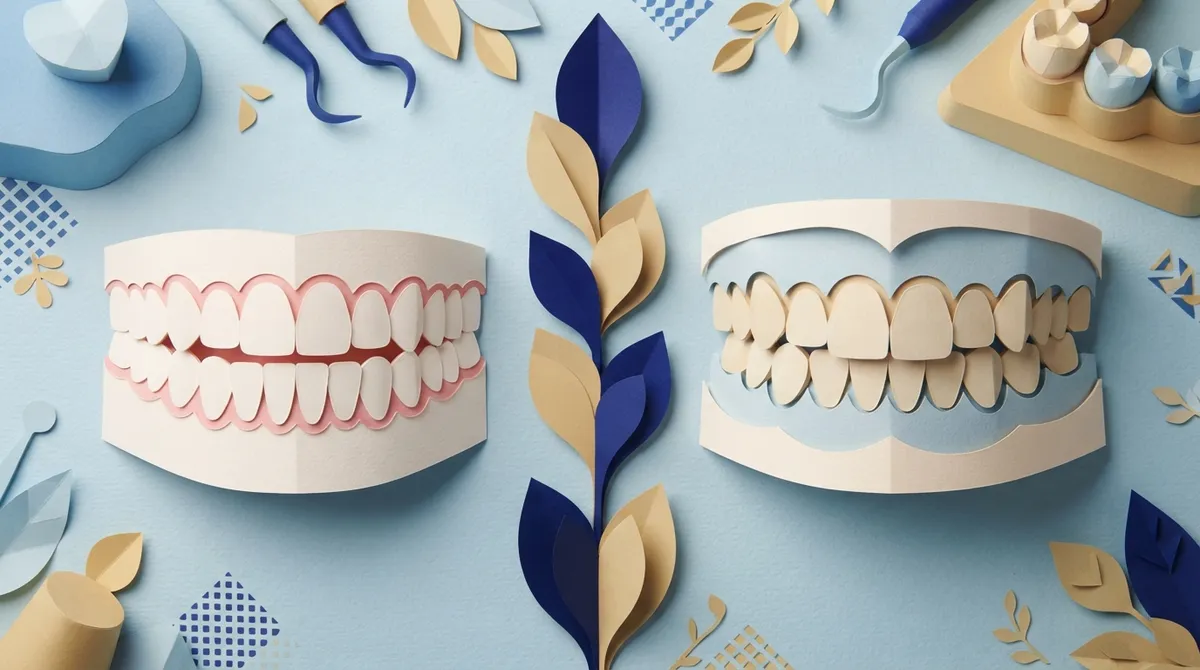
Here is the surprise: why straight-looking teeth can still have bite issues comes down to one simple fact. A straight smile and a healthy bite are two different things. Straight teeth describe how your teeth line up when you look at them. Your bite describes how your upper and lower teeth meet when you close your mouth.
That second part is hard to see in a mirror. Your back teeth, your jaw position, and the way everything fits together all matter. Yet most of that hides from view.
If you have ever wondered whether your smile is only a “surface” success, you are in good company. In this guide, we will walk through five friendly, easy-to-understand reasons a smile can look straight while the bite is still off. We will also cover warning signs, how an orthodontist checks your bite, and what you can do next.
Straight Teeth vs. a Healthy Bite: What Is the Difference?
Before we dive into the five reasons, let’s clear up two terms that often get mixed up.
Tooth alignment is about how each tooth is positioned. Are they crowded? Spaced? Rotated? This is what you see in photos.
Occlusion (the dental word for your bite) is about how your upper and lower teeth and jaws fit together. It includes the back teeth that rarely show when you smile.
Think of it like a zipper. Each tooth on the zipper can look perfectly neat. But if the two sides do not meet evenly when you pull it shut, the zipper will not work well. Your teeth are similar.
Orthodontists use the word malocclusion for a bite that does not fit together the way it should. According to the MedlinePlus Medical Encyclopedia, malocclusion can include several different patterns, and some are easy to miss without a professional exam.
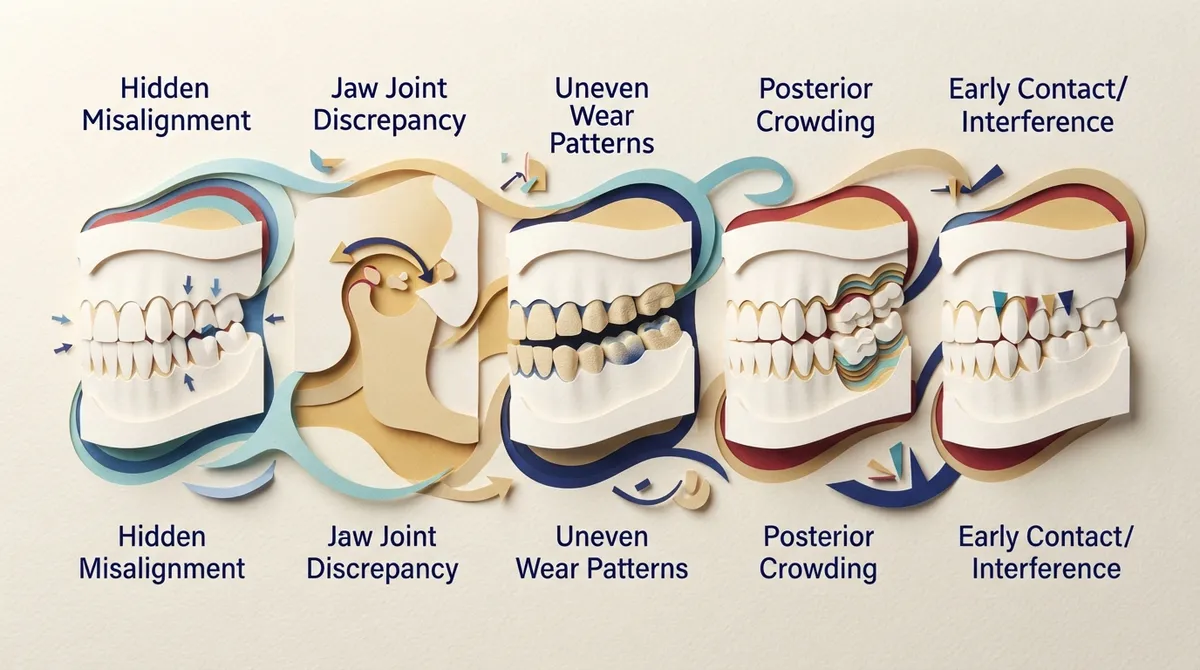
5 Reasons Straight-Looking Teeth Can Still Have Bite Issues
1. Your Upper and Lower Jaws Do Not Match in Size or Position
This is the biggest reason. Your teeth can be individually straight while the jaws that hold them are different widths, lengths, or positions.
Picture two perfectly lined-up rows of books on two shelves. If one shelf is narrower or sits farther back than the other, the books will not line up from top to bottom, even though each row looks neat on its own.
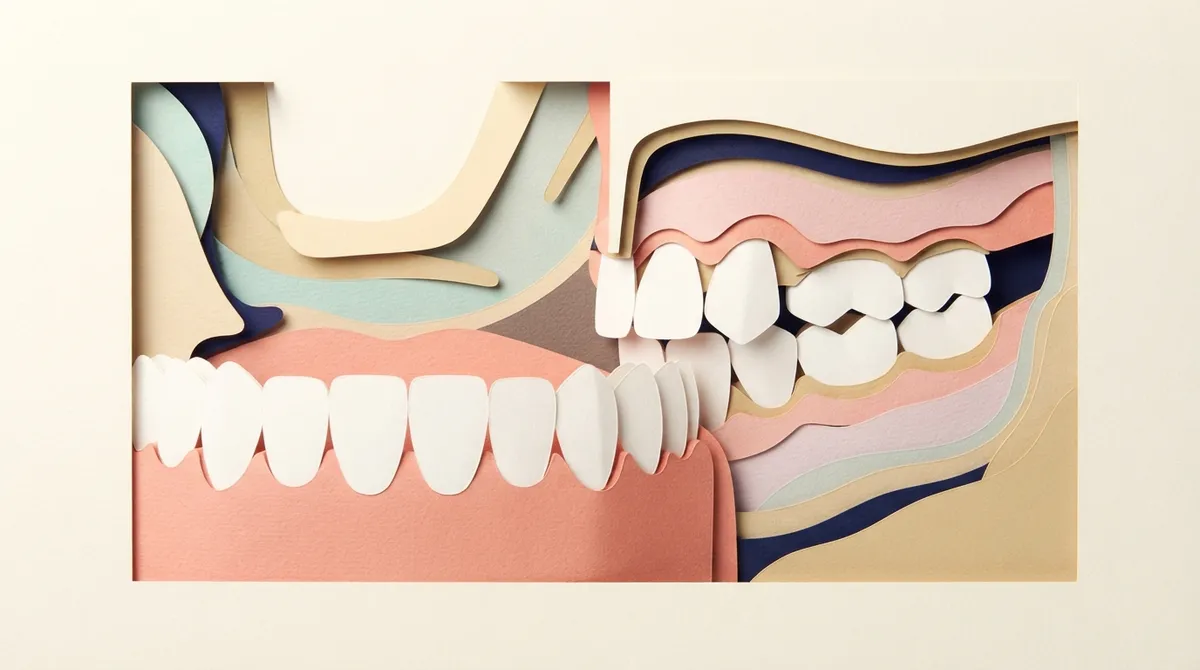
When the upper jaw is narrow compared to the lower jaw, the upper back teeth can land inside the lower teeth instead of outside. That is called a crossbite. Your front teeth might look beautiful, but the sides of your mouth tell a different story. If you want to learn more about this one, our guide on crossbite treatment and whether you really need it explains it in plain language.
Jaw differences can also lead to an underbite, where the lower teeth sit in front of the upper teeth. Again, the teeth themselves may look fine.
2. The Problem Is Hiding in Your Back Teeth
When we judge a smile, we look at the front. But a lot of bite work happens in the back. Your molars do most of the chewing, and they need to meet in a stable, balanced way.
Back teeth can meet unevenly even when the front six or eight teeth look flawless. One side might hit first. Some teeth might not touch at all. You might not notice until you try to chew something tough, or until a dentist points out odd wear patterns.
Because these issues sit out of sight, many people go years without knowing. A mirror simply cannot show how your molars fit together when you bite down.
3. Your Teeth Overlap Too Much (or Not Enough) Vertically
Some bite problems are about how far your top teeth cover your bottom teeth up and down. This is called vertical overlap.
- Deep bite: The upper front teeth cover too much of the lower front teeth. Sometimes the lower teeth are almost hidden.
- Open bite: The front teeth do not touch at all when the back teeth are closed. There is a visible gap from top to bottom.
- Overbite and overjet: Overbite is excess vertical overlap. Overjet is when the upper front teeth stick out forward past the lower ones.
Here is the tricky part. In a deep bite, the teeth can look straight and tidy while the overlap is far too heavy. In a front-on photo, you may never see the issue. If you are curious about the difference between these two patterns, we break it down in Deep Bite vs Overbite: What’s the Real Difference?
You can also read about how braces fix a deep overbite if you want a closer look at treatment.
4. Childhood Habits, Injuries, or Tooth Loss Changed How Things Fit
Sometimes the bite is shaped by life, not just genetics. Bite problems can be inherited, but they can also be linked to other factors, such as:
- Prolonged thumb sucking or pacifier use in childhood
- An injury to the face, jaw, or teeth
- Losing baby teeth too early, or too late
- Teeth that shift over time
Early loss of a baby tooth, for example, can let neighboring teeth drift into the gap. Later, the smile may look straight once everything settles. But the way the upper and lower teeth meet may have changed along the way. If this sounds familiar, you may enjoy our read on why early loss of baby teeth matters for smiles.
Teeth can also move after orthodontic treatment if retainers are not worn as directed. Many people who had braces years ago find their smile still looks fairly straight, yet their bite has slowly changed. A retainer is the best way to protect your results, and our post on why you still need retainers after Invisalign shows why this habit matters for every type of treatment.
5. A Past Fix Focused on Looks, Not Function
Not every straightening plan looks at the whole bite. Some quick or appearance-only approaches focus on lining up the front teeth. That can give a nice photo-ready result.
But a good orthodontic plan asks bigger questions. How do the teeth meet? How are the jaws related? Will the bite be stable long term? Orthodontic treatment should be based on an individual diagnosis, not on appearance alone.
If you have ever tried a do-it-yourself approach or a plan that skipped a full bite exam, it may be worth a second look. We compare these paths in DIY Smile Fixes vs. Finding an Orthodontist: Who Wins?
Common Types of Bite Problems at a Glance
Here is a quick table to help you picture the most common bite patterns. This is not a diagnosis. Only a dentist or orthodontist can tell you what is going on in your mouth.
| Bite Type | What It Means | Can It Hide Behind Straight-Looking Teeth? |
|---|---|---|
| Crossbite | Some upper teeth bite inside the lower teeth | Yes, especially when it affects the back teeth |
| Deep bite | Upper front teeth cover too much of the lower front teeth | Yes, front teeth can look neat and even |
| Open bite | Front teeth do not touch when the mouth is closed | Sometimes, teeth can look straight but not meet |
| Overjet | Upper front teeth stick out forward | Sometimes, the teeth may be evenly lined up |
| Underbite | Lower teeth sit in front of the upper teeth | Yes, the jaw relationship is the main cause |
| Uneven contact | Some teeth hit first or not at all | Yes, often found only in the back teeth |
Signs Your Bite May Be Off (Even If Your Smile Looks Great)
You do not need to guess. Your body often gives small clues. These signs are not specific to bite problems and can have other causes, so please do not self-diagnose. But they are good reasons to book a dental check.
- Difficulty biting into foods or chewing comfortably
- Teeth that hit unevenly or only on one side
- Frequent cheek biting
- Front teeth that do not meet, or that overlap a lot
- Unusual wear, flat spots, or chips on certain teeth
- Areas that are hard to clean well
Jaw soreness and headaches can have many different causes, so they are not proof of a bite issue on their own. If they show up often, let your dentist or orthodontist know so they can help you sort out the cause.
How an Orthodontist Checks Your Bite
A quick glance at your front teeth cannot tell you whether your bite is healthy. A proper exam goes much deeper. Here is what you can usually expect:
- A clinical exam. The orthodontist watches how your teeth meet and how your jaw moves when you open, close, and chew.
- Photos. Pictures from several angles help track tooth and facial features.
- Digital scans or models. These give a 3D view of your teeth and how the upper and lower arches fit. You can learn more about this tech in our post on intraoral scanning for orthodontics.
- X-rays when needed. These show tooth positions, roots, and the relationship between your jaws.
- A plan you can understand. A good orthodontist explains what they see, what it means, and what outcomes are realistic.
If you are nervous about the first visit, take a deep breath. It is mostly friendly chatting and gentle looking. You can read more in What to Expect at the Orthodontist: Your First Visit Guide.
What Can Be Done About a Bite Problem?
The right treatment depends on the cause and how severe the problem is. There is no one-size-fits-all answer. Options may include:
- Braces to guide teeth and bite into better positions, including metal or ceramic options
- Clear aligners in suitable cases, supervised by an orthodontist
- Expanders or other appliances to address jaw width differences, especially in growing kids
- Coordinated orthodontic and surgical care for significant jaw discrepancies
The American Dental Association notes that braces treatment commonly lasts about 1 to 3 years, followed by retainer use, though the real timeline varies from person to person. Our breakdown of bite-friendly treatment choices can help, but the best path always starts with a personal exam.
For a closer look at how different treatments compare, you might like Which Is Right for You: Clear Aligners vs Braces?
Who Should Pay Extra Attention to Bite Health?
Bite concerns can affect almost anyone, but they come up in different ways at different ages:
- Parents of kids and teens: Children are still growing, which makes early checks helpful. Jaw width and bite patterns can be guided while growth is active.
- Teens and young adults: You may want a great smile for graduation or a big event. A full bite check makes sure the result looks good and works well.
- Busy adult professionals: Discreet options may fit your schedule, but your bite still deserves a full review.
- Past braces patients: If your teeth have shifted, a fresh evaluation can find out what changed and whether retreatment makes sense.
- Health-minded patients: If you care about long-term oral health, a stable bite is part of that picture.
Not sure when kids should start? Our guide on Age 7 vs. Waiting: When Should a Child See an Orthodontist? can point you in the right direction.
Why Local, Personalized Care Matters
A bite is as individual as a fingerprint. Two people with similar-looking smiles can have very different bite needs. That is why a personalized exam matters more than a one-size-fits-all plan.
At Brockway Orthodontics in Clearwater, Florida, Dr. Brockway takes the time to listen to your goals and explain what she sees in plain, friendly terms. The practice offers metal braces, ceramic braces, and Spark™ Clear Aligners for patients of all ages, with modern tools like digital impressions and 3D imaging to plan treatment with care. Curious about the practice? See what our Brockway Orthodontics patients say on Google, or learn more about the Brockway orthodontist in Clearwater.
Quick Tips to Protect Your Bite Health
- Schedule regular dental checkups and ask about your bite, not just cavities.
- Do not rely on the mirror alone. Bite issues often hide in the back teeth.
- Wear your retainers as directed after any orthodontic treatment.
- Mention chewing trouble, uneven wear, or frequent cheek biting to your dentist.
- Choose an orthodontist who looks at the whole bite, not just the front teeth.
Ready to Check Your Bite? Let’s Take a Look Together
A straight-looking smile is a wonderful thing, but it is only part of the story. A healthy bite supports comfortable chewing, even wear, and long-lasting results. If anything in this article sounded familiar, there is no need to worry. Bite concerns are common, and there are real, gentle ways to address them.
The best next step is simple: get a professional look. Book your appointment online and let Dr. Brockway and the team help you understand how your teeth truly fit together. If you have questions first, you can always contact us and we will be glad to help.
For more general guidance, the American Dental Association is a helpful source for oral health basics. Your smile deserves to look great and feel great too.
FAQs
Q: Can teeth look straight but still have a bad bite?
A: Yes, absolutely! Straight teeth describe how your teeth line up visually, while your bite describes how the upper and lower teeth meet. You can have neat-looking front teeth and still have a crossbite, deep bite, or uneven contact in the back.
Q: What are signs that my bite is misaligned?
A: Common clues include trouble biting or chewing, teeth that hit unevenly or on one side, frequent cheek biting, front teeth that do not meet, and unusual tooth wear. These signs are not specific to bite problems, so it is best to have a dentist or orthodontist take a look rather than guess.
Q: How does an orthodontist diagnose a bite problem?
A: An orthodontist starts with a clinical exam to see how your teeth and jaws meet. They may also use photos, digital scans or models, and X-rays to see tooth positions and jaw relationships. A quick look at the front teeth alone cannot tell if your bite is healthy.
Q: Can clear aligners correct bite issues, or are braces needed?
A: It depends on the cause and severity of the bite problem. Some cases can be treated with supervised clear aligners, while others may need braces, expanders, or other appliances. An orthodontist can explain which option fits your bite and what results are realistic.
Q: When should I see an orthodontist about a bite problem?
A: If you notice chewing trouble, uneven wear, or your dentist mentions your bite, it is a good time to book a visit. For children, an early check around age 7 can help spot jaw and bite concerns while they are still growing.
Our Service Area