Key Takeaways
-
Crooked teeth describe the position of individual teeth (crowding, rotation, gaps), while a bite problem (malocclusion) describes how upper and lower teeth meet, and the two can occur together or separately.
-
A straight-looking smile can still hide a bite problem, and a crowded smile can still bite together normally, so appearance alone can't determine whether treatment is needed.
-
Bite problems are often harder to spot than crooked teeth; warning signs include trouble chewing, upper and lower teeth not meeting evenly, uneven tooth wear, and difficulty keeping teeth clean.
-
The American Association of Orthodontists recommends an initial orthodontic check-up by age 7, which is an evaluation rather than a guarantee that treatment is needed.
Ever looked in the mirror and wondered, “Are my teeth just crooked, or is something else going on with how my teeth fit together?” You’re not alone! Many people use the terms interchangeably, but in orthodontics, they mean two different things. And knowing the difference can help you (or your child) get the right kind of care.
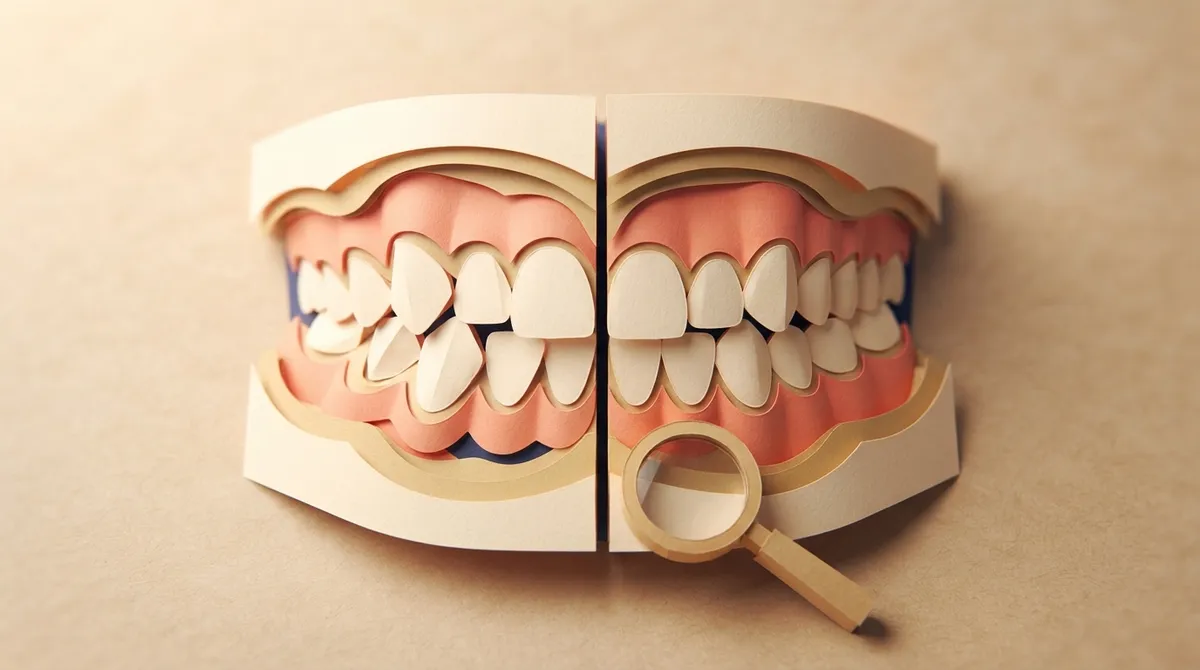
Here’s the quick version. Crooked teeth are about where each tooth sits. A bite problem is about how your upper and lower teeth meet when you close your mouth. Sometimes they show up together. Sometimes you can have one without the other. That is why a smile that looks straight can still hide a bite issue, and why a crowded smile can still bite together just fine.
In this friendly guide, we’ll walk through four key ways crooked teeth versus bite problems differ, what causes each, and what treatment looks like. Whether you’re a parent, a teen eyeing a big milestone, or an adult thinking about a fresh start, you’ll leave feeling more confident about your next step.
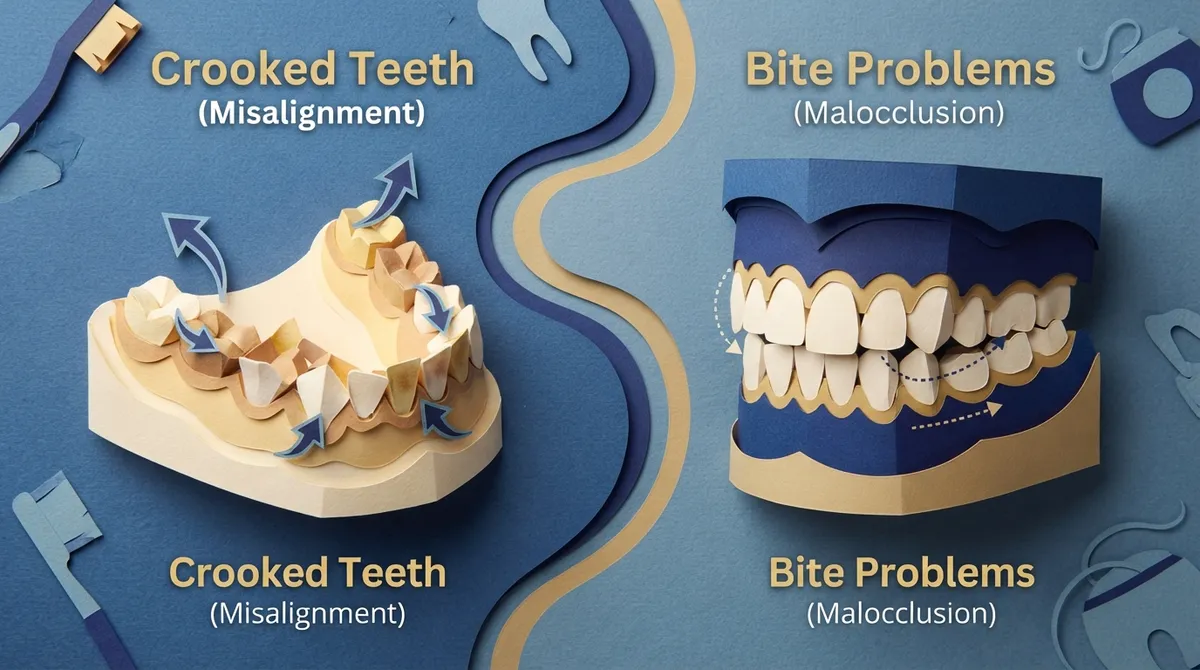
1. What They Actually Mean
Let’s start with the basics, because the words matter.
Crooked Teeth: A Tooth-Position Issue
“Crooked teeth” usually describes what you can see in a smile. It points to the position of individual teeth. Common examples include:
- Crowding: Teeth that overlap or twist because there isn’t enough room.
- Rotation: A tooth that has turned out of line.
- Spacing: Gaps between teeth.
These are mostly about alignment. If you’d like to see how tooth position gets evaluated, our guide on spacing versus crowding in orthodontics breaks it down nicely.
Bite Problems: A Fit-Together Issue
A bite problem, called malocclusion, is about how the upper and lower teeth meet. Sometimes the jaws themselves play a role. Your bite is the way your teeth come together when you chew, speak, and rest.
Think of it like a zipper. Crooked teeth are like a few zipper teeth sitting out of line. A bite problem is more like the two sides of the zipper not lining up with each other at all.
| Feature | Crooked Teeth | Bite Problems (Malocclusion) |
|---|---|---|
| Main focus | Position of individual teeth | How upper and lower teeth fit together |
| Common terms | Crowding, rotation, spacing | Overbite, underbite, crossbite, open bite |
| Easy to spot? | Often visible in a smile | Sometimes hidden when the mouth is open |
| Can jaws be involved? | Usually not | Sometimes, yes |
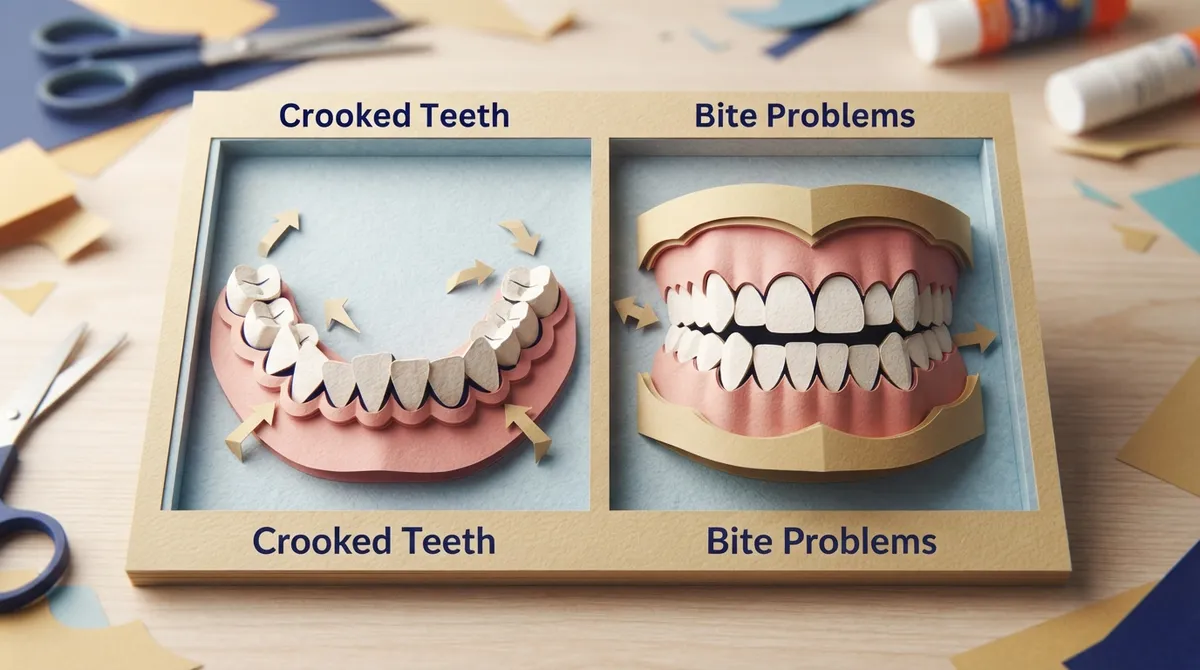
2. How You Can Spot Each One
Here is where it gets interesting. The clues for each issue are a little different.
Signs of Crooked Teeth
These are often easy to see. You might notice:
- Teeth that overlap or look twisted
- Visible gaps between teeth
- A tooth that sticks out or sits behind the others
- Food that gets trapped in tight spots
Signs of a Bite Problem
Bite issues can be sneakier. Look and listen for:
- Trouble biting or chewing certain foods
- Upper and lower teeth that don’t meet evenly
- Front teeth that stick out noticeably
- Uneven tooth wear over time
- Difficulty keeping teeth clean
A quick word of honesty: appearance alone can’t tell you whether a bite needs treatment. A trained orthodontist looks at both your teeth and your jaw relationship, along with your overall oral health, before making a call.
The Common Bite Problem Types
Bite problems come in several flavors. Here are the main ones:
- Overbite: The upper front teeth overlap the lower ones too much vertically. If you’re curious, we’ve written about deep bite versus overbite to clear up the confusion.
- Overjet: The upper front teeth project forward. Learn more in our post on overjet versus overbite.
- Underbite: The lower teeth sit in front of the upper teeth.
- Crossbite: Some upper teeth sit inside the lower teeth when you close.
- Open bite: Front teeth don’t touch when the back teeth are closed.
3. Why Each One Happens
Knowing the causes can take away a lot of guilt. Neither crooked teeth nor bite problems are anyone’s fault. Many are simply inherited, while others develop over time.
Common Causes of Crooked Teeth
Crooked teeth often come down to a space issue. Contributing factors may include:
- A jaw that’s a little small for the teeth it holds
- Early or late loss of baby teeth
- Extra or missing teeth
- Prolonged thumb-sucking or similar habits
Parents often ask us about this. Our article on what causes crowding in children’s developing teeth is a helpful read.
Common Causes of Bite Problems
Bite issues often connect to jaw growth patterns, but they can have other roots too:
- Inherited jaw shape or growth patterns
- Dental disease or injury
- Missing or extra teeth
- Long-term oral habits
Sometimes the two overlap. A crowded smile and a deep overbite can happen in the same mouth. That’s perfectly normal, and it’s exactly why a full evaluation matters.
Quick Reality Check
Here’s a point worth repeating: you can have crooked teeth with a normal bite, or straight-looking teeth with a bite problem. One does not automatically mean the other. We even cover this in 5 reasons straight-looking teeth can still have bite issues.
4. How Treatment Differs
Now for the part everyone wants to know: what can be done? The good news is that modern orthodontics offers plenty of options, and the right one depends on your diagnosis.
Treating Crooked Teeth
When the main concern is tooth position, treatment often focuses on aligning teeth and creating space. Options may include:
- Metal braces: Reliable and effective for many cases.
- Ceramic (clear) braces: A more discreet look with the same goal.
- Clear aligners: Removable trays, including Spark™ Clear Aligners, which are a more affordable alternative to Invisalign.
Curious which path fits you? Our comparison of braces versus clear aligners can help you weigh the pros and cons.
Treating Bite Problems
Bite correction often goes a step further. Because the goal is to improve how the teeth and sometimes the jaws fit together, treatment may involve:
- Braces or clear aligners, sometimes with elastics (rubber bands)
- Other appliances, such as palatal expanders for certain crossbites
- In selected cases with significant jaw differences, orthognathic (jaw) surgery
Not every bite needs surgery. In fact, most cases are managed without it. A careful assessment is what tells us the right plan. You might like our post on crossbite treatment or our guide to fixing an overbite.
Can One Treatment Fix Both?
Often, yes! Braces and clear aligners can improve both crooked teeth and many bite problems, depending on the case. Complexity matters, though. A mild bite issue paired with crowding may be a great fit for aligners. A more involved bite concern might call for braces or extra appliances. That’s why one-size-fits-all advice rarely works.
| Concern | Common Options | Best Next Step |
|---|---|---|
| Mild crowding or gaps | Clear aligners or braces | Orthodontic evaluation |
| Overbite or overjet | Braces or aligners, sometimes with elastics | Bite assessment |
| Crossbite | Expanders, braces, or aligners | Early check-up for children |
| Significant jaw difference | Braces, sometimes jaw surgery | Specialist consultation |
When Should You Get Checked?
The American Association of Orthodontists recommends an initial orthodontic check-up by age 7. Here’s the key point: that’s an evaluation, not a promise of treatment. Many kids just need a friendly look and a “we’ll keep watching.” Others benefit from early guidance. If you want to learn more, read about age 7 versus waiting.
For teens and adults, there’s no wrong time to ask questions. Plenty of adults are surprised to learn that braces work at any age. And if you had braces before but your teeth have drifted, a retreatment evaluation can show whether your bite or tooth position changed.
Why an Orthodontist Makes the Difference
Telling crooked teeth from bite problems takes more than a quick glance. An orthodontist looks at your teeth, your jaws, and how everything works together. Photos, digital scans, and X-rays may all help paint the full picture.
At Brockway Orthodontics, Dr. Brockway takes time to listen to your goals and explain your options in plain, friendly language. Our practice uses modern tools like digital impressions instead of messy molds, plus 3D imaging for precise planning. We treat the whole family, from kids to adults, and we want you to feel informed and comfortable every step of the way. Curious what patients think? You can visit us on Google — Brockway Orthodontics to read reviews from our Clearwater neighbors.
For general dental health guidance, the American Dental Association is a trusted resource. And if you want to confirm an orthodontist’s background in our state, the Florida Association of Orthodontists is a good place to start. You can also follow our everyday smile stories on Instagram.
The Bottom Line
So, crooked teeth versus bite problems? Crooked teeth are about where teeth sit. Bite problems are about how your teeth (and sometimes jaws) meet. They can show up alone or together, and the best way to know which applies to you is a professional evaluation. The sooner you ask, the sooner you can plan with confidence.
Ready to find out what’s going on with your smile? Take the first step and book a free consultation online with Dr. Brockway. Prefer to chat first? Just contact us and our friendly team will help. We can’t wait to meet you!
FAQs
Q: What is the difference between crooked teeth and a bite problem?
A: Crooked teeth describe the position of individual teeth, like crowding, rotation, or gaps. A bite problem (malocclusion) describes how your upper and lower teeth fit together when you close your mouth. They can happen together, but one doesn’t always mean the other!
Q: Can you have crooked teeth but a normal bite?
A: Yes, absolutely. Some people have crowded or rotated teeth that still meet nicely when the mouth closes. The reverse can happen too: straight-looking teeth with a bite that doesn’t line up. An orthodontic evaluation is the best way to know for sure.
Q: Can braces or clear aligners correct both crooked teeth and bite problems?
A: In many cases, yes! Braces and clear aligners can improve tooth alignment and many bite issues. The right choice depends on your diagnosis and how complex your case is, which is why a personalized plan from an orthodontist matters.
Q: When should a child have their first orthodontic evaluation?
A: The American Association of Orthodontists recommends an initial check-up by age 7. This is an evaluation, not a guarantee your child needs treatment. It simply helps spot concerns early so you can plan with confidence.
Q: When might jaw surgery be considered for a bite problem?
A: Jaw surgery is only considered in selected cases with significant jaw discrepancies that braces or aligners alone can’t address. Most bite problems are treated without surgery. Your orthodontist will walk you through all your options and what to expect.
Our Service Area