Key Takeaways
-
The AAO recommends an orthodontic check-up by age 7, but this is an evaluation, not an automatic start to treatment; many children are only monitored.
-
Timing depends on four factors: the specific bite or jaw concern, stage of tooth development, facial and jaw growth, and whether treating now beats waiting.
-
Problems like underbites, crossbites, and jaw shifts when closing often benefit from early attention, while mild crowding is commonly monitored.
-
Parents should watch for jaw shifting, teeth that don't meet, thumb or finger sucking past toddler years, mouth breathing, and early or late baby tooth loss.
-
Ask the orthodontist whether the plan is no treatment, monitoring, or early treatment, and why, then set a recheck schedule as permanent teeth arrive.
-
Age alone doesn't determine readiness; two eight-year-olds may need completely different plans, and children past the early window can still be treated effectively.
Is your child about to turn seven, and you keep hearing that it is “time to see an orthodontist”? Take a deep breath. You are not signing up for braces. You are simply booking a look at how your child’s smile is growing.
Here is the big idea: what determines the timing of early orthodontic care is not a birthday. It is the specific bite or jaw concern, the stage of tooth development, the child’s growth pattern, and whether stepping in now helps more than watching and waiting. Some kids need a plan right away. Many just need a friendly check-in every so often.
This guide walks you through that decision step by step, in plain language. You will learn what orthodontists look at, which problems tend to need early attention, and when waiting is the smarter move. Whether you are a parent of a young child, a teen, or an adult who wishes someone had caught things earlier, you will leave knowing what to ask and what to expect. Let’s get started.
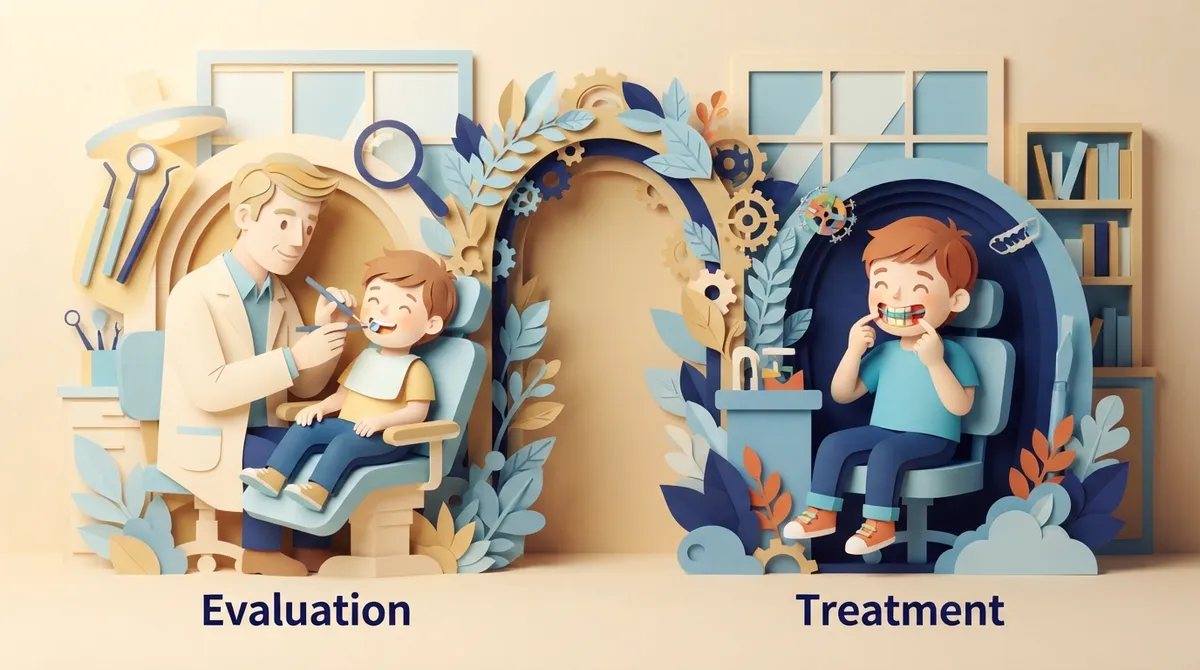
Start With the Right Question: Evaluation vs. Treatment
The American Association of Orthodontists (AAO) recommends an orthodontic check-up by age 7, or sooner if you notice a concern. That is a screening milestone. It is not a promise that treatment starts at 7.
Think of it like a first visit to a coach. The coach watches how a young athlete moves, then decides if training should start now, later, or just needs a yearly check. An orthodontic visit works the same way. Three outcomes are common:
- No treatment needed. Your child’s teeth and jaws are on a healthy track.
- Monitoring during growth. The orthodontist watches and rechecks as more permanent teeth arrive.
- Early treatment. A specific problem is best handled while your child is still growing.
If you want to dig into this idea, our guide on why early evaluation isn’t treatment explains the difference in more detail.
The Four Factors That Decide Timing
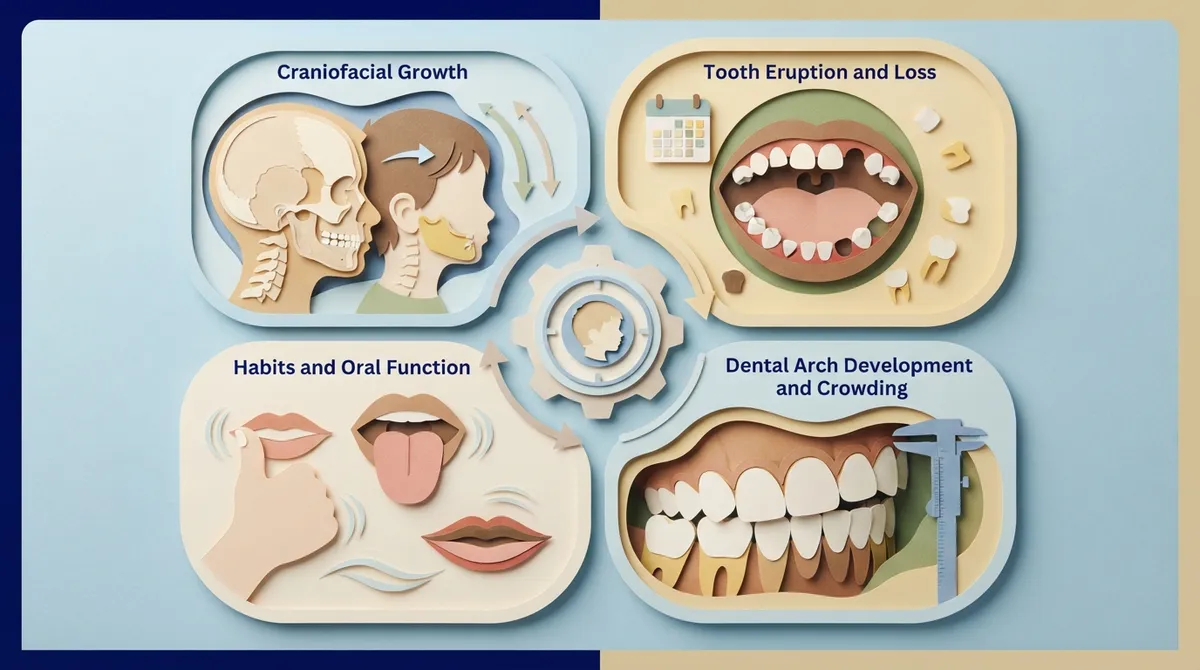
Orthodontists weigh several things at once. No single factor decides it. Here are the four big ones.
1. The Specific Bite or Jaw Concern
The type of problem matters most. Some issues can get worse as a child grows. Others tend to stay stable or even improve on their own. An underbite or a crossbite, for example, may be easier to guide while the jaws are still developing. Mild crooked teeth, on the other hand, are often fine to monitor.
2. Stage of Tooth Development
Children move through a stage called mixed dentition, when baby teeth and permanent teeth are both in the mouth. The American Academy of Pediatric Dentistry (AAPD) describes this as roughly ages 6 to 11. It is a handy window because the orthodontist can watch how the permanent teeth are coming in and how the bite is forming.
If you are curious how this stage looks in real life, see our article on braces treatment with mixed dentition.
3. Facial and Jaw Growth
Growth is a double-edged sword. When a jaw is growing, an orthodontist may be able to guide it. After growth slows, some problems are harder to change without more involved care. That is why timing can matter for certain jaw issues. It is also why the same problem can call for different timing in two different kids.
4. Treat Now vs. Monitor or Wait
This is the heart of it. For every child, the orthodontist asks: will treating now prevent a bigger problem, or will it just add an extra step? If waiting costs nothing, waiting often wins. If waiting makes things harder, early care makes sense.
How to Time Early Orthodontic Care: A Step-by-Step Path
Here is a simple way to move through the decision as a parent. Follow these steps in order.
- Watch for signs from toddler years on. Notice how your child bites, chews, and breathes. Write down anything that seems off.
- Book an evaluation around age 7. Go sooner if you spot a concern. The visit gives you a baseline.
- Ask for a clear diagnosis. Ask what the orthodontist sees, in plain words. A good answer names the problem and explains why it matters.
- Ask about the timing choices. Is the plan no treatment, monitoring, or early treatment? Ask why.
- Set a recheck schedule. If your child is being monitored, ask how often to come back.
- Revisit the plan as teeth come in. The best timing can shift as your child grows.
For a smart list of things to bring up, read how to ask the right questions about early treatment before your visit.
Problems That May Call for Early Attention
Some conditions are more likely to benefit from an early look. This list does not mean every child with these signs needs early treatment. It means they deserve a closer look sooner rather than later.
- Underbite: lower front teeth sit in front of the upper ones.
- Crossbite: some upper teeth bite inside the lower teeth.
- Substantial crowding: not enough room for incoming permanent teeth.
- Excessive spacing: large gaps between teeth.
- Abnormal eruption: teeth coming in at odd times or in odd places.
- Extra or missing teeth: more or fewer teeth than expected.
- Teeth that do not meet normally: the bite looks off when the mouth closes.
- Persistent thumb or finger sucking: habits that affect the bite or jaw.
You can learn more about specific problems in our posts on crossbite treatment and what causes crowding in children’s developing teeth.
Early Signs Parents Can Spot Before Age 7
You do not have to wait for a calendar date. If you notice any of these, a visit sooner may be a good idea:
- Your child’s jaw shifts to one side when closing the mouth.
- Teeth do not meet at the front or sides when biting down.
- Your child still sucks a thumb or finger past the toddler years.
- Baby teeth were lost very early, or very late.
- Your child breathes through the mouth most of the time.
- Teeth look very crowded or very spaced out.
- Your child has trouble chewing or biting.
None of these is a diagnosis on its own. They are simply good reasons to ask a specialist. Our guide on how to know if your child needs early orthodontic care goes deeper on these signs.
Early Treatment vs. Monitoring: A Side-by-Side Look
It helps to see the two paths next to each other. This table gives a general picture. Your orthodontist will tailor it to your child.
| Factor | Early Treatment May Fit When… | Monitoring May Fit When… |
|---|---|---|
| Type of problem | It could worsen with growth, such as an underbite or crossbite | It is mild and stable, such as slight crooked teeth |
| Tooth development | Permanent teeth need space or guidance now | Teeth are still coming in and need time |
| Jaw growth | Growth can be used to guide the jaw | Growth is not yet at a helpful stage |
| Habits | A habit is affecting the bite or jaw | No habit is affecting the bite |
| Goal | Prevent or reduce a bigger problem | Wait for the best time to treat once |
Notice that waiting is a real, valid choice. Many problems are better treated after more permanent teeth have come in. And some children who do receive early treatment may still need a later phase. That is normal and expected. To compare the two stages, see phase one vs. phase two orthodontics.
Why Age Alone Does Not Decide Readiness
Two children can both be eight years old and need totally different plans. One may have a developing crossbite and a jaw that is ready to be guided. The other may have mild crowding and a few baby teeth still to lose.
That is why a good orthodontist looks at the whole picture: teeth, bite, jaw relationship, growth, and the timing of tooth eruption. Age is a handy starting point. It is never the whole answer.
This is also why the age 7 vs. waiting debate trips up so many parents. The point of age 7 is to get an expert’s eyes on your child’s smile early, so you can choose with good information instead of guessing.
What Happens at an Early Evaluation
Parents often worry about what the first visit involves. The good news is that it is usually gentle and quick. A typical visit includes:
- A friendly chat about your child’s health, habits, and your concerns
- A careful look at the teeth, bite, and jaw
- Digital scans or imaging when needed, to see what is coming in under the gums
- A clear explanation of what the orthodontist found
- A recommendation: no treatment, monitoring, or early treatment
At Brockway Orthodontics in Clearwater, Florida, Dr. Brockway takes time to listen to your worries and explain things in a simple, friendly way. We use modern tools like digital impressions instead of messy molds and 3D imaging to plan with care. You can read more about what to expect in your child’s first orthodontic visit.
Can a Child Be Treated While Still Having Baby Teeth?
Yes, in selected cases. Early, or interceptive, treatment is used to address a developing problem during growth. The goals might be to stop a problem from getting worse, guide jaw development, remove a habit that is affecting the bite, or create space for incoming permanent teeth.
Some children may use a tool like a palatal expander to widen the upper jaw. If that sounds like your child, our palatal expander guide explains how it works. For families wanting the big picture on early care, our early treatment page is a good place to start.
A Quick Word for Teens, Adults, and Retreatment Patients
If your child is past the early window, do not worry. Many orthodontic problems are well suited to treatment once more permanent teeth are in. Teens can explore braces or clear aligners, and our adolescent treatment options cover both.
Adults are welcome too. Many of us never had a chance for early care, and it is never too late to improve a smile. If you had braces before and your teeth have shifted, a fresh evaluation can show your options. See our adult treatment page to learn more. We offer metal braces, ceramic (clear) braces, and Spark™ Clear Aligners, a more affordable alternative to Invisalign, so there is likely a choice that suits your life.
Common Mistakes That Throw Off Timing
A few missteps come up again and again. Avoid these and you will be ahead of the game:
- Assuming age 7 means braces. It means a check-up, not automatic treatment.
- Waiting for “all the adult teeth” when there is a clear concern. Some problems are best caught early.
- Skipping follow-up visits. If your child is being monitored, rechecks matter.
- Ignoring habits. Thumb or finger sucking that continues can affect the bite.
- Not asking questions. A good plan is one you understand.
Our article on mistakes parents make skipping early orthodontic treatment covers more of these in detail.
Putting It All Together
Here is the simple recap. The timing of early orthodontic care depends on your child’s specific concern, their stage of tooth development, how their jaws are growing, and whether acting now beats waiting. The age 7 check-up is a smart way to get that information, not a starting gun for treatment.
Trust the process. An expert evaluation can give you peace of mind either way: either “all is well, see you later” or “let’s make a plan.” You can also hear what other families think by reading Brockway Orthodontics reviews on Google. For trusted background on oral health, the American Dental Association is a helpful resource, and you can learn about the orthodontic community in our state through the Florida Association of Orthodontists. The AAO’s page on child orthodontics and early treatment is another solid read.
Ready for Clear Answers About Your Child’s Smile?
If you live in or near Clearwater, Florida, we would love to meet your family. Dr. Brockway and our team will check your child’s bite, explain what we see, and help you choose the right timing with no pressure. Book your appointment online today, or contact us with any questions. Your child’s healthy, confident smile starts with one friendly visit.
FAQs
Q: At what age should a child first see an orthodontist?
A: The American Association of Orthodontists recommends a first check-up by age 7, or sooner if you notice a concern like a shifting jaw or teeth that do not meet. It is just a look at how things are developing, so there is no need to feel nervous.
Q: Does a child need braces at age 7?
A: Not usually! Age 7 is a time for an evaluation, not an automatic start to treatment. Many children are simply monitored as their permanent teeth come in, and only selected problems benefit from early care.
Q: How does jaw growth affect the timing of orthodontic care?
A: When a child’s jaws are still growing, an orthodontist may be able to guide that growth to help with certain bite problems. Once growth slows, some issues can be harder to change, which is why timing matters for certain conditions.
Q: When would an orthodontist monitor a child instead of starting treatment?
A: If a problem is mild or likely to settle on its own, watching and waiting is often the smartest choice. Many issues are best treated once more permanent teeth have arrived, so regular rechecks keep everything on track.
Q: Will early orthodontic treatment mean a child needs braces again later?
A: Sometimes, yes. Some children who have early treatment still need a second phase once their permanent teeth are in, and that is a normal part of the plan. Your orthodontist can explain what to expect for your child.
Our Service Area