Key Takeaways
-
Jaw growth, not age alone, determines orthodontic timing; a child's bite plan depends on their individual growth stage, so a personal exam matters more than a one-size-fits-all age rule.
-
Identify whether a bite problem is dental (tooth position, moved by braces or aligners) or skeletal (jaw size or position, which may need growth-guiding appliances or later surgery), since the plan differs.
-
Get an orthodontic evaluation by age 7 even if teeth look fine, but understand that an early check-up is an assessment and not an automatic start to treatment.
-
Growth-guiding appliances such as functional appliances or palatal expanders work best during a limited growth window, so waiting too long can narrow options for some jaw differences.
-
Growth estimation tools like cervical vertebral maturation are helpful guides, not exact forecasts, and should be interpreted alongside the clinical exam and dental development.
-
Plans should be rechecked regularly because growth continues during treatment, and tooth movement can still correct many problems in teens and adults after growth ends.
Picture this: a parent notices their 8-year-old’s lower jaw sitting a little forward, or a teen’s upper teeth sticking out more than they used to. The first thought is often, “Do we need braces right now?” The honest answer is, “It depends on how the jaws are growing.” That is exactly why understanding how jaw growth affects orthodontic planning matters so much for families.
Jaw growth shapes almost every choice an orthodontist makes. It helps us tell whether a bite problem comes from crooked teeth or from jaws that differ in size or position. It also decides whether there is a helpful window to guide growth, or whether it is wiser to watch and wait.
The good news? Most of the missteps families make are easy to avoid once you know them. In this friendly guide, we will walk through 10 common mistakes, explain what is really going on, and show you how to plan with confidence in 2026. Whether you are a parent, a teen, or an adult thinking about treatment, you will leave with clear, practical answers.

Why Jaw Growth Matters in Orthodontics
Think of the jaws as the foundation of a house and the teeth as the furniture. You can rearrange furniture easily. Changing the foundation is a bigger job. Orthodontists look at both so the plan fits the whole picture.
Growth can change how the upper and lower jaws line up over time. That is why a plan made at age 8 may look different by age 12. Orthodontic plans need to be rechecked as teeth come in and the face and jaws develop.
Here is the simple idea: if a child is still growing, we may be able to use that growth to help. If growth is nearly done, we usually shift to moving teeth, and in rare cases consider surgery for a large jaw difference.
Dental Problems vs. Skeletal Problems
This is the big one. A dental problem is about tooth position, like crowding or a tooth tipped out of line. A skeletal problem is about the size or relationship of the jaws, like an upper jaw that sits too far back or too narrow.
Why does it matter? Because the plan is different. Tooth position problems often respond well to braces or clear aligners. Jaw problems may call for growth-guiding appliances in a growing child, or a more involved plan later on.
| Type of Problem | What It Means | Common Planning Focus |
|---|---|---|
| Dental | Teeth are crowded, spaced, or tilted | Moving teeth with braces or aligners |
| Skeletal | Jaws differ in size or position | Guiding growth, or planning after growth |
| Combined | Both teeth and jaws play a role | Staged plan that may change over time |
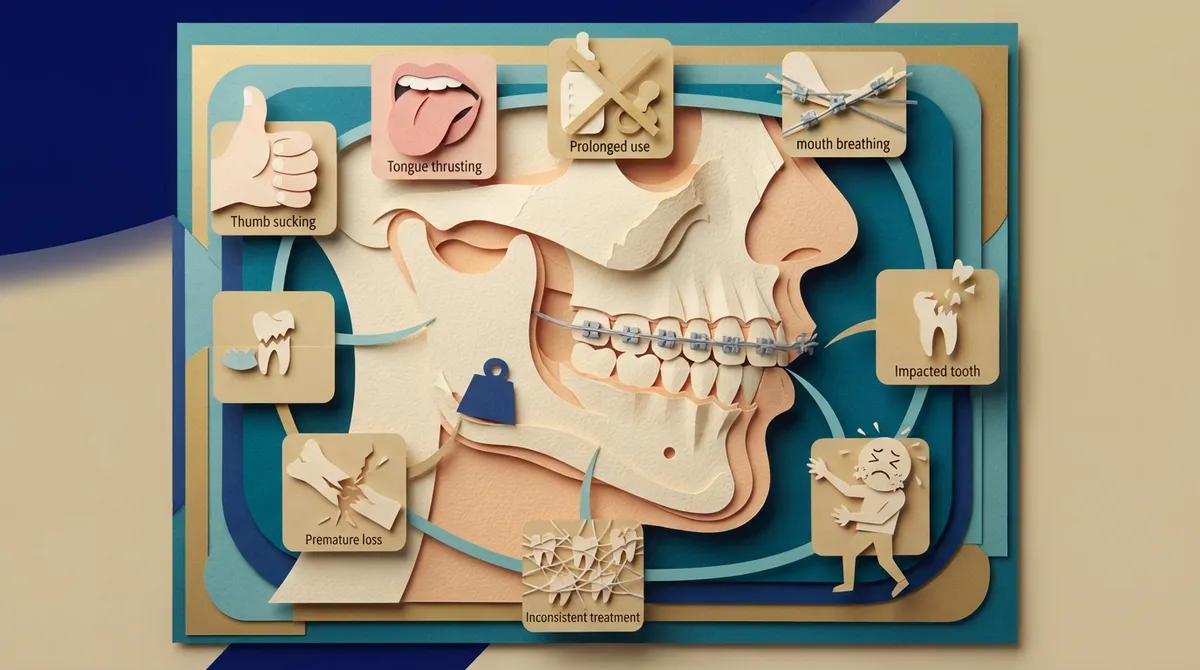
10 Jaw Growth Mistakes That Derail Orthodontic Plans
Let us walk through the mistakes one by one. Each includes a simple fix you can use right away.
1. Going by Age Alone
Many families ask, “What age is best for braces?” Age matters, but it is not the whole story. Treatment timing depends on the specific bite problem, dental development, and the child’s individual growth stage.
Two 11-year-olds can be at very different growth points. One may be right in a growth spurt. The other may be a year or two away. That is why a personal exam beats a one-size-fits-all age rule. If you are curious about timing, our guide on how to time early orthodontic care for your child is a great next read.
2. Skipping the Age 7 Check-Up
The American Association of Orthodontists recommends an orthodontic check-up no later than age 7. Some parents skip it because their child’s teeth look fine. But the check-up is not just about crooked teeth. It looks at how the jaws and bite are developing.
An early visit can spot issues and set up a monitoring plan. It is an evaluation, not a promise that treatment starts right away. If you want to learn more, take a look at why early evaluation isn’t treatment.
3. Assuming Every Child Needs Early Treatment
This is the flip side of mistake number two. A check-up at age 7 does not mean braces at age 7. Many children do not need immediate treatment at all.
Early or interceptive treatment helps most when acting during growth can improve the bite or create better conditions for later development. For many kids, regular monitoring is the right plan. It is okay to “just watch” when watching is the smart move.
4. Waiting Too Long When Growth Could Help
Now for the other side. For some bite problems, there is a limited window when growth can be put to work. Waiting past that window can change your options.
When a child is still growing, certain appliances can use that growth to address some jaw differences. For example, functional appliances may be considered for some Class II patterns, where the lower jaw sits back. Palatal expansion may be used for a narrow upper jaw in appropriate growing patients. Results vary by diagnosis and patient, so this is always a case-by-case call.
If you have been wondering whether your child is in a helpful window, our post on jaw growth and bite development answers many common parent questions.
5. Thinking Braces Can Change Any Jaw Problem
Braces and aligners are fantastic at moving teeth. They are not magic wands for every jaw difference. A small jaw mismatch may be hidden by moving teeth into good positions, which orthodontists call camouflage. A larger skeletal difference may need a different approach.
Honesty is part of good care. Your orthodontist should explain what an appliance can and cannot do for your specific bite. Appliance effects vary, so ask about realistic goals. You can also read about palatal expansion versus braces alone to see how these options differ.
6. Ignoring Growth Checks During Treatment
Growth does not pause just because treatment started. A teen’s jaws may keep changing while braces are on. That is why plans are staged and rechecked.
Regular visits let your orthodontist see how the bite is responding and adjust as needed. A staged plan may change with new clinical findings, and that is a normal, healthy part of care. For more on follow-up visits, see why orthodontic checkups matter so much.
7. Treating a Growth Estimate Like a Guarantee
Orthodontists use several tools to estimate growth. One is cervical vertebral maturation, which looks at the neck bones on a side-view X-ray called a lateral cephalogram. It helps estimate where a patient is in their growth.
Here is the important part. A 2022 systematic review of 43 studies found moderate-to-high correlations with other skeletal maturity methods, and concluded the method can help assess maturity. But the review also pointed out limits in evidence quality: 16 studies were rated low quality, 25 moderate, and only 2 high. So these tools are helpful guides, not exact forecasts. Your orthodontist should read them alongside the clinical exam, dental development, and history.
8. Overlooking Genetics, Sex, and Health
Growth is not the same for everyone. Genetics, sex, general health, and individual maturation all play a role. That is why friends or siblings may follow very different timelines.
It is tempting to compare your child to a classmate or a cousin. Try not to. Instead, ask your orthodontist what is happening with your child’s growth pattern. A personal plan beats a borrowed one every time.
9. Believing the Window Closes Forever
When growth slows or ends, the chance to modify jaw growth gets smaller. But that does not mean you are out of options! Tooth movement can still correct many problems at any age, which is great news for teens, adults, and anyone returning after relapse.
A significant jaw-size or jaw-position difference may call for a different plan after growth. In selected cases, that can include orthognathic (jaw) surgery. Many adults get wonderful results with braces or aligners alone. If you are an adult wondering where you fit, check out 14 facts that prove adults can get braces in 2026.
10. Not Asking Questions at the Consultation
The last mistake is the quietest one: leaving questions unasked. A great consultation is a two-way conversation. You should leave understanding the diagnosis, the options, and the timing.
Not sure what to ask? Try these starters:
- Is my child’s bite problem mainly about teeth or about the jaws?
- Is this a good time to treat, or should we monitor first?
- How will you check on growth over time?
- What could change the plan down the road?
- What happens if we choose to wait?
For more ideas, see how to ask the right questions about early treatment.
How Orthodontists Assess Jaw Growth
So how do we actually figure out where a patient is in their growth? There is no single test. Instead, your orthodontist pieces together a picture from several sources.
- Medical and dental history. Past dental care, habits like thumb sucking, and family patterns all give clues.
- Facial and dental exam. We look at facial balance, how the teeth meet, and which teeth have come in.
- Bite analysis. We check how the upper and lower teeth fit together and whether the jaws line up well.
- Imaging when clinically indicated. X-rays or 3D images are used only when they help answer a real question about growth or diagnosis.
- Skeletal maturity indicators. Tools like cervical vertebral maturation help estimate growth stage, always read with the other findings.
If you are curious about the technology side, our article on what orthodontic X-rays can help evaluate in 2026 explains what these images show.
Growth Stages and Planning Options at a Glance
Every patient is different, so treat this table as a general map rather than a rule. Your orthodontist will tailor the plan to you.
| Growth Stage | What It Often Means for Planning | Possible Approaches |
|---|---|---|
| Still growing, early years | Growth may help guide jaw relationships | Monitoring, or selected appliances such as expanders or functional appliances |
| Growth nearing its peak | A helpful window may exist for some bite problems | Growth-guiding appliances, then braces or aligners |
| Growth slowing or complete | Less chance to change jaw growth | Tooth movement with braces or aligners; surgery considered only for significant skeletal differences |
Notice how the plan can shift as a patient moves from one stage to the next. That is why ongoing check-ins matter so much.
What This Means for Different Patients
For Parents of Children and Teens
You do not have to figure this out alone. The goal at the early visit is to learn what is going on and make a plan. If your child needs nothing right now, you will know when to come back. If a growth window is open, you will know that too.
For teens, timing often lines up with the arrival of most permanent teeth and the growth spurt years. Our guide on how growth affects a teenager’s orthodontic plan in 2026 goes deeper on this stage.
For Adults and Relapse Patients
Your jaws have finished growing, so the planning is different. The focus turns to tooth position, bite function, and gum health. Many adults are surprised by how much can be done with braces or clear aligners alone.
If you had braces years ago and your teeth have drifted, you are in good company. Teeth can shift for many reasons, and retreatment is common. Our post on how age affects orthodontic treatment planning in 2026 shows how plans differ at different life stages.
For Health-Conscious Patients
If you care about your whole-mouth health, jaw position and bite matter beyond looks. How your teeth meet affects chewing and wear over time. A thoughtful plan considers function, comfort, and long-term oral health together.
How Brockway Orthodontics Approaches Growth-Based Planning
At Brockway Orthodontics, Dr. Brockway takes the time to listen to your concerns and explain what she sees, in friendly, plain language. We use modern tools like digital impressions and 3D imaging to plan treatment with care and precision, and we offer braces, ceramic (clear) braces, and Spark™ Clear Aligners for patients of all ages.
As a trusted orthodontist in Clearwater, Florida, we believe families should feel informed at every step. Whether your child needs a simple monitoring plan or you are ready to explore treatment, we will walk you through the options and what to expect. You can also see what other families say by reading reviews on Google for Brockway Orthodontics.
To stay connected with orthodontic best practices, the Florida Association of Orthodontists and the American Dental Association are both helpful resources for families who want trustworthy information.
A Simple Plan to Avoid These Mistakes
Feeling a little overwhelmed? Here is an easy path to follow:
- Book an early check-up by age 7, even if teeth look fine.
- Ask whether the issue is dental or skeletal so you understand the real cause.
- Learn the timing. Ask if now is a good time to treat, or if monitoring is better.
- Plan for rechecks. Expect your plan to be reviewed as teeth and jaws change.
- Keep asking questions. A good orthodontist welcomes them.
Follow these steps and you will sidestep most of the mistakes above. Better yet, you will feel calm and confident about each decision along the way.
Final Thoughts: Plan With Growth, Not Against It
Understanding how jaw growth affects orthodontic planning gives you a real advantage. It helps you avoid rushing in too early, waiting too long, or expecting braces to do something they cannot. Growth is personal, it is variable, and it keeps changing, so the best plans are flexible and checked often.
The takeaway is simple. Get an evaluation, ask good questions, and let your orthodontist build a plan around your unique growth and bite. Ready to take the next step? Book a free consultation online and let Dr. Brockway and our friendly team help you understand your options. Prefer to chat first? You can also contact us with any questions. We would love to help your family smile with confidence.
FAQs
Q: How does jaw growth affect when a child should get braces?
A: Timing depends on the specific bite problem, dental development, and your child’s individual growth stage, not age alone. Some children benefit from growth-guiding treatment, while many simply need monitoring until more permanent teeth come in. A personal exam is the best way to find the right time.
Q: Why does the AAO recommend an orthodontic check-up by age 7?
A: The check-up lets an orthodontist spot bite or jaw issues early and set up a monitoring plan. It is an evaluation, not a recommendation that every child start treatment then. Most kids simply get peace of mind and a clear timeline.
Q: Can braces or appliances change jaw growth in children?
A: In some growing patients, selected appliances like functional appliances or palatal expanders can help address certain jaw differences. Braces alone mainly move teeth. How well each option works varies by diagnosis and patient, so your orthodontist will explain what is realistic for your child.
Q: What is the difference between a dental problem and a skeletal jaw problem?
A: A dental problem involves tooth position, like crowding or tilted teeth. A skeletal problem involves the size or relationship of the jaws. Knowing which one you have helps decide whether the plan focuses on moving teeth, guiding growth, or planning for after growth.
Q: Can jaw problems still be treated after growth is complete?
A: Yes! Tooth movement with braces or clear aligners can correct many problems at any age. For a significant jaw-size or jaw-position difference, a different plan may be needed, and in selected cases orthognathic surgery may be considered.
Our Service Area