
Key Takeaways
-
Get a written, itemized treatment plan listing the total fee, treatment length, payment schedule, possible extra charges, and whether retainers and follow-up visits are included.
-
Call your dental insurer to confirm orthodontia coverage, lifetime maximum, age limits, waiting periods, and in-network rules, then get the estimated insurance payment in writing.
-
Orthodontic costs are generally eligible for HSA or health FSA funds, letting you pay with pre-tax dollars, but keep receipts and contracts and watch FSA plan-year deadlines.
-
Compare quotes by what each includes, not just the headline price, since one office may bundle retainers and visits that another charges for separately.
-
Check whether your teen may qualify for Medicaid or CHIP, which must cover medically necessary orthodontic care for eligible children, though cosmetic-only treatment may not be covered.
-
Budget for the unexpected by adding a contingency fund for replacement retainers, missed-appointment fees, extra supplies, and longer-than-planned treatment.
Your teen’s smile is worth investing in, but let’s be honest: the price tag can feel scary. If you’ve ever stared at a treatment quote and wondered how to fit it into your family budget, you’re not alone. The good news? With a little planning, budgeting for teen orthodontic treatment is very doable.
Here’s the thing. Orthodontic costs aren’t one-size-fits-all. Fees vary by location, case complexity, treatment length, and the type of appliance. There’s no single national price you can count on, so the smartest move is to get a clear, written estimate and build your plan around it.
In this friendly guide, we’ll walk through each step. You’ll learn how to get a solid estimate, check insurance, use HSA or FSA funds, explore monthly payment plans, and set aside a small cushion for surprises. By the end, you’ll feel ready to move forward with confidence.

Step 1: Start With a Consultation and a Written Treatment Plan
Every good budget starts with real numbers. The best way to get them is a consultation with an orthodontist. This visit helps you understand what your teen needs, how long treatment may take, and what it will cost.
Many families find that a no-pressure first visit takes a lot of the fear away. If you’re curious how that works, see our post on free vs. paid braces consultations.
After the visit, ask for a written, itemized treatment plan. It should spell out the total fee and what it covers. A clear quote keeps surprises away later.
What to ask the practice to put in writing
- The total treatment fee and exactly what it includes
- The expected length of treatment
- The payment schedule (down payment and monthly amounts)
- Possible extra charges, like replacement appliances or missed-appointment fees
- Whether retainers and follow-up visits are included
Writing it all down protects you and makes comparing quotes much easier.
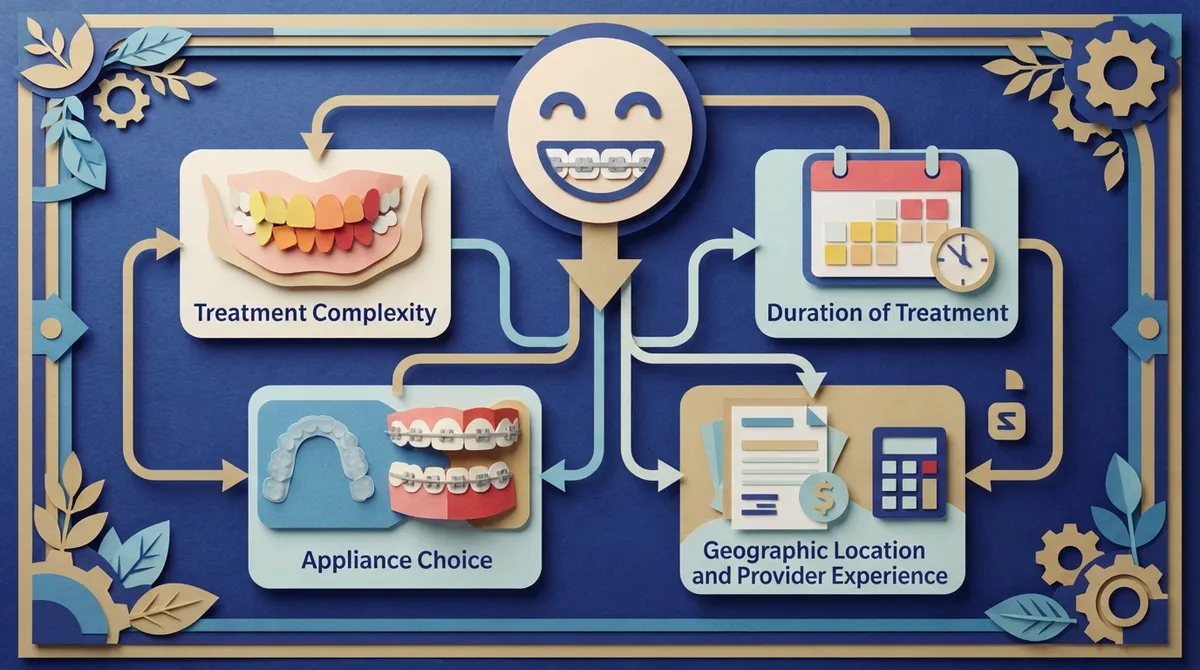
Step 2: Understand What Shapes the Price
Why do quotes differ so much from one family to the next? Several things play a role. Knowing them helps you read an estimate with a sharper eye.
| Cost Factor | Why It Matters |
|---|---|
| Case complexity | Simple crowding usually needs less work than a complex bite problem |
| Treatment length | Longer treatment often means more visits and a higher fee |
| Appliance type | Metal braces, ceramic braces, and clear aligners can be priced differently |
| Location | Fees vary by region and by practice |
| Provider | Experience, technology, and office policies all play a part |
You can dig deeper into this in our guides on how treatment length affects orthodontic costs and how treatment complexity affects fees.
Compare quotes the smart way
It’s smart to get more than one estimate. But compare what each quote includes, not just the headline number. One office may include retainers and visits while another charges separately. Two quotes that look different may actually be very close once you line them up side by side.
Step 3: Choose the Right Appliance for Your Teen and Your Budget
Teens have options. Traditional metal braces are a classic, ceramic braces blend in more, and clear aligners are removable and discreet. Each has its own look, feel, and price.
The best choice depends on your teen’s bite, lifestyle, and personality. A teen who plays contact sports or forgets things easily may do better with fixed braces. A teen who wants a low-profile look and is very responsible may love aligners.
At Brockway Orthodontics in Clearwater, we offer metal braces, ceramic (clear) braces, and Spark™ Clear Aligners, a more affordable alternative to other popular aligner brands. To weigh the options, check out our comparison of clear aligners vs. braces cost, or read about metal vs. ceramic braces.
Step 4: Check Your Dental Insurance Benefits
Dental insurance may pay part of orthodontic care for a dependent child. But benefits differ a lot from plan to plan, so don’t assume anything. A quick call to your insurer can save you real money and stress.
Questions to ask your insurance company
- Is orthodontia covered at all? Some plans exclude it completely.
- What is the lifetime maximum? This is the most the plan will pay over time.
- Are there age limits? Some plans only cover children up to a certain age.
- Is there a waiting period? Some plans make you wait before benefits start.
- Do I have to use an in-network provider? Out-of-network care may be covered at a lower rate.
- Are there exclusions? Some plans exclude certain appliances or treatments.
Here’s a key tip. A plan’s stated maximum is not always the amount it will pay for your teen’s case. Ask both the insurer and the orthodontist to coordinate benefits before treatment begins. Then get the estimated insurance payment and your remaining balance in writing.
Need more help? Our guides on using dental insurance to help pay for braces and common orthodontic insurance mistakes walk you through it.
Step 5: Use HSA and FSA Funds to Save on Taxes
Here’s a budgeting trick many families overlook. Orthodontic expenses, such as braces, are generally eligible medical expenses for a Health Savings Account (HSA) or a health Flexible Spending Account (FSA). That means you may be able to pay with pre-tax dollars.
The IRS describes qualified medical expenses as costs for the diagnosis, cure, mitigation, treatment, or prevention of disease. Orthodontic care may qualify when your plan and tax rules are met. You can read more in IRS Publication 969.
Tips for using these accounts well
- Check your plan’s documentation and reimbursement rules first
- Keep your treatment contract, receipts, and payment records
- Know your yearly FSA limit and deadline, since FSA funds often must be used within the plan year
- Don’t count the same expense for both tax-free reimbursement and a tax deduction
It’s a good idea to talk with a tax professional if you’re unsure how it all fits together.
Step 6: Look Into Medicaid and CHIP if You Qualify
Some families may have help they don’t know about. According to Medicaid.gov, Medicaid and CHIP must provide dental benefits to children. Under federal EPSDT rules, medically necessary orthodontic services are included for eligible children.
Coverage is decided under your state’s rules and by an individual medical-necessity review. Cosmetic-only orthodontia may not be covered, and prior authorization may be required. If you think your teen may qualify, contact your state Medicaid or CHIP office and ask how orthodontic coverage works in your area.
Step 7: Plan Your Monthly Payments
For most families, the real question isn’t the total price. It’s the monthly payment. The good news is that many orthodontic practices break the cost into manageable pieces, usually an initial payment followed by monthly installments. Some even offer no-interest terms.
Our Clearwater team loves helping families find a plan that fits. You can learn more about options in our posts on monthly payment plans, braces down payments, and CareCredit financing.
Questions to ask before agreeing to a payment plan
- How much is the down payment?
- What is the monthly amount, and how many months will it last?
- Are there fees or interest?
- Is there a discount for paying in full up front?
- What happens if treatment ends early or your insurance changes?
Answers to these questions help you avoid surprises and keep your budget steady.
Step 8: Build in a Cushion for the Unexpected
A practical budget includes more than the quote. Add the expected family share, then set aside a small contingency fund. Life with a teen can be unpredictable, and a little padding keeps stress low.
Here are costs that sometimes pop up:
- Replacement retainers or appliances if one is lost or broken
- Missed-appointment fees
- Extra supplies like orthodontic wax, special brushes, or floss threaders
- Added visits if treatment runs longer than planned
Don’t forget life after braces, either. Retainers protect your investment, so plan for them. Our guide on how to budget for retainer price after braces can help.
Step 9: Put It All Together in a Simple Budget
Now let’s turn the pieces into one clear picture. Grab a notebook or spreadsheet and walk through these steps.
- Write down the total treatment fee from your itemized estimate.
- Subtract the estimated insurance payment you confirmed in writing.
- Subtract any discounts, such as a pay-in-full option, if you plan to use it.
- Divide the remaining balance by the number of months in your payment plan.
- Add a contingency amount for retainers, repairs, or extra supplies.
- Check HSA or FSA funds to see how much of the balance you can pay with pre-tax dollars.
Once you see the monthly number, you can decide if it fits your household budget. If it feels tight, ask about a longer payment term or a different appliance option.
Keep Good Records Along the Way
This one is easy to forget but very helpful. Keep your treatment contract, insurance estimates, receipts, and reimbursement records in one folder. It makes tax time and FSA or HSA claims much simpler.
It also helps if your insurance changes or you ever need to transfer care. A tidy paper trail is a budgeting superpower.
Talk With Your Teen About the Plan
Here’s a fun bonus step. Include your teen in the conversation! Teens who understand the investment tend to take better care of their braces or aligners. Keeping up with brushing, wearing elastics, and going to every appointment can help avoid extra costs and delays.
Our 12 questions teens should ask their orthodontist is a great way to get them involved. And if you want to know what to expect from the process, see our braces for teenagers facts.
Why Families Choose Brockway Orthodontics
At Brockway Orthodontics, we believe great orthodontic care should feel welcoming and clear, especially when it comes to cost. Dr. Brockway takes the time to listen to your family’s goals, explain every option in plain language, and help you find a plan that works. We also use modern tools like digital impressions and 3D imaging, so your teen’s plan is precise and comfortable.
Curious what other families say? See what our Brockway Orthodontics patients say on Google. You can also learn more about the Florida orthodontic community through the Florida Association of Orthodontists or oral health basics at the American Dental Association.
You’ve Got This
Budgeting for teen orthodontic treatment doesn’t have to be overwhelming. Start with a written estimate, check your insurance, explore HSA or FSA savings, and pick a monthly plan that fits your life. Add a small cushion, keep your records tidy, and you’ll be set.
Ready to take the first step toward a confident smile for your teen? Book your appointment online and our friendly Clearwater team will walk you through every cost, option, and payment plan.
FAQs
Q: How much do braces cost for a teenager?
A: There’s no single national price, because costs depend on your location, your teen’s case, treatment length, and the type of appliance. The best way to know for sure is to get a written, itemized estimate, and even better, compare a couple of quotes.
Q: Does dental insurance cover braces for teens?
A: It might! Many plans cover part of a dependent child’s orthodontic care, but benefits vary. Check for a lifetime maximum, age limits, waiting periods, and in-network rules, and ask for the estimated payment in writing before treatment starts.
Q: Can I use an HSA or FSA to pay for my teen’s braces?
A: Yes, in many cases. Orthodontic expenses like braces are generally eligible medical expenses for HSA or health FSA funds, subject to IRS rules and your plan’s requirements. Keep your receipts and contract handy for reimbursement.
Q: Does Medicaid or CHIP cover braces for teens?
A: Possibly. Medicaid and CHIP provide children with dental benefits, and medically necessary orthodontic services may be covered for eligible kids. Each state sets its own rules, and cosmetic-only treatment may not qualify, so check with your state program.
Q: Can orthodontic treatment be paid for monthly?
A: Absolutely. Many practices offer a down payment followed by monthly installments, sometimes with no-interest terms. Ask about the down payment, monthly amount, any fees, and what happens if treatment ends early.
Our Service Area