Key Takeaways
-
Spark aligners suit many adults with mild to moderate crowding, spacing, or relapse, but complex cases may need attachments, elastics, or braces, so a thorough exam is essential.
-
Spark's patient guidance recommends wearing aligners about 22 hours a day, so honestly assess whether your daily routine can support that level of consistent wear.
-
A digital simulation is a plan, not a promise; your orthodontist must monitor progress and adjust, since teeth don't always move as predicted.
-
Costs vary by provider, case complexity, and location; Spark's examples run $3,500 to $8,000 before insurance, so request a written estimate and confirm whether refinements and retainers are included.
-
Retainers are part of treatment, not an afterthought, so ask about retainer type, wear schedule, and long-term follow-up before you begin.
-
Check your gum health and existing dental work first, since gum disease, cavities, or restorations like crowns and implants may need treatment before aligners can safely move your teeth.
Thinking about straightening your teeth as an adult? You’re in good company. More grown-ups than ever are asking about clear aligners, and it’s easy to see why. They’re removable, nearly invisible, and they fit into a busy work and social life. But before you say yes to any aligner brand, it helps to know what you’re getting into. Here is what adults should know before choosing Spark aligners, from who they suit best to what they cost.
Spark aligners are custom clear trays prescribed and monitored by a dental professional. They can be a great fit for many adults. They are not magic, though, and they work best when the plan, the provider, and your daily habits all line up. Think of this guide as a friendly chat before your first appointment. We’ll cover candidacy, wear time, timelines, costs, and retainers, so you can walk in with confident questions.
What Are Spark Aligners, Exactly?
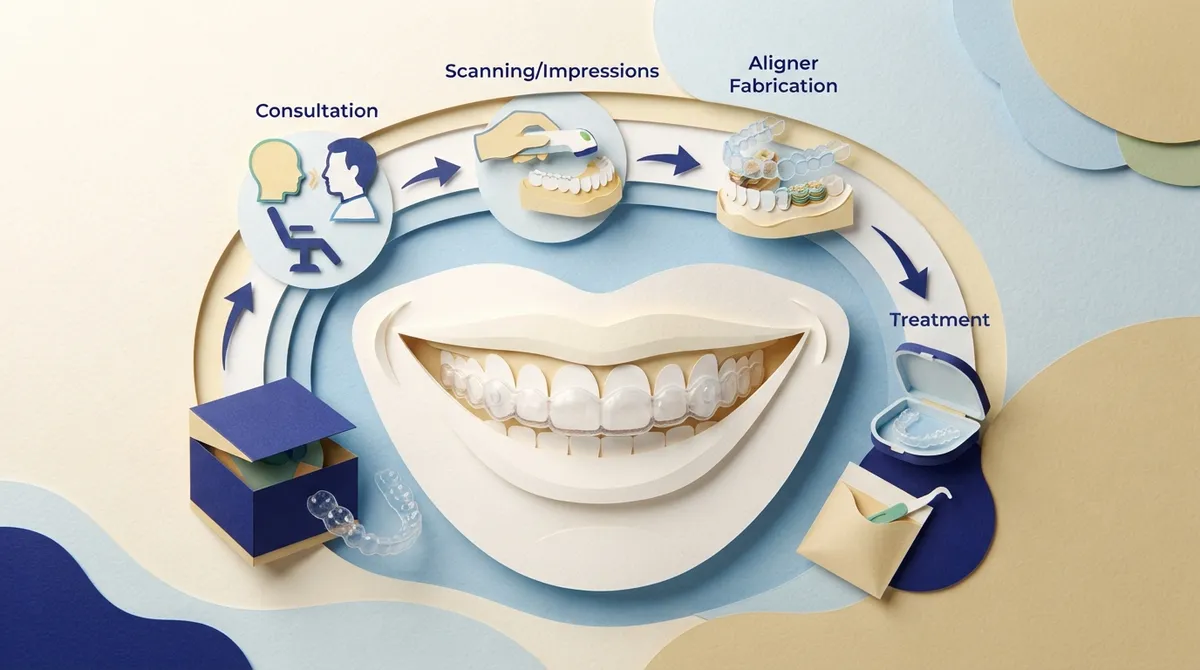
Spark is a brand of removable, clear orthodontic aligners. Each set is a series of custom trays. Every tray moves your teeth a small amount, and you switch to the next one as your orthodontist directs. Brockway Orthodontics offers Spark™ Clear Aligners as a more affordable alternative to some other well-known aligner systems. If you want a primer first, our guide to what Spark clear aligners are is a good place to start.
Here is the key point. Spark aligners are a tool, not a shortcut. The tray is only part of the story. The real value comes from the examination, the digital plan, and the professional who guides your care.

Are You a Good Candidate?
Many adults are. But candidacy depends on your own bite, the tooth movements you need, and the health of your gums and bone. Clear aligners handle many alignment problems well. Some complex movements are less predictable and may call for extra help. That help might include small tooth-colored attachments, interproximal reduction (IPR, which means polishing tiny amounts of enamel between teeth to make room), elastics, braces, or a mix of approaches.
Aligners often work well for:
- Mild to moderate crowding
- Gaps and spacing between teeth
- Some bite problems, depending on the case
- Relapse after earlier braces
If you want to explore this more, read about what makes someone a clear aligner candidate. And if your case is more complex, a good orthodontist will tell you honestly when braces may do the job better. Our comparison of braces vs. clear aligners can help you weigh the options.
Get a Real Exam Before You Decide
This is the step adults should never skip. A proper orthodontic assessment looks at your teeth, gums, bite, and jaw. It usually includes digital records such as photos and scans. At Brockway Orthodontics, we use modern tools like digital impressions instead of messy molds, so your records are accurate and comfortable to capture. You can learn more about intraoral scanning if you’re curious how it works.
Why does the exam matter so much? Because a digital simulation is a plan, not a promise. It shows how your teeth are expected to move. Real teeth don’t always follow the script. Research backs this up. A 2025 systematic review of adult clear-aligner rotational movements found low-to-moderate certainty and noted that most included studies had moderate-to-serious risk of bias. In plain terms, predicting exactly how every tooth will move is hard, and your orthodontist needs to monitor your progress and adjust.
Check Your Dental Health First
Aligners can’t replace routine dental care. Before you start, your team should check for gum disease, cavities, and any existing dental work. These issues may need treatment first. Moving teeth when gums are unhealthy can cause real trouble.
Existing crowns, bridges, or implants can also change the plan. Not every restoration moves the way natural teeth do. Our article on using clear aligners with dental restorations explains what to ask. And if gum health is a worry, see why gum health matters before adult braces.
The 22-Hour Rule: Be Honest About Your Habits
Here’s the part that surprises many adults. Spark’s patient guidance recommends wearing aligners about 22 hours a day. You take them out to eat and to drink anything other than water. Then you clean your teeth and put them back in. Your own orthodontist’s instructions always come first, but the general rule is clear. The trays only work when they’re in your mouth.
Ask yourself a few honest questions:
- Can I keep my aligners in during long workdays and meetings?
- Will I remember to take them out before meals and put them back after?
- Do I snack or sip coffee all day, which would mean taking trays out again and again?
- Am I willing to brush before reinserting them?
If you tend to forget things, aligners can still work, but you’ll need a routine. Inconsistent wear can delay progress or affect how the trays fit. If that sounds like you, braces keep working around the clock with no effort from you. Our guide on options for people who forget removable appliances is worth a read. For busy professionals, here are tips on caring for aligners during a workday.
What to Expect Day to Day
Aligners are comfortable for most people, but there’s a short adjustment period. Here’s what adults commonly notice:
- Pressure or soreness: You may feel tightness for a day or two when you start a new tray. That’s normal and usually fades.
- Speech changes: You might have a slight lisp at first. Most people adapt within days.
- Eating routine: You remove trays for meals, so you can eat what you like. You just need to clean up before putting them back.
- Cleaning: Trays need daily care. Hot water can warp them, so check out how to clean clear aligners the right way.
Your orthodontist should also explain risks and tell you which symptoms mean it’s time to call the office. Never ignore pain that feels sharp or that doesn’t improve.
How Long Will Treatment Take?
There’s no single answer. Treatment time depends on how much your teeth need to move and how well you wear the trays. Many cases take several months to over a year. A 2024 systematic review of clear-aligner wear protocols looked at six studies (three randomized and three non-randomized). Findings on tooth movement across 7-, 10-, and 14-day tray-change schedules were mixed, and the authors rated the efficacy evidence very low. The takeaway? Tray-change timing should be set by your clinician for your case, not copied from a generic schedule.
You’ll also have regular professional checks. These matter. They let your orthodontist confirm that your teeth are tracking as planned. Learn more about keeping clear aligners on track with monitoring.
Refinements Are Normal
Sometimes teeth don’t track perfectly, and a second set of trays is needed to fine-tune the result. That’s called a refinement. It doesn’t mean something went wrong. It’s a normal part of many aligner cases. Ask your provider upfront whether refinements are included in your quoted fee. Here’s why refinement aligners may be needed.
What Do Spark Aligners Cost?
Cost is a big question for adults, so let’s be clear. Spark’s official cost information says fees are set by each individual provider. They vary with case complexity, treatment length, and local market. Spark gives illustrative examples of total treatment from $3,500 to $8,000, with example insurance contributions from $1,500 to $3,500. Those are examples, not a price list. Your actual fee depends on your provider, your case, and your coverage.
| Cost Factor | Why It Matters |
|---|---|
| Case complexity | More movement usually means more trays and visits |
| Treatment length | Longer plans often cost more |
| Refinements | Ask if extra trays are included or billed separately |
| Retainers | Confirm if they’re part of the fee |
| Insurance | Benefits vary widely by plan |
| Financing | Monthly plans can spread out the cost |
Always ask for a written estimate. Then call your insurer directly to confirm your orthodontic benefits. Our guides on adult orthodontic insurance questions and budgeting for clear aligners can help. If you want to compare, see clear aligners vs. braces cost. Monthly options are covered in our payment plan guide.
Understand the Evidence (and Its Limits)
Good orthodontic care means being honest about what we know. Clear aligners work well for many tooth movements, but the evidence isn’t equally strong for all of them, and brand-specific comparisons are limited. For example, the FDA 510(k) summary for the Spark Clear Aligner System (K240501) reported that clinical testing had not been conducted for that submission. Clearance was supported by non-clinical testing. That is not a head-to-head clinical comparison against other aligners or braces.
What does that mean for you? It means the provider matters as much as the product. An experienced orthodontist plans your movements, watches your progress, and changes course when needed. For a look at how professional planning works, see how orthodontists plan tooth movement. You can also verify a provider’s credentials through the American Dental Association or the Florida Association of Orthodontists.
Don’t Forget About Retainers
Retention is part of treatment, not an afterthought. After your teeth move, they can shift back. That’s true for aligners and braces alike. Before you begin, ask about the retainer type, the wear schedule, and the long-term follow-up plan.
Common retainer choices include clear removable retainers, Hawley retainers, and fixed bonded wires. Each has pros and cons. Explore your choices in our guide to retainer options after Spark aligners and learn why retainers still matter after aligners. If you’ve had braces before and your smile shifted, you may be an orthodontic retreatment candidate.
Questions to Ask at Your Consultation
Bring a short list to your visit. These questions can help you feel in control:
- Is my case a good fit for aligners, or would braces or a combined approach work better?
- Will I need attachments, IPR, or elastics?
- How many hours a day should I wear my trays?
- How often will you check my progress?
- Are refinements and retainers included in my fee?
- What happens if a tray breaks or I fall behind?
Our article on preparing for your orthodontist consultation walks through what to bring and expect.
Why Choose Brockway Orthodontics?
At Brockway Orthodontics in Clearwater, Florida, Dr. Brockway takes time to listen. She wants to know your goals, your schedule, and your worries. Then she explains your options in plain language, whether that’s Spark aligners, ceramic braces, or traditional metal braces. Our team uses modern technology, including digital impressions and 3D imaging, to plan your care. You can also read reviews and visit us on Google — Brockway Orthodontics to see what patients say.
We’ll tell you honestly whether aligners suit your smile. That honesty is part of caring about your journey.
Ready to Take the Next Step?
Choosing aligners is a big decision, and you deserve clear answers. The best choice comes from a real exam, an honest plan, and a team you trust. If you’re curious whether Spark aligners fit your smile, book an appointment online and we’ll walk you through your options. Prefer to talk first? Contact us any time. We can’t wait to meet you!
FAQs
Q: Are Spark aligners a good option for adults?
A: They can be! Many adults do well with Spark aligners, especially for mild to moderate crowding or spacing. The best way to know is a personal exam, since your bite, gum health, and the tooth movements you need all play a part.
Q: How many hours a day do I need to wear Spark aligners?
A: Spark’s patient guidance recommends about 22 hours a day. You only take them out to eat, drink anything besides water, and clean your teeth. Always follow your orthodontist’s exact instructions, since they come first.
Q: How much do Spark aligners cost, and does insurance help?
A: Fees are set by each provider and depend on your case, treatment length, and location. Spark’s examples range from $3,500 to $8,000, with example insurance contributions of $1,500 to $3,500. Ask for a written estimate and check your orthodontic benefits with your insurer.
Q: Will I need retainers after Spark aligner treatment?
A: Yes, retention is a key part of treatment. Teeth can shift after they move, so you’ll need a retainer plan. Talk with your orthodontist about the type, the wear schedule, and the follow-up before you begin.
Q: Are Spark aligners as effective as braces for complex cases?
A: It depends on the case. Aligners work well for many problems, but some complex movements may be less predictable and may need attachments, elastics, or braces. A thorough exam will show which option gives you the best result.
Our Service Area