Key Takeaways
-
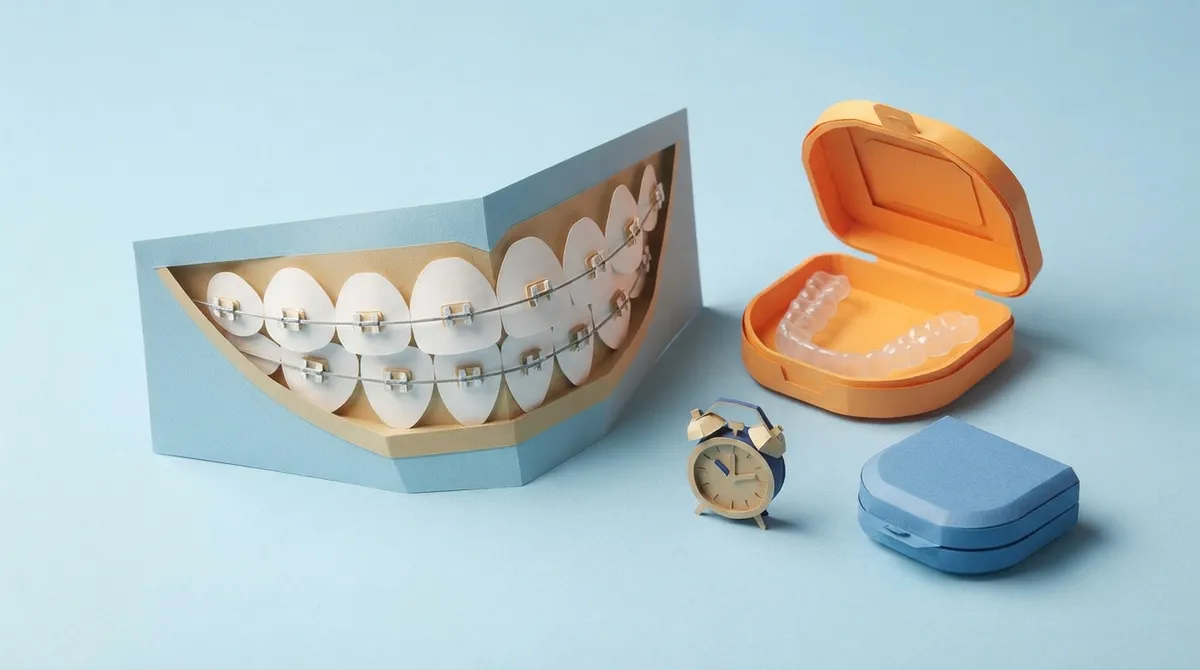
Fixed braces, such as metal or ceramic, work around the clock without any daily remembering, making them the most reliable option for people who often forget removable appliances.
-
Clear aligners are typically worn about 20 to 22 hours a day, and a 2025 study found that people who knew they were monitored wore them about 4.4 hours more per day.
-
A fixed bonded retainer keeps teeth in place after treatment with nothing to remove or put in each night, but it needs careful cleaning and regular professional checks.
-
If you miss aligner wear time, put the current tray back in and call your orthodontist rather than skipping ahead to the next tray on your own.
-
If you stick with aligners, use a bright case every time, set phone reminders after meals, and keep a spare case at work, in the car, and at school.
-
Choosing between fixed and removable appliances depends on your bite, goals, oral health, and routine, so an in-person orthodontist assessment is the best way to decide.
Let’s be honest: we all forget things. Keys, birthdays, that one dentist appointment you swore you’d book. So if you keep leaving your aligners in a napkin at lunch or your retainer on the bathroom counter, you are in very good company. The good news? Forgetting does not mean you can’t have a straight, healthy smile.
The right orthodontic options for people who forget removable appliances exist, and they are more common than you might think. Some treatments work in the background all day, every day, with no remembering required. Others can still work for you with a few smart habits.
In this guide, we will walk through how removable appliances work, what happens when they get skipped, and which choices may fit a forgetful (but wonderful) human like you. Whether you are a parent helping a busy teen, a young adult juggling a packed schedule, or a professional with a calendar full of meetings, there is a path that can work.
Why Removable Appliances Are Easy to Forget
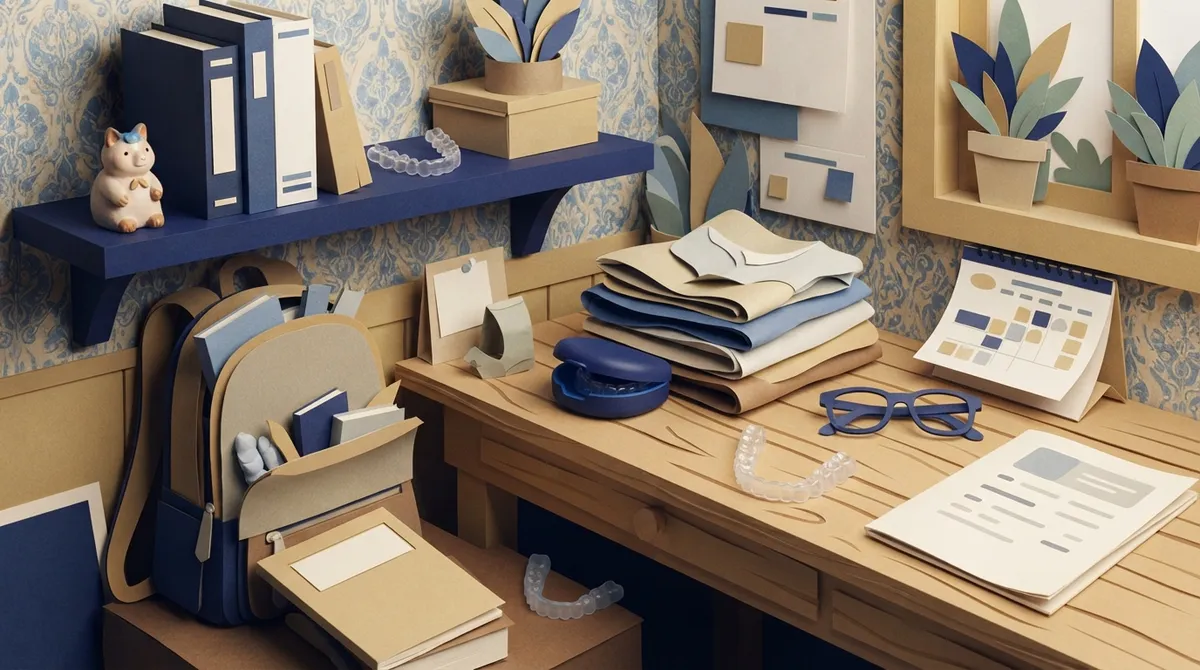
Removable appliances are great in many ways. They come out for meals, they are easy to clean, and they can be nearly invisible. But that freedom comes with a catch: the treatment only works when the appliance is actually in your mouth.
Think about a typical day. You pop out your aligners for lunch, get pulled into a meeting, and suddenly it is 3 p.m. Or your teen takes a retainer out before a game and it ends up in a gym bag. These small slips happen to everyone.
Common reasons people forget include:
- Busy routines: School, work, sports, and family life crowd out small tasks.
- Eating on the go: Appliances come out for snacks and never go back in.
- Comfort breaks: Some people take them out for a quick rest and lose track of time.
- Out of sight, out of mind: If it is not in your mouth, it is easy to forget.
None of this makes you a bad patient. It just means a different approach may serve you better.
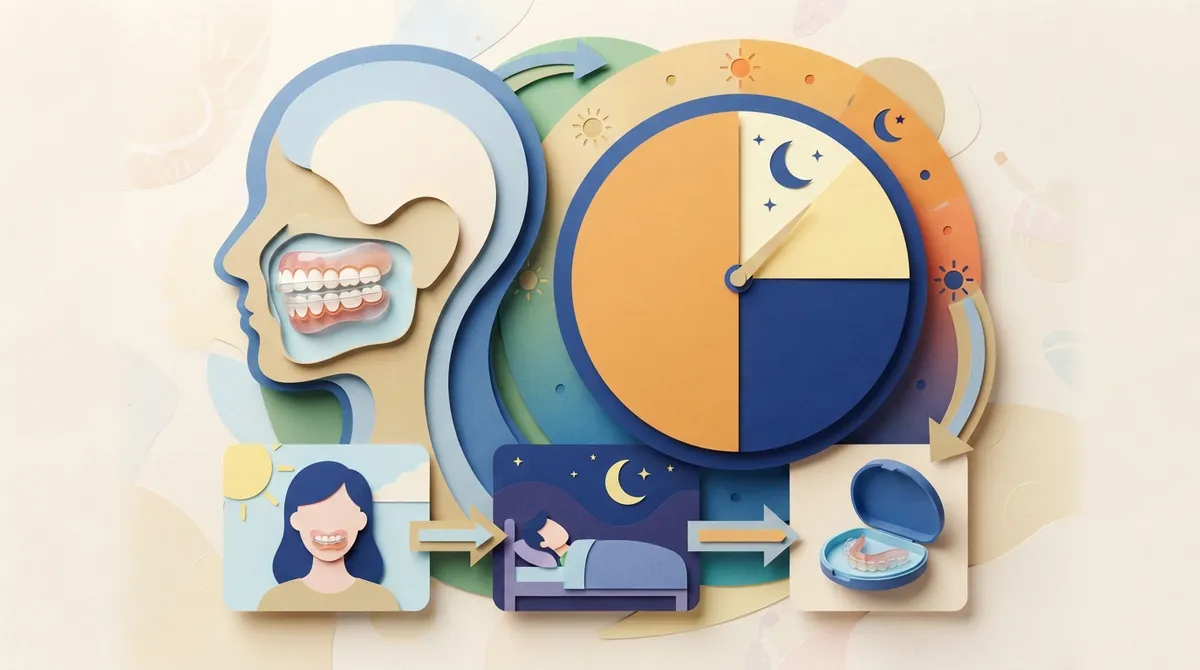
How Much Wear Time Do Removable Appliances Need?
The American Association of Orthodontists (AAO) generally describes clear aligner wear as about 20 to 22 hours per day, or as your orthodontist directs. You take them out for meals and cleaning, and the rest of the time they stay in.
That is a lot of wear time. Here is how it breaks down in everyday terms.
| Appliance Type | Typical Wear Expectation | Needs Daily Remembering? |
|---|---|---|
| Clear aligners | About 20–22 hours per day, or as prescribed | Yes |
| Removable retainers | Schedule varies by patient and appliance | Yes |
| Removable functional appliances | As prescribed by your orthodontist | Yes |
| Traditional braces | Always on the teeth | No |
| Bonded (fixed) retainer | Always on the teeth | No |
Research shows that real-world wear can fall short. A 2024 scoping review found that mean wear for removable functional appliances ranged from 45% to 93% of prescribed time across studies. The same review noted one aligner study in which 36% of patients met prescribed wear time. Keep in mind these numbers come from varied studies and are not a universal rate. The review also cautioned that evidence linking measured wear directly to outcomes is still limited.
A small 2025 randomized study of 43 adults using sensor-equipped aligners found an average wear time of 15.2 hours per day. Interestingly, people who knew they were being monitored wore their aligners about 4.4 hours more per day. That tells us something encouraging: reminders and accountability really can help. (It was a small, single-center study, so results may not apply to everyone.)
What Happens When You Skip Wear Time?
Teeth move when steady, gentle pressure is applied. When an aligner is out for too long, that pressure stops. Over time, skipping wear can lead to:
- Slower progress: Teeth may not follow the planned path on schedule.
- Longer treatment: Missed wear can add months to your timeline.
- Poor tray fit: A new aligner may feel tight or not seat fully.
- Planned movements getting interrupted: The treatment plan depends on consistent wear.
If your aligner no longer fits or you have missed a lot of wear time, please do not simply jump ahead to the next tray on your own. Call your orthodontist for guidance first. If you are curious about why this matters, our guide on why not to skip ahead to a new aligner tray explains it in plain language.
Orthodontic Options for People Who Forget Removable Appliances
Now for the part you came for. If remembering is a daily struggle, these options take that burden off your plate. The best fit depends on your bite, your goals, your oral health, and an in-person assessment.
1. Traditional Metal Braces
Braces are bonded to your teeth, so they work around the clock without you doing a thing. There is nothing to take out, nothing to lose, and nothing to leave in a lunch tray. For many forgetful patients, this is the simplest answer.
Modern metal braces are smaller and more comfortable than the ones your parents may remember. You can also pick fun colored bands, which many teens love. To learn more, see our post on metal braces benefits, cost, and what to expect.
2. Ceramic (Clear) Braces
Prefer a more discreet look? Ceramic braces use tooth-colored or clear brackets. Like metal braces, they stay on your teeth full time, so there is no wear schedule to remember. They are a popular pick for adult professionals and young adults who want a lower-profile smile.
If you are weighing the two styles, our comparison of metal vs ceramic braces can help you decide.
3. Fixed Braces Followed by a Bonded Retainer
Here is a great one-two plan. Use braces for active treatment, then finish with a fixed bonded retainer, a thin wire attached behind your teeth. Because it stays in place, you do not have to remember to put it in each night.
This can be a wonderful choice for anyone likely to misplace a removable retainer. You can read more in our guide to the fixed bonded retainer.
4. Clear Aligners With Built-In Habits
Do you love the look and feel of aligners? You may not have to give them up. Clear aligners can still work well for people who forget, as long as you build strong habits and your orthodontist agrees you are a good candidate.
Brockway Orthodontics offers Spark™ Clear Aligners, a more affordable alternative to other popular aligner brands. If you want to learn how they work, check out how removable aligners straighten teeth.
Fixed vs. Removable: A Side-by-Side Look
The appliance that is hardest to forget is not always the best one. Each approach has trade-offs. Here is a simple comparison.
| Factor | Fixed Braces | Removable Aligners |
|---|---|---|
| Depends on your memory | No | Yes, daily |
| Eating restrictions | Some foods to avoid | Remove for meals |
| Cleaning | Needs extra brushing and flossing care | Brush as usual; clean the trays |
| Appearance | Visible (metal) or discreet (ceramic) | Nearly invisible |
| Comfort | Occasional soreness or poking wires | Pressure with each new tray |
| Best for | People who struggle with consistent wear | People who can follow a wear routine |
Not sure which side wins for you? Our guide on braces vs. clear aligners goes deeper into the pros and cons.
What About After Treatment? Retainers and Forgetfulness
Finishing braces or aligners is a big win, but your teeth can shift afterward. That is why retainers matter so much. Even people who did great during active treatment sometimes lose track of a removable retainer.
Here are your main retention choices:
- Removable retainer: Easy to clean, but it relies on you wearing it as prescribed.
- Fixed bonded retainer: Attached behind the teeth, so there is nothing to forget.
- A combination approach: Some patients use both, depending on their orthodontist’s plan.
A fixed retainer is a lifesaver for forgetful folks, but it is not a magic fix. It needs careful cleaning and regular professional checks. If it loosens or breaks, call your orthodontist right away. It also does not always replace every other retention instruction, so follow your doctor’s plan. For more on this choice, see fixed vs. removable bite retainer.
Already lost a retainer? Do not panic. Our guide on what to do when you lose your retainer walks you through the next steps.
Smart Habits to Help You Remember (If You Stay With Removables)
Maybe you love aligners and want to make them work. That is totally doable! Small tricks can make a big difference. Try these:
- Use a case every time: Never wrap aligners in a napkin. A bright case you cannot miss is a great reminder.
- Set phone alarms: Add a reminder after every meal to put them back in.
- Link it to a habit: Pair aligner time with brushing your teeth, like “brush, then aligners in.”
- Keep a spare case in your bag: Stash one at work, in the car, and at school.
- Track your wear: A simple checklist or app can build accountability, which the 2025 study suggests may boost wear time.
- Ask your family to cheer you on: A gentle “did you put them in?” goes a long way.
For more practical tips, take a look at how to help teens remember aligner wear time.
Can You Switch From Aligners to Braces Mid-Treatment?
Sometimes, yes. If you start with aligners and find that the daily routine is just not working, your orthodontist may talk with you about moving to braces. This can be a smart reset rather than a failure.
Every case is different, so the decision depends on how far along you are, how your teeth have moved, and your oral health. The best move is to be honest with your orthodontist early. Nobody will judge you! They would much rather adjust the plan than watch progress stall. Our article on how to switch from aligners to braces smoothly shares helpful pointers.
Which Option Fits You Best?
Different people have different needs. Here is a quick way to think about it by reader type.
- Parents of kids and teens: If your child often loses or forgets removable items, fixed braces may take the stress off both of you.
- Teens and young adults: Ceramic braces can offer a discreet look without the daily wear worry.
- Adult professionals: If your schedule is packed, a fixed option may fit better than juggling trays between meetings.
- Relapse patients: If a lost retainer led to shifting, a fixed bonded retainer after retreatment may help protect your investment.
- Health-conscious patients: Fixed appliances need diligent hygiene, so think about whether you can commit to careful brushing and flossing.
No matter which path you pick, fixed appliances still need good hygiene and follow-up visits. Check out our tips on how to brush teeth with braces to stay on track.
What an Orthodontist Looks At Before Recommending a Plan
Choosing between fixed and removable is not just about memory. Your orthodontist will consider:
- Your bite and alignment: Some problems respond better to certain tools.
- Your treatment goals: Do you want speed, discretion, or both?
- Your oral health: Gums, cavities, and existing dental work all matter.
- Your daily routine: Honest talk about your habits leads to the best plan.
- Your budget and timeline: Costs and schedules can shape the choice.
This is why an in-person visit is so valuable. At Brockway Orthodontics in Clearwater, Dr. Brockway takes the time to listen to your concerns and your goals, then explains your options in a friendly, easy-to-understand way. We offer Spark™ Clear Aligners, metal braces, and ceramic braces for the whole family, so we can match you with what truly fits your life. You can even visit us on Google — Brockway Orthodontics to see what our Clearwater patients have to say.
Want to know what to bring and ask? Our guide on how to prepare for your orthodontist consultation can help you walk in feeling confident. For a trusted professional resource on oral health overall, the American Dental Association is a helpful place to explore.
A Quick Word on Cost and Payment
Cost is a big part of any decision. Treatment length, complexity, and appliance type all affect the price. The good news is that flexible plans can make care more manageable. If budget is on your mind, explore braces payment plans for Clearwater families and see how monthly options can fit your household.
Final Thoughts: You Do Not Need a Perfect Memory
Here is the heart of it. Forgetting your removable appliance does not disqualify you from a great smile. It simply points you toward the approach that fits your real life.
If you keep forgetting, talk with an orthodontist about fixed braces for active treatment and a bonded retainer afterward. If you love aligners, build simple habits and use reminders. Either way, the most important step is being honest about what works for you.
Ready to find your best fit? We would love to meet you. Book your free consultation online or contact us to chat with our friendly team. Let’s build a plan that works for the busy, wonderful, slightly forgetful you.
FAQs
Q: What orthodontic treatment is best if I keep forgetting to wear my aligners?
A: Fixed braces are a common choice because they stay attached to your teeth and do not depend on you remembering anything. The right pick depends on your bite, goals, and oral health, so a quick visit with your orthodontist is the best way to know for sure.
Q: How many hours a day do I need to wear clear aligners?
A: The American Association of Orthodontists generally describes aligner wear as about 20 to 22 hours a day, or as your orthodontist directs. You take them out for meals and cleaning, and the rest of the day they stay in.
Q: What should I do if I forgot to wear my aligners for a day or longer?
A: First, do not worry, it happens! Put your current tray back in and call your orthodontist for instructions. Please avoid jumping ahead to the next tray on your own, since that can throw off your planned tooth movement.
Q: Is there a permanent retainer for people who forget removable retainers?
A: Yes, a fixed bonded retainer is a thin wire attached behind your teeth, so there is nothing to put in each night. It does need careful cleaning and regular professional checks, and you should call your orthodontist if it loosens or breaks.
Q: What happens if I do not wear my retainer as prescribed?
A: Teeth can slowly shift back after braces or aligners, which is called relapse. Following your orthodontist’s retention plan is the best way to protect your results, and a fixed retainer may help if you tend to forget.
Our Service Area