Key Takeaways
-
The AAO recommends a first orthodontic check-up no later than age 7, or sooner if you notice a concern like crowding, crossbite, or trouble chewing.
-
An orthodontic evaluation is a screening, not a promise of braces; many children are simply monitored as their permanent teeth come in.
-
Treatment most often begins between ages 9 and 14, though timing depends on the specific issue and your child's growth.
-
Possible outcomes after an evaluation are no treatment, monitoring with periodic check-ups, or early treatment for issues like a narrow upper jaw or crossbite.
-
Before the visit, write down your questions, note habits like thumb-sucking or teeth grinding, and bring any dental X-rays your dentist has.
-
Ask the practice directly whether the first evaluation is free, whether imaging costs extra, and whether they accept your dental insurance, since fees vary.
If you have ever stared at your child’s smile and wondered, “Is that normal, or should someone take a look?” you are in good company. Lots of parents in Clearwater ask the same thing. Baby teeth fall out, adult teeth show up in surprising spots, and suddenly you are Googling bite problems at midnight.
Here is the good news. A children’s orthodontic evaluation in Clearwater is simply a check-up for your child’s teeth, bite, and jaws. It is not a promise of braces. It is a chance to get answers, ease worries, and make a smart plan. This guide walks you through when to go, what happens, and what questions to ask. We will keep it simple and friendly, just like the visit itself should be.
What Is a Children’s Orthodontic Evaluation?
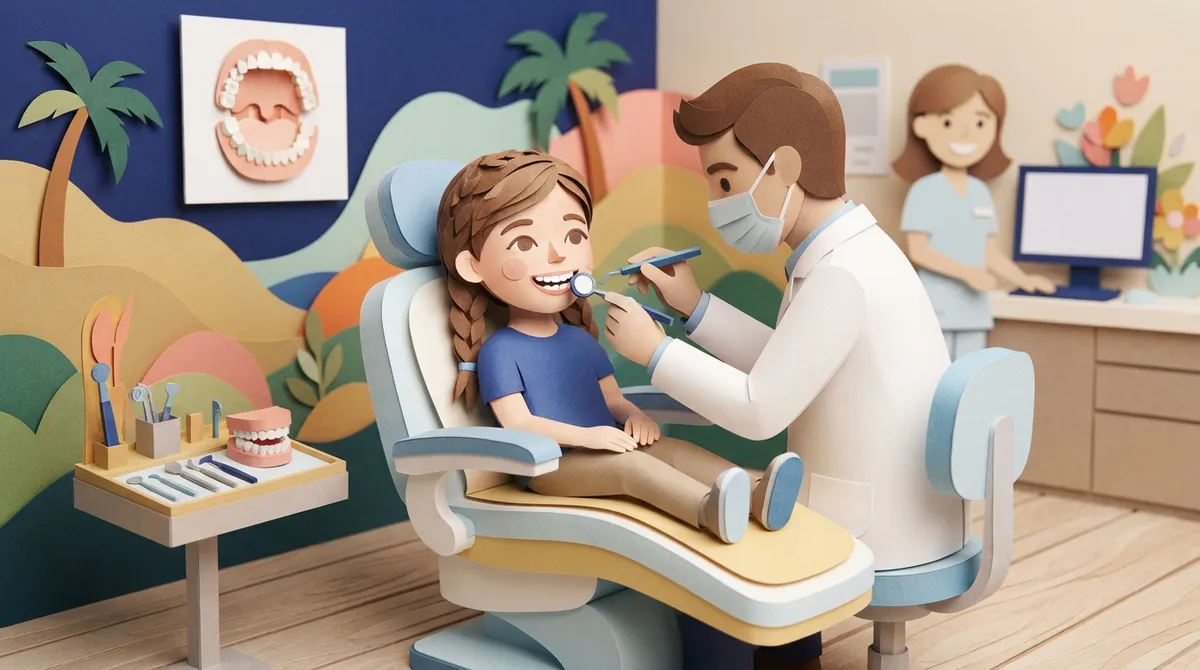
A children’s orthodontic evaluation is a screening visit with an orthodontist. The doctor looks at how your child’s teeth are lining up, how the upper and lower teeth meet, and how the jaws are growing. The goal is to spot issues early and decide if your child needs treatment now, later, or not at all.
Think of it like a growth check at the pediatrician. The orthodontist is watching a moving target. Your child’s mouth is changing fast, so one look can tell a lot about what is coming next.
It is also different from a regular dental cleaning. Your dentist checks for cavities and gum health. An orthodontist focuses on tooth position, bite, and jaw development. Your child still needs both.
When Should Your Child Have a First Orthodontic Visit?
The American Association of Orthodontists (AAO) recommends a first check-up when a concern is noticed, and no later than age 7. At that age, most kids have a mix of baby teeth and new permanent teeth. That mix gives the orthodontist a helpful peek at how things are developing.
Does that mean every 7-year-old gets braces? Not at all. Most of the time, the answer is “let’s watch and wait.” If you want a deeper dive on timing, our post on age 7 vs. waiting breaks it down nicely.
| Age Range | What’s Usually Happening | Typical Orthodontic Focus |
|---|---|---|
| Under 7 | Mostly baby teeth | Visit only if you notice a concern |
| Around 7 | Mix of baby and permanent teeth | First screening check-up |
| 9 to 14 | Most permanent teeth arriving | Treatment most often begins here |
| Teen years | Nearly all adult teeth in place | Full treatment with braces or aligners |
According to AAO guidance, treatment most often begins between ages 9 and 14. Still, timing depends on your child and the specific problem. That is why an early look is so useful.
Signs Your Child May Need an Evaluation Sooner
You do not have to wait until age 7 if something seems off. Trust your gut. Here are common signs that can be worth a visit:
- Crowded or overlapping teeth
- Noticeable gaps or spacing between teeth
- An underbite or crossbite
- Upper and lower teeth that do not meet properly
- Trouble chewing or biting
- Baby teeth lost very early or very late
- Thumb-sucking or similar habits that continue
- Jaws that shift or make sounds when moving
Seeing one of these does not mean something is wrong. It just means a professional should take a look. Learn more about spotting trouble in our guide to signs a child may need an orthodontic evaluation.
What Happens During the Visit?
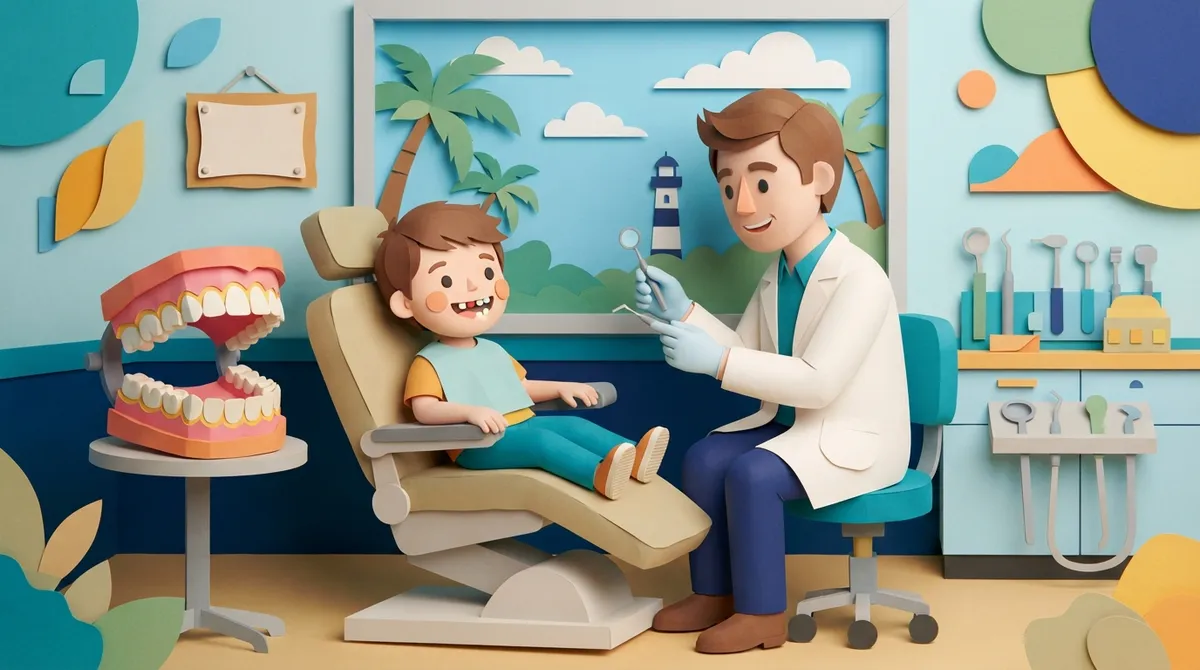
Parents often picture something scary. The reality is much more relaxed. Most kids actually enjoy it. Here is what a typical visit looks like:
- A friendly welcome. The team says hello, talks with your child, and asks you about any concerns.
- A health and dental history review. You share what you have noticed, like habits, past dental work, or family history of bite problems.
- A gentle exam. The orthodontist checks tooth alignment, bite, and jaw movement.
- Records, if needed. This may include photos, X-rays, or digital scans. Not every child needs all of them.
- A clear explanation. The orthodontist tells you what they see and what the options are.
- A plan. That could be no treatment, regular monitoring, or early treatment.
If you are curious about why records matter, see our post on what records help assess a child’s developing bite. You can also read what to expect at your child’s first orthodontic visit to help your little one feel ready.
Three Possible Outcomes After an Evaluation
Parents are often relieved to learn there are really just three paths. None of them are scary.
1. No Treatment Needed
Sometimes the teeth and bite are developing just fine. You leave with peace of mind and a pat on the back for being a proactive parent.
2. Monitor and Check Back
This is the most common result. The orthodontist keeps an eye on your child as more permanent teeth come in. Follow-up visits are usually spaced out, so it is not a big time commitment. Regular checks matter, and our article on why orthodontic checkups matter explains why.
3. Early Treatment
Some problems are easier to correct while a child is still growing. Examples include a narrow upper jaw or a crossbite. Early treatment is not needed for every child, but when it is, it can help guide growth and make later care simpler. Explore the pros and cons in our post on phase one vs. phase two orthodontics.
Common Issues an Orthodontist May Spot
During an evaluation, the orthodontist may notice things you could not see at home. A few common ones include:
- Crowding. There is not enough room for all the teeth. Our article on what causes crowding in children’s developing teeth explains the reasons.
- Crossbite. Some upper teeth sit inside the lower teeth. See what crossbite treatment involves.
- Spacing. Gaps between teeth can come from tooth size, jaw size, or habits.
- Retained baby teeth. A baby tooth that will not budge can push a new tooth off course. Our retained baby teeth guide answers common questions.
- Jaw growth concerns. The upper and lower jaws may be growing at different rates.
How to Get Your Child Ready
A little prep goes a long way. Here are some easy tips:
- Keep the tone upbeat. Say “the tooth doctor will count and check your teeth.”
- Write down your questions ahead of time.
- Bring any dental X-rays if your dentist has them.
- Note habits like thumb-sucking, mouth breathing, or nighttime teeth grinding.
- Let your child bring a favorite stuffed animal if that helps them relax.
Our guide on how to prepare for your first visit to an orthodontist has more helpful ideas.
Questions to Ask in Clearwater
When you are choosing a provider, a few smart questions can save you time and money. Because availability, fees, and insurance details vary, always confirm directly with the practice. Good questions include:
- Is the doctor a specialist orthodontist?
- Is the first evaluation complimentary, or is there a fee?
- Will my child need X-rays or scans, and is there a charge for them?
- Do you work with my dental insurance?
- If treatment is not needed yet, how often will you want to see my child?
- What payment options are available if treatment is recommended later?
To learn what makes a specialist different, read what makes a specialist orthodontist different. Also, our article on free vs. paid braces consultations explains why fees differ from office to office.
Orthodontist or Pediatric Dentist?
This is a big question for many families, and the answer is “both.” Your pediatric dentist or family dentist keeps cavities and gums in check with regular cleanings. An orthodontist is the expert in tooth movement, bite, and jaw growth.
Keep up with your dental check-ups whether or not your child sees an orthodontist. The two work as a team. If you want to understand the split of roles, take a look at orthodontist vs. dentist: which one do you actually need.
Common Parent Worries (And Honest Answers)
“Is my child too young?”
Probably not. Age 7 is the AAO’s recommended upper limit for a first look, and the visit is just a screening. Nothing gets glued, pulled, or tightened.
“Will it hurt?”
An evaluation is painless. At most, your child may bite down on a few things and open wide for photos.
“What if we wait too long?”
Some issues are easier to treat during growth. Others are simply fine to wait on. The only way to know which camp your child is in is to have a professional look. For a deeper look at the risks of delay, read about mistakes parents make skipping early orthodontic treatment.
Why Families Choose Brockway Orthodontics
At Brockway Orthodontics in Clearwater, we love celebrating families. Dr. Brockway takes time to listen to your concerns and your child’s questions, so everyone feels comfortable and informed from start to finish. We explain what we see in plain, friendly language, with no pressure.
Our office uses modern tools like digital impressions instead of messy molds, plus 3D imaging that helps us plan with precision. That means a more comfortable visit for your child. We treat kids, teens, and adults, so your whole family can get care under one roof. Want to know more about the doctor? Meet the Brockway orthodontist in Clearwater, FL, and see what neighbors say when you visit us on Google — Brockway Orthodontics.
You can also stay connected with our community on Facebook for updates and smile stories.
What About Costs and Insurance?
Cost is a real concern for most families, and it deserves a straight answer. We cannot promise specific numbers here because fees depend on the practice, your child’s needs, and your insurance plan. Always ask for a written breakdown, including any charges for imaging.
If treatment is recommended, there are often ways to spread out payments. Our guide to braces payment plans for Clearwater families and our tips on using dental insurance to help pay for braces are good places to start.
Looking Ahead: What If Treatment Is Needed?
If your child does need braces or aligners down the road, you will have options. Traditional metal braces, clear (ceramic) braces, and clear aligners each have their strengths. We offer Spark™ Clear Aligners, a more affordable alternative to Invisalign, along with metal and ceramic braces. Our comparison of braces vs. clear aligners in Clearwater can help you picture what each path looks like.
For now, the most important step is the simplest one: get an expert opinion so you know where your child stands. Learn more from trusted sources like the American Association of Orthodontists and the American Dental Association.
Ready to Book Your Child’s Evaluation?
A children’s orthodontic evaluation in Clearwater gives you clarity and calm. Whether your child needs a plan today or just a watchful eye over time, you will walk out knowing more than when you walked in. And that is a win for any parent.
Ready to take the first step? Book an appointment online or contact our friendly team with any questions. We would love to meet your family and help your child smile with confidence.
FAQs
Q: When should my child have their first orthodontic evaluation in Clearwater?
A: The AAO recommends a first check-up when you notice a concern, and no later than age 7. At that age, kids have a mix of baby and permanent teeth, which helps the orthodontist see how things are growing. It is just a friendly screening, so there is no need to worry.
Q: Does a 7-year-old need braces after an orthodontic evaluation?
A: Usually not! Many children are simply monitored as they grow, and some need nothing at all. If a specific issue shows up, the orthodontist may suggest early treatment, but that is only when it truly helps.
Q: What happens at a child’s first orthodontist appointment?
A: The orthodontist checks your child’s teeth, bite, and jaw growth, and may take photos, X-rays, or digital scans if needed. Then they explain what they see in plain language and talk through next steps. It is painless and most kids find it pretty fun.
Q: Are children’s orthodontic evaluations in Clearwater free?
A: It depends on the practice. Some offer a complimentary first visit, while others charge a fee, and imaging may cost extra. Always ask the office directly about fees and what your insurance may cover before you book.
Q: Should my child see a pediatric dentist or an orthodontist for bite concerns?
A: Both play an important role! Your dentist handles cleanings, cavities, and gum health, while an orthodontist focuses on tooth alignment, bite, and jaw growth. Keep up regular dental visits even if your child is seeing an orthodontist.
Our Service Area