Key Takeaways
-
Braces require brushing above and below every bracket and using interdental brushes under the wire, while aligners require cleaning both your teeth and trays every time.
-
Brush for about two minutes after meals and before bed, and floss daily; if you can't brush, rinse thoroughly with water.
-
Remove aligner trays before eating or drinking anything other than plain water, and always brush teeth before reinserting them to avoid trapping bacteria and sugar.
-
Never clean aligner trays with hot or boiling water or abrasive cleaners, as heat can warp the plastic and harsh products can scratch or cloud it.
-
Store aligners in their case, never wrapped in a napkin, to prevent accidental loss in the trash.
-
Keep professional cleanings every six months, since plaque around brackets or under trays can cause gum inflammation, cavities, and white-spot marks.
Getting a straighter smile is exciting, but nobody tells you how much your daily routine will change. Whether you chose braces or clear aligners, keeping your teeth clean becomes a bigger part of your day. And here’s the fun twist: the two treatments ask for very different habits.
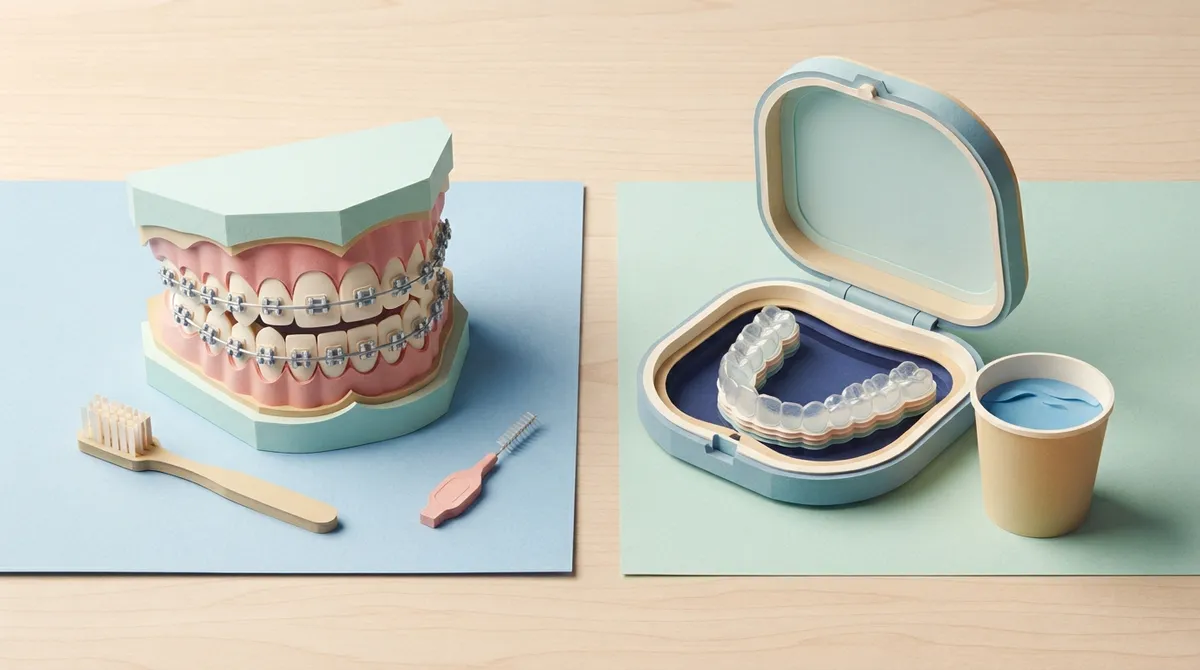
Think of it like cleaning a kitchen. With braces, the “furniture” never leaves, so you have to clean around it every time. With aligners, you can take everything out, but you also have two more things to keep spotless: your teeth and your trays.
This guide is all about comparing cleaning routines for braces and aligners, so you know exactly what to do from morning to bedtime. We’ll cover brushing, flossing, tray care, and the mistakes to avoid. It works for kids, teens, and adults, and for busy parents helping a child through treatment too.
One note before we dive in: always follow your own orthodontist’s instructions. Every smile and every appliance is a little different.
Why Cleaning Routines Differ Between Braces and Aligners
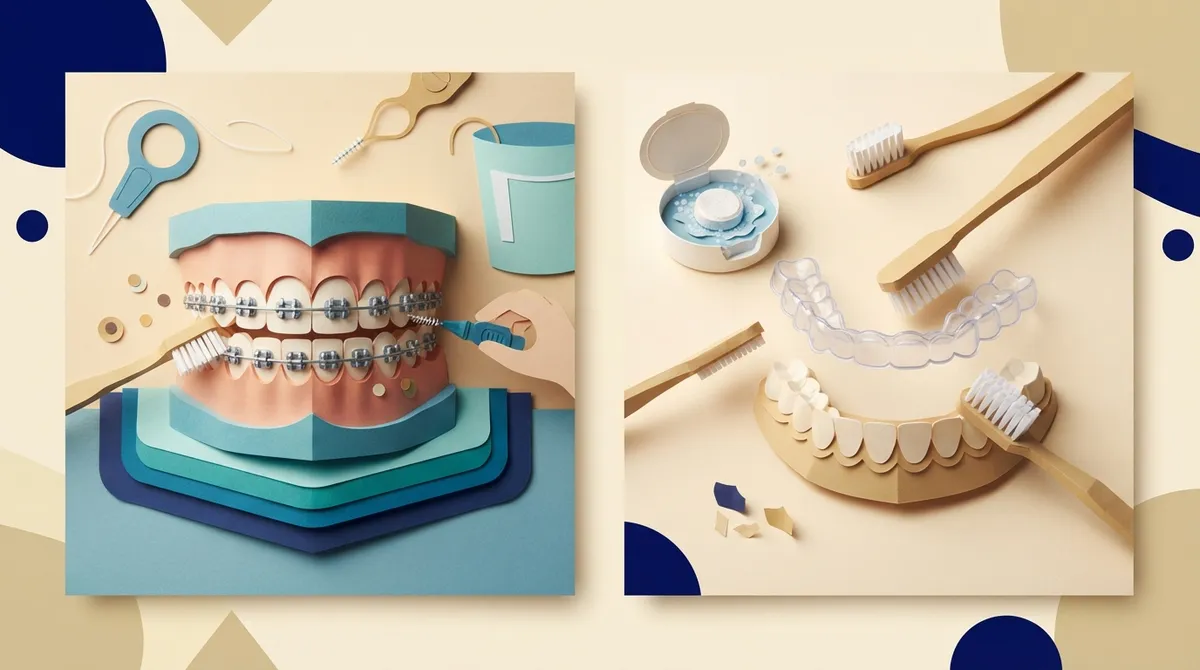
The big difference is simple. Fixed braces stay glued to your teeth for the whole treatment. Clear aligners are removable, so you take them out to eat, drink, brush, and floss.
That one detail changes everything:
- Braces: Food and plaque get trapped around brackets and under wires. Your brushing has to work harder and more carefully.
- Aligners: Your tooth surfaces are easier to reach, but the trays need cleaning too. If you pop them back in over dirty teeth, you trap bacteria and sugar against your enamel.
Here’s something that surprises many families. A 2026 systematic review and meta-analysis reported lower plaque index scores with clear aligners than with fixed appliances (mean difference of −0.437), along with lower gingival index scores (mean difference of −0.233). The authors cautioned that differences between studies mean the results should be read carefully. Still, it fits what we see in real life: removable trays can make cleaning easier, but only if you actually do the cleaning.

The Rules That Apply to Both Treatments
Some habits never change, no matter which option you picked. Aligners do not replace normal brushing or flossing, and braces do not excuse you from either one.
- Brush with fluoride toothpaste. Fluoride helps protect enamel, which matters even more when plaque is hiding near brackets or under trays.
- Clean between your teeth every day. Floss or another orthodontist-recommended tool should be part of your daily routine.
- Brush after meals when you can. The American Association of Orthodontists (AAO) advises brushing for about two minutes after meals or snacks and before bed. If you can’t brush, rinse with water.
- Keep up with dental cleanings. The AAO advises a professional cleaning at least every six months, or more often if your dentist recommends it.
Plaque left around brackets can lead to gum inflammation, cavities, and permanent white-spot marks on the teeth. That’s why consistency matters so much. If you’re curious about the basics, our guide on how to keep a healthy smile during braces is a great companion read.
Cleaning Routine for Fixed Braces
Braces ask for patience. You’re cleaning around metal or ceramic brackets, a wire, and every little gap in between. It takes a few extra minutes, but it becomes second nature quickly.
Step-by-Step Braces Cleaning
- Rinse first. Swish water around your mouth to loosen food stuck in the brackets.
- Brush the gumline. Angle your soft-bristled toothbrush toward the gums and use gentle circles. Take your time along the gumline, where plaque likes to hide.
- Brush above and below each bracket. Tilt the brush so the bristles reach the area above the bracket, then the area below it.
- Don’t forget the chewing and inner surfaces. Clean the tops of your back teeth and the sides facing your tongue.
- Use an interdental brush. These tiny brushes slip around brackets and under the archwire, where a regular toothbrush can’t reach.
- Floss daily. Floss threaders or orthodontic floss help you get between teeth and under the wire. Water flossers can help some patients too, but ask your orthodontist first.
- Check the mirror. Look for leftover food or a chalky film on the teeth. If you see it, brush again.
If brushing feels clumsy at first, you’re not alone. Our post on why brushing teeth with braces feels tricky at first explains why it gets easier, and 8 steps to brush teeth with braces the right way walks through the technique in more detail. Common slip-ups are covered in 7 brushing mistakes that wreck braces.
Cleaning Routine for Clear Aligners
Aligners give you more freedom, and with that comes a different kind of responsibility. You’re cleaning two things: your teeth and the trays themselves.
Step-by-Step Aligner Cleaning
- Take your trays out before eating or drinking. Plain water is the only thing that should go in your mouth with aligners in. Anything else can trap food, sugars, and acids against your teeth.
- Store them safely. Put your trays in their case, never wrapped in a napkin. Napkins are famous for ending up in the trash.
- Brush and floss after eating. Clean your teeth before the trays go back in. If you can’t brush, rinse well with water at the very least.
- Clean your aligners. Rinse them and gently brush them with a soft toothbrush, using the method your orthodontist recommends.
- Put them back in. Only reinsert once your teeth and trays are both clean.
Want a deeper dive? We cover this in how to clean Invisalign the right way every day and how to clean clear aligners: a simple 2026 guide. At Brockway Orthodontics, we also offer Spark™ Clear Aligners, so if that’s your treatment, ask our team about the best way to care for those specific trays.
What to Avoid When Cleaning Aligners
Aligner plastic is sturdy but not indestructible. Protect your investment with these rules:
- Skip hot or boiling water. Heat can warp the plastic, and warped trays don’t fit properly. Learn more in why hot water can damage clear aligners.
- Avoid abrasive cleaners. Harsh scrubbing powders and some whitening toothpastes can scratch trays and make them cloudy.
- Don’t use unapproved cleaning products. Not every aligner tolerates the same cleaners. Follow product-specific instructions instead of guessing.
- Don’t reinsert over unbrushed teeth. This is the quickest way to trap bacteria against your enamel.
Side-by-Side: Braces vs. Aligners Cleaning
Here’s a quick snapshot of how the two routines stack up:
| Cleaning Task | Fixed Braces | Clear Aligners |
|---|---|---|
| Brushing | Brush carefully around every bracket, along the gumline, and under the wire | Brush all tooth surfaces before reinserting trays |
| Interdental cleaning | Interdental brushes plus floss with a threader or orthodontic floss | Floss daily; trays come out so access is easier |
| Appliance care | Nothing to remove, but brackets and wires need close attention | Clean trays gently as directed by your orthodontist |
| Eating and drinking | Avoid sticky, hard foods that can damage brackets | Remove trays for anything but plain water |
| Biggest challenge | Plaque hiding around brackets | Remembering to clean teeth and trays every time |
| Extra supplies | Interdental brushes, floss threaders, orthodontic wax | Travel toothbrush, tray case, approved cleaner |
A Sample Daily Routine for Each Treatment
Routines work best when they’re easy to repeat. Here’s a simple day-in-the-life for each treatment.
Braces Daily Routine
- Morning: Brush for two minutes with fluoride toothpaste, paying extra attention to brackets and the gumline.
- After lunch or snacks: Rinse with water or brush if you can. A travel toothbrush in your bag is a lifesaver.
- Evening: Brush thoroughly, use interdental brushes, and floss.
- Weekly check: Look closely for any loose brackets or poking wires.
Aligner Daily Routine
- Morning: Take out your trays, brush your teeth and clean the trays, then put them back in.
- After meals: Remove the trays, eat, brush and floss, then reinsert clean trays.
- Evening: Brush, floss, rinse your trays, and wear them overnight as directed.
- Throughout the day: Aim to wear them as many hours as your orthodontist prescribes.
Tips for Different Patients
Parents of Kids and Teens
Kids and teens are busy, and cleaning is easy to skip. Make it a habit: keep a spare toothbrush in the backpack, set phone reminders, and check in after dinner. We share more ideas in 7 ways parents can support teen oral hygiene with braces, and how to care for aligners during a school day is perfect for the lunchroom routine.
Busy Adult Professionals
Between meetings and travel, a pocket-sized kit saves the day. Keep a travel toothbrush, floss picks, and an aligner case in your bag or desk drawer. If you wear aligners, how to care for your aligners during a busy workday has practical, real-life tips.
Retainer Wearers and Retreatment Patients
If you’re finishing up or coming back after relapse, remember that retainers need daily care too. Clean them gently and keep them away from heat. See how to care for your dental retainer the right way for step-by-step guidance.
Health-Conscious Patients
If you have gum concerns or other oral health needs, cleaning is even more important. Talk to your orthodontist and dentist about your specific situation so they can recommend the best tools and schedule. Our article on how dental health affects your braces or aligner options explains why this matters.
Common Mistakes (and Easy Fixes)
- Skipping floss. It feels like a hassle, but plaque loves the spaces between teeth. Try floss threaders or a water flosser if your orthodontist approves.
- Rushing the brush. Two minutes feels long until you do it with brackets. Use a timer or song.
- Drinking sweet or colored drinks with aligners in. Take trays out first, or stick to plain water.
- Using hot water on trays. Lukewarm or cool water is the safe choice.
- Forgetting regular dental visits. Braces and aligners don’t replace professional cleanings. Keep your six-month appointments, or whatever schedule your dentist recommends.
Staying on top of routine visits helps too, and why orthodontic checkups matter so much explains how those appointments protect your progress.
Which Routine Is Easier?
Honestly, it depends on you. Aligners make brushing and flossing easier because the trays come out, but they ask for discipline: you have to clean your teeth and trays every single time. Braces can feel more demanding at first, but there’s nothing to remember to take out or put back in.
Neither option is a magic fix for oral health. The best routine is the one you can actually stick to. If you’re still deciding between the two, our comparisons like braces vs. clear aligners: which Clearwater choice wins and which is right for you: clear aligners vs. braces can help you weigh daily habits alongside everything else.
Keep Your Smile Healthy, Whichever Path You Choose
Comparing cleaning routines for braces and aligners comes down to one idea: braces need careful cleaning around the hardware, while aligners need clean teeth and clean trays. Both rely on fluoride toothpaste, daily interdental cleaning, and regular dental visits. Small habits, done consistently, protect your teeth and your results.
At Brockway Orthodontics in Clearwater, Dr. Brockway and our team love helping families feel confident about their care. We’ll show you exactly how to clean your braces or aligners and answer every question along the way. You can also see what patients are saying when you visit us on Google — Brockway Orthodontics, or learn more from trusted organizations like the American Dental Association and the American Association of Orthodontists.
Ready to start your smile journey or need a refresher on your routine? Book your free consultation online and let’s build a plan that fits your life. Prefer to chat first? Contact us anytime.
FAQs
Q: How often should I brush my teeth with braces or clear aligners?
A: Great question! Aim to brush for about two minutes after meals and snacks and again before bed, and floss at least once a day. If you can’t brush right away, a quick rinse with water is a good backup.
Q: How should I clean my clear aligner trays?
A: Keep it gentle! Rinse your trays and clean them softly using the method your orthodontist recommends. Skip hot or boiling water and harsh or abrasive cleaners, since they can warp or scratch the plastic.
Q: Do I need to brush my teeth every time before putting my aligners back in?
A: Yes, whenever you can! Reinserting trays over food and sugar traps them against your teeth, which isn’t great for your enamel. If brushing isn’t possible, rinse well with water until you can brush.
Q: How do I clean around brackets and wires on braces?
A: Angle your soft toothbrush toward the gums, brush above and below each bracket, and use a tiny interdental brush to reach around and under the wire. Pair that with daily flossing using a threader or orthodontic floss, and you’re set.
Q: Are clear aligners easier to keep clean than braces?
A: Often, yes, since you can remove them to reach every tooth surface. A 2026 review found lower plaque and gum scores with aligners, though the authors urged caution in reading the results. Either way, your daily habits matter most.
Our Service Area