Key Takeaways
-
Chewing trouble is a clue, not a diagnosis: cavities, loose baby teeth, or food sensitivities can cause the same problems, so a professional exam is needed to find the real cause.
-
The AAO recommends a first orthodontic check-up by age 7, and an early visit is usually an evaluation and monitoring, not an automatic start to braces.
-
Note which foods your child avoids and which side they chew on, and watch for cheek biting or a jaw that shifts or clicks; these notes help the dentist or orthodontist.
-
Crossbites, underbites, and open bites can change how teeth meet and make chewing less efficient, but whether any variation needs treatment is the orthodontist's decision.
-
Many evaluations end with a plan to monitor growth, since timing of any treatment depends on the child's jaw growth and stage of dental development (mixed dentition runs about ages 6 to 13).
-
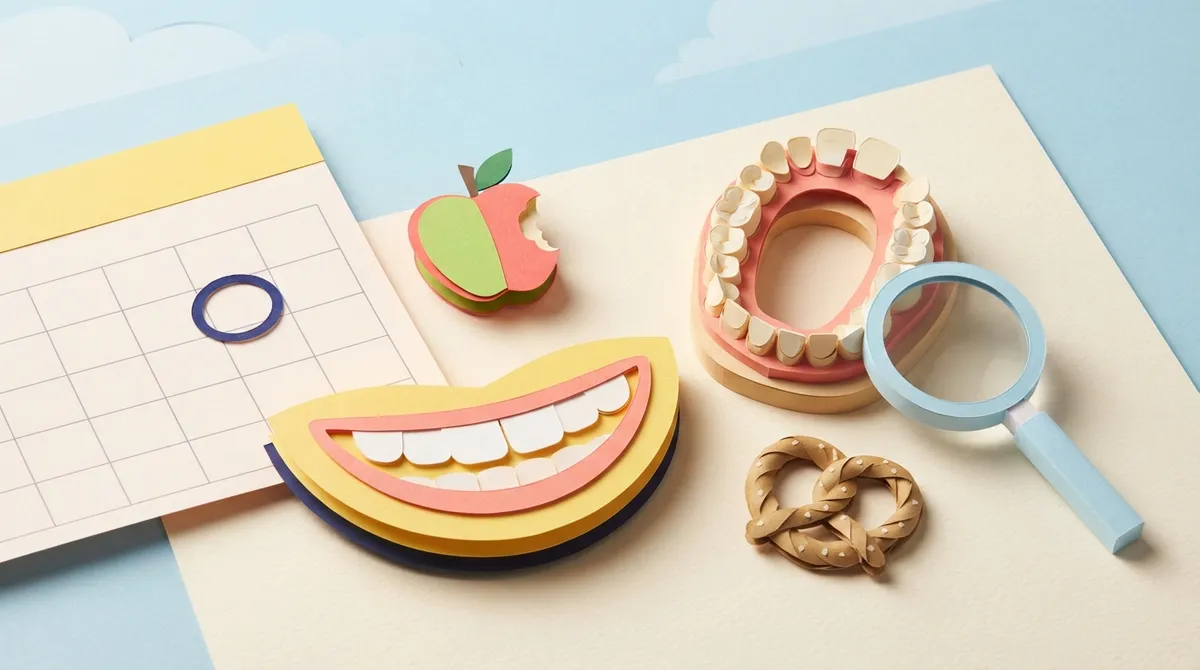
If your child struggles to bite into an apple or tear a sandwich, mention it at the next visit, since you will get answers either way.
Have you ever watched your child push food around the plate, chew on just one side, or avoid crunchy snacks? It can be hard to know what it means. Sometimes it is just a picky phase. Other times, it may be a clue that the teeth and jaws are not fitting together the way they should.
The good news is that you do not need to guess. Chewing difficulties and children’s bite evaluations go hand in hand, and a simple check-up can help you understand what is really going on. An evaluation is about gathering answers, not rushing into treatment.
In this friendly guide, we will walk you through 14 facts every parent should know. You will learn which signs matter, what happens at an evaluation, and when watching and waiting is the smartest plan. Whether your child is 6 or 16, you will leave with clear, calm next steps.
Why Chewing Difficulties Deserve a Closer Look
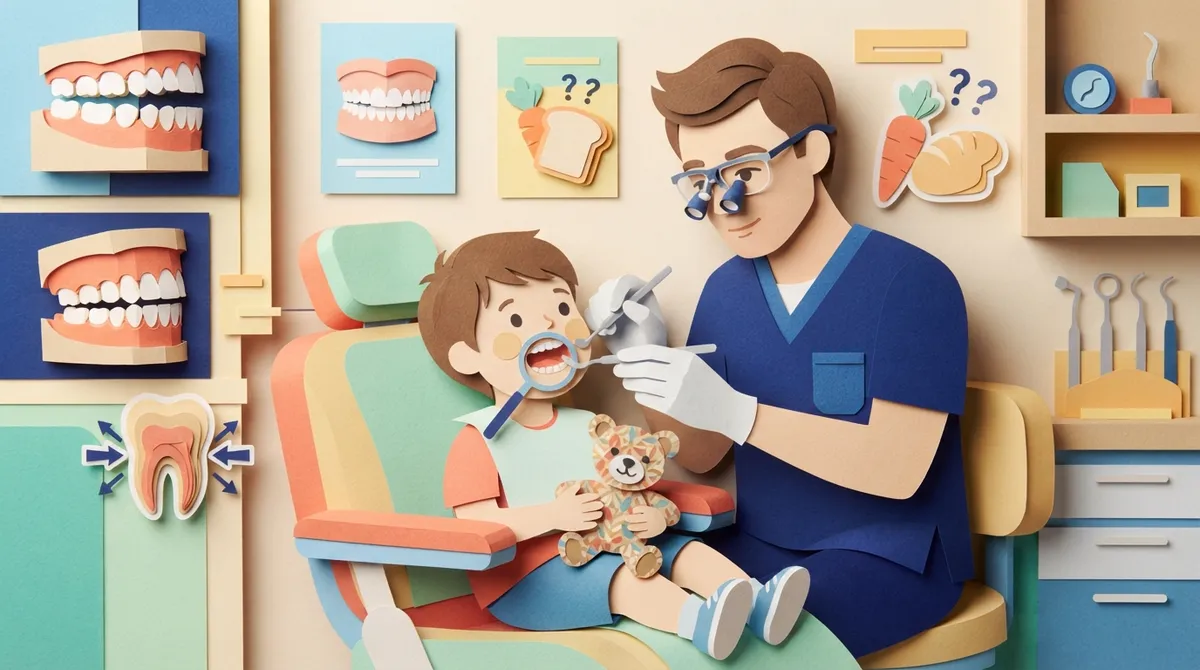
Chewing is a team effort. The teeth, jaws, muscles, and tongue all work together. When one part is out of sync, eating can feel awkward or tiring for a child.
Here is an important point to keep in mind. Chewing trouble can point to a bite problem, but it does not prove one on its own. Other things, like a sore tooth, a cavity, a loose baby tooth, or even sensory preferences with food, can cause the same issue. That is why a professional look matters.
Think of chewing trouble as a helpful clue, not a diagnosis. Your child’s dentist or orthodontist can sort out the real cause.
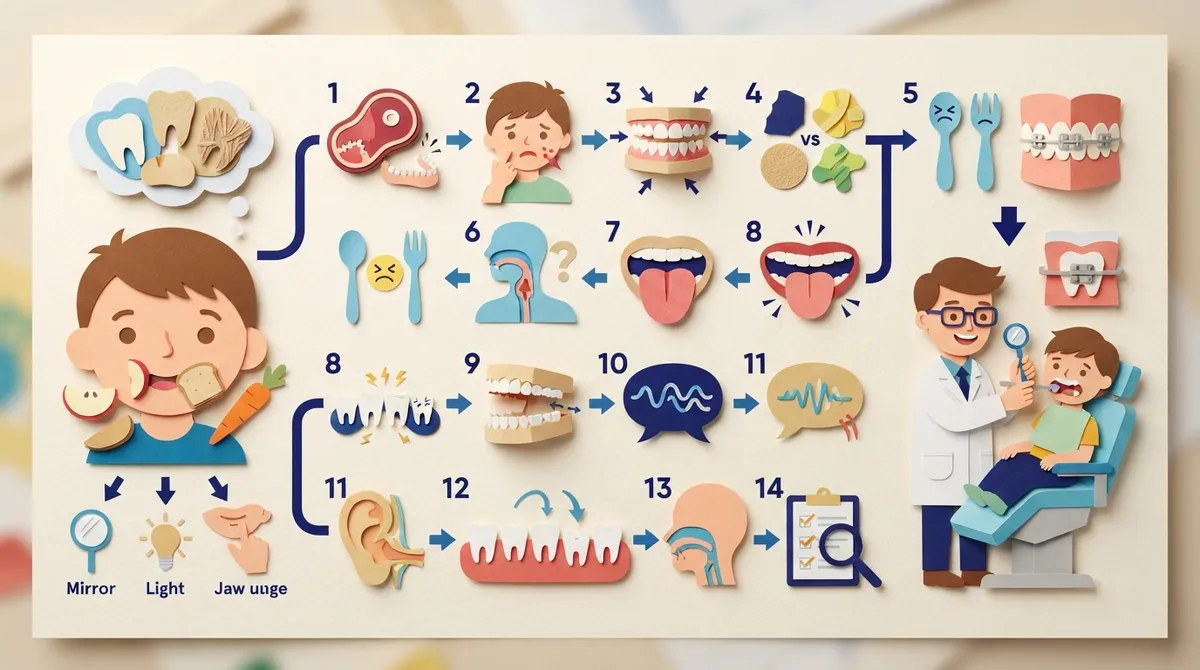
14 Facts About Chewing Difficulties and Children’s Bite Evaluations
1. The AAO Recommends a Check-Up by Age 7
The American Association of Orthodontists suggests a first orthodontic check-up by age 7, or sooner if you notice a concern. This is a screening visit. It does not mean your child will start braces at that age.
If you are curious about timing, our guide on age 7 vs. waiting explains how families decide.
2. An Early Visit Is an Evaluation, Not Treatment
Many parents worry that an early visit means early braces. In truth, many children simply get monitored. The orthodontist watches growth and tooth eruption over time and steps in only when it helps. You can learn more in why early evaluation isn’t treatment.
3. Difficulty Biting or Chewing Is a Sign Worth Mentioning
If your child struggles to bite into an apple, tear a sandwich, or chew tougher foods, mention it at the next visit. It may relate to how the teeth meet, or it may not. Either way, you will get answers.
4. Other Signs Can Show Up Alongside Chewing Trouble
Chewing issues rarely travel alone. Keep an eye out for these signs:
- Frequent cheek or tongue biting
- Teeth that do not meet in a normal way
- A jaw that shifts to one side when closing
- Clicking or popping in the jaw
- Chewing mostly on one side
- Food falling out of the mouth while chewing
Any of these is worth a conversation with a dentist or orthodontist. None of them proves a bite problem alone.
5. Several Bite Patterns Can Affect How Teeth Meet
Orthodontists look for patterns that change how the teeth fit together. The table below gives a simple overview.
| Bite Pattern | What It Means | How It May Show Up |
|---|---|---|
| Crossbite | Some upper teeth sit inside the lower teeth | Jaw shifting, uneven wear |
| Underbite | Lower teeth sit in front of upper teeth | Trouble biting into foods |
| Open bite | Front teeth do not touch when the mouth closes | Trouble biting through food |
| Overbite | Upper teeth cover much of the lower teeth | Awkward bite, possible strain |
| Significant crowding | Not enough room for all teeth | Overlapping, twisted teeth |
An orthodontist decides whether the bite works normally. Not every variation needs treatment.
6. Crossbites and Underbites Can Affect Chewing
Because these patterns change how upper and lower teeth line up, they can make chewing feel less efficient. A child may favor one side or avoid certain foods. If you want a deeper look, read what crossbite treatment involves.
7. Mixed Dentition Is a Great Time to Evaluate
Most kids have both baby teeth and adult teeth from about age 6 to 13. This stage is called mixed dentition. It gives clinicians a helpful view of how teeth are coming in and how the bite is developing. Our article on braces treatment with mixed dentition covers what that can look like.
8. The AAPD Supports Ongoing Monitoring
The American Academy of Pediatric Dentistry encourages regular exams to watch the developing teeth and bite. Its guidance stresses that timing and treatment should fit each child’s stage of dental development. In other words, one size does not fit all.
9. A Bite Evaluation Has Several Parts
So what actually happens at the visit? Here is a simple look at the usual steps:
- Health and dental history. The team asks about your child’s habits, past care, and any concerns.
- Exam of the teeth and jaws. The orthodontist checks how the teeth look and how the jaws line up.
- Bite and jaw movement check. Your child closes and moves the jaw so the doctor can see how everything works.
- Review of eruption and growth. The doctor looks at which teeth have come in and which are still to come.
- Talk and plan. You discuss findings and decide whether to monitor or act.
You can read more about what a first visit feels like in what to expect at the orthodontist.
10. X-Rays Are Not Always Required
Imaging is chosen when it is clinically useful. It is not automatic for every child. If your child does need an X-ray or scan, the team will explain why. Our post on what orthodontic X-rays can help evaluate shares more detail.
11. Many Evaluations End With Monitoring
Here is a comforting truth. An early check-up may simply lead to a plan to watch and wait. When treatment is right, the timing and approach depend on the specific issue, your child’s growth, and their dental development. Not every concern benefits from early treatment.
12. Dental Health Can Be Part of the Picture
Sometimes chewing trouble comes from a cavity, a loose tooth, or a tooth that is slow to come in. That is why the evaluation looks at the whole mouth. If you are wondering about unusual tooth timing, see retained baby teeth questions parents ask.
13. Jaw Growth Shapes the Plan
Children are still growing, and that changes how and when an orthodontist may help. Some bite concerns respond best when growth is still active. Others are better handled later. For more on this topic, check out jaw growth and bite development questions.
14. Treatment, If Needed, Comes in Different Forms
If your child does need care, options vary with age and need. Some children benefit from an early phase of treatment, while others wait for a single round later on. Our guide on phase one vs phase two orthodontics explains the difference. Teens may also compare braces and clear aligners when the time is right.
How to Tell Whether It Is a Bite Problem or Something Else
It can be tricky to tell the difference at home. Here is a handy comparison to help you sort through it.
| Possible Cause | Common Clues | Who to See First |
|---|---|---|
| Bite or jaw issue | Teeth do not meet well, jaw shifts, chewing on one side | Orthodontist or dentist |
| Cavity or tooth pain | Pain with hot, cold, or sweet foods | Dentist |
| Loose baby tooth | Wobbly tooth, tender gums | Dentist |
| Food preference or texture sensitivity | Avoids certain textures, not tied to pain | Pediatrician |
When in doubt, start with your child’s dentist or an orthodontist. They can guide you to the right place.
What Parents Can Do Right Now
You do not need to wait for a big problem. A few small steps can make a real difference:
- Notice which foods your child avoids and write them down.
- Watch which side they chew on during meals.
- Look for cheek biting or a jaw that seems to slide when they close.
- Keep up with regular dental visits.
- Ask the dentist about an orthodontic check-up if you see any of these signs.
Your notes are very helpful at the visit. They give the team real-life clues to work with.
For Teens and Adults Reading Along
Chewing trouble is not only a childhood issue. Teens and adults can have bite concerns too, and relapse after past treatment is common. If this sounds like you, our article on how to fix bite alignment problems at any age is a great next read.
Choosing a Caring Team for Your Child’s Evaluation
A good evaluation should feel calm, clear, and friendly. At Brockway Orthodontics in Clearwater, Dr. Brockway takes time to listen to your worries and explain every finding in plain language. The practice uses modern tools like digital impressions and 3D imaging, so visits stay comfortable and your child’s plan is precise. You can read more about the Brockway orthodontist or see what families say when you visit us on Google — Brockway Orthodontics.
For extra background on children’s oral health, the American Dental Association offers helpful public resources, and the Florida Association of Orthodontists shares information on orthodontic care across the state.
Conclusion: A Calm Check-Up Brings Clear Answers
Chewing difficulties can feel worrying, but they do not have to be. A simple bite evaluation helps you learn whether the teeth and jaws are working well together or whether something else is going on. In many cases, the answer is just to keep watching as your child grows.
You know your child best. If you notice picky chewing, cheek biting, or a jaw that shifts, trust that instinct and ask for a look. Ready to take the next step? Book an appointment online and let our friendly team help you feel confident about your child’s smile. You can also contact us with any questions.
FAQs
Q: When should my child have their first orthodontic evaluation?
A: The American Association of Orthodontists recommends a first check-up by age 7, or sooner if you notice a concern like chewing trouble or a shifting jaw. It is a screening visit, so it does not mean your child will need braces right away.
Q: Can a bite problem cause a child to have difficulty chewing?
A: Yes, it can. Patterns like a crossbite, underbite, or open bite may change how the teeth meet, which can make chewing harder. But chewing trouble can also come from other causes, so an exam is the best way to know for sure.
Q: Does every child who has an orthodontic evaluation need braces?
A: Not at all! Many children are simply monitored as their teeth and jaws grow. Treatment is recommended only when it truly helps, and the timing depends on your child’s growth and dental development.
Q: Are X-rays always needed during a child’s bite evaluation?
A: No. Imaging is used only when it is clinically helpful, not for every child. If your child needs an X-ray, the orthodontist will explain why it is needed.
Q: Should I see an orthodontist if my child’s jaw shifts or clicks?
A: It is a good idea to mention it. A shifting or clicking jaw is a sign worth discussing with a dentist or orthodontist, though it does not prove a bite problem by itself. A quick evaluation can give you peace of mind.
Our Service Area