Key Takeaways
-
Aligners suit mild-to-moderate cases and motivated patients, while fixed braces offer constant force and stronger control for complex cases, bite problems, and extractions.
-
Removable aligners typically require 20 to 22 hours of daily wear, so skipping wear time is the main factor that slows treatment or hurts results.
-
A 2025 meta-analysis of 15 trials found no significant difference in treatment quality or duration for non-extraction cases, but fixed appliances performed better when extractions were needed.
-
Aligners make brushing, flossing, and eating easier, and a 2024 umbrella review favored them for oral hygiene and gum health measures.
-
Braces cannot be forgotten or lost, which makes them a practical choice for children and teens who may struggle to keep track of removable trays.
-
A retainer is required after either treatment, since skipping it is one of the most common reasons teeth drift back to their original positions.
Choosing between removable aligners versus fixed braces can feel like a big decision. Maybe you are a parent helping your 12-year-old. Maybe you are a busy professional who wants a quiet, low-key smile upgrade. Or maybe you had braces years ago and your teeth have started to drift. Whatever your story, you deserve clear answers and a friendly guide.
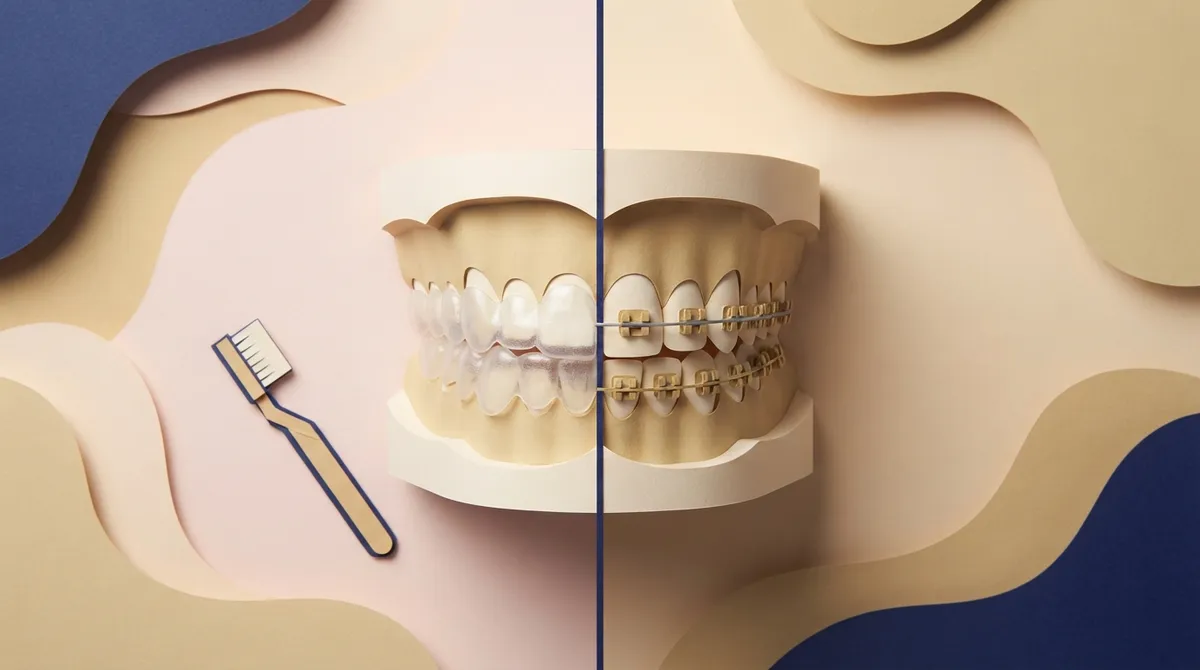
Here is the short version. Both options can straighten teeth well. They just work differently, ask different things from you, and fit different smiles. Aligners are clear trays you take out. Braces are brackets and wires that stay on. Neither one is “better” for everyone.
In this guide, we will walk through how each option works, what daily life looks like, what the research says, and how to pick the right fit. At Brockway Orthodontics in Clearwater, Florida, we offer both, so our advice is based on your smile, not a sales pitch. Let’s dive in!
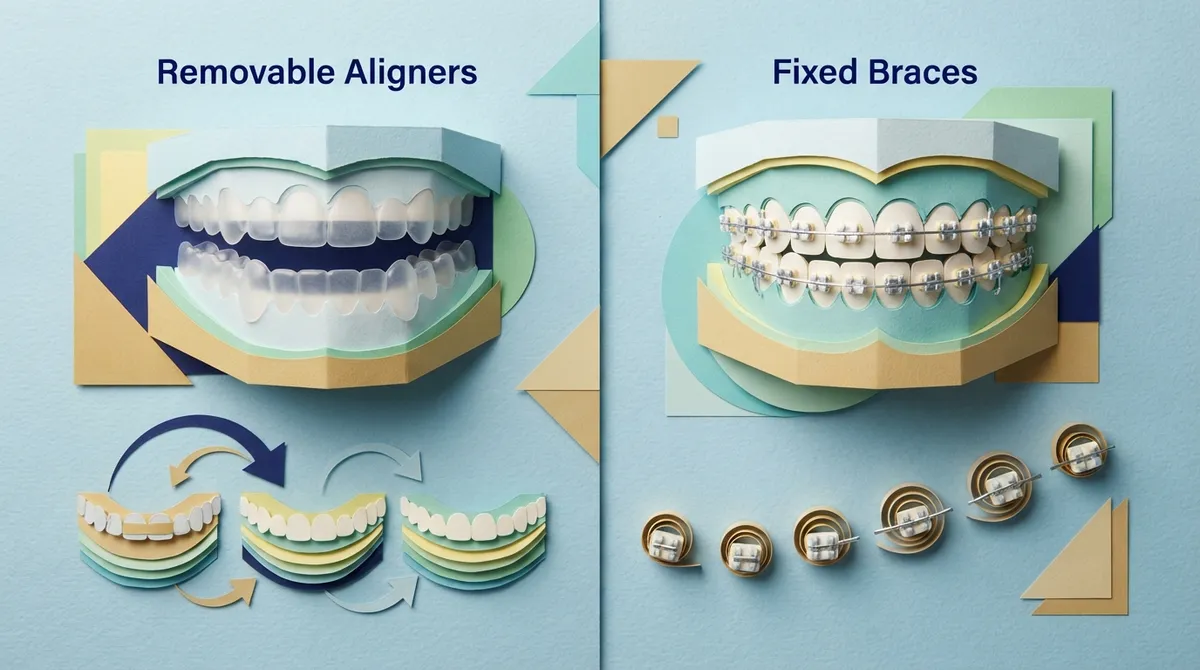
How Removable Aligners and Fixed Braces Work
Both treatments move teeth with gentle, steady pressure. The tools are just different.
Removable Clear Aligners
Clear aligners are custom-made plastic trays. You wear one set for a short time, then switch to the next set. Each tray moves your teeth a tiny bit. Over time, your smile shifts into the planned position.
The big feature is that you can take them out. You remove them to eat, brush, and floss. Orthodontists commonly prescribe about 20 to 22 hours of wear each day. The American Association of Orthodontists often describes at least 22 hours daily. Your exact schedule depends on your treatment plan.
At our practice, we offer Spark™ Clear Aligners, a more affordable option than many well-known aligner brands. You can learn more about the basics in our guide on how removable aligners straighten teeth.
Fixed Braces
Fixed braces use small brackets glued to your teeth. A thin wire connects them. Your orthodontist adjusts the wire over time to guide each tooth where it needs to go.
You cannot remove braces. That means the force is always working. You do not have to remember to wear anything. We offer both metal braces and ceramic (clear) braces. Ceramic brackets blend in with your teeth, which many teens and adults love.
Curious about the look and feel of each type? Our comparison of metal vs. ceramic braces can help.
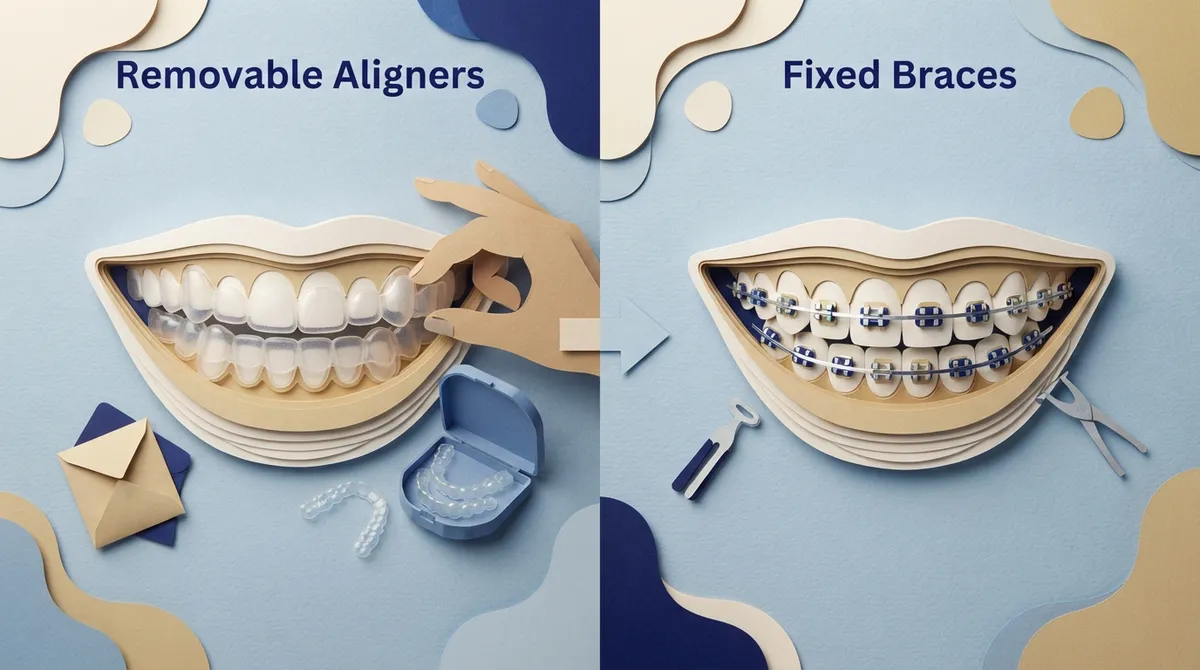
Removable Aligners vs. Fixed Braces: Side-by-Side Comparison
Here is a quick look at how the two options stack up in everyday life.
| Feature | Removable Aligners | Fixed Braces |
|---|---|---|
| Appearance | Nearly invisible clear trays | Metal or ceramic brackets and wires |
| Removable? | Yes, for meals and cleaning | No, stays on the whole time |
| Wear-time responsibility | High: about 20 to 22 hours daily | Low: always working |
| Eating | Take trays out, eat normally | Avoid hard and sticky foods |
| Brushing and flossing | Easier, since trays come out | Takes extra care around brackets and wires |
| Best for | Mild to moderate cases, motivated patients | Complex cases, some extraction cases, bite control |
| Common issues | Lost trays, not wearing them enough | Broken brackets, poking wires |
Keep in mind that this table shows general patterns. Your own diagnosis matters most. If you want a deeper side-by-side, take a look at which is right for you: clear aligners vs. braces.
The Pros of Removable Aligners
Aligners are popular for good reasons. Here are the biggest perks people tell us about.
- Discreet look. The trays are clear, so most people will not notice them. This is a big win for graduations, weddings, job interviews, and everyday confidence.
- Easy eating. You take the trays out for meals. No special food rules. Pizza crust? Go for it.
- Simpler cleaning. Because trays come out, brushing and flossing feel normal. A 2024 umbrella review reported advantages for aligners in oral hygiene and gum health measures.
- Comfort. There are no metal brackets to rub on your cheeks and lips.
- Fewer visits for some patients. Check-ins are often straightforward since there are no wire changes.
For busy adults especially, that flexibility can be a game changer. You can read more in our post on why invisible braces for adults are so popular in 2026.
The Pros of Fixed Braces
Braces have been moving teeth for decades, and they are still a great choice. Here is why many families choose them.
- No wear-time worries. Braces work around the clock. You cannot forget them on the bathroom counter.
- Strong control. Brackets and wires give your orthodontist precise control over tooth movement. This can help with complex cases, tricky rotations, and some bite problems.
- Great for extraction cases. A 2025 systematic review and meta-analysis found that in cases needing tooth extractions, fixed appliances produced better treatment quality.
- Good for younger patients. Kids and teens who may lose or forget trays often do well with braces.
- Many style options. Metal braces, ceramic braces, and even colorful bands let patients show some personality.
If you are weighing price as well, our guide to clear aligners vs. braces cost breaks down what shapes the numbers.
The Challenges to Know About
No treatment is perfect. Being honest about the downsides helps you plan ahead.
Aligner Challenges
- Compliance matters a lot. If you wear trays less than prescribed, treatment can slow down or the result can suffer.
- Lost or broken trays. Trays can slip into a napkin and head for the trash. It happens more than you would think!
- Not ideal for every case. Some complex movements are harder to control with trays alone.
- Care rules. You need to clean the trays and avoid hot water that can warp them.
Braces Challenges
- Food limits. Hard, crunchy, and sticky foods can break brackets or bend wires.
- Extra cleaning effort. Food loves to hide around brackets. You will need good brushing habits and tools like floss threaders. Our post on brushing mistakes that wreck braces is a handy read.
- Soreness after adjustments. Pressure and tenderness are normal for a few days.
- More visible. Even ceramic braces are more noticeable than clear trays.
Here is a friendly reminder: both options can cause temporary soreness as teeth move. That is a sign things are working, not a sign something is wrong.
What Does the Research Say?
Researchers have studied aligners and braces side by side. The results are promising, but they are not a final verdict. Here are the key points.
- A 2025 systematic review and meta-analysis looked at 15 trials with 1,084 patients. It found no significant difference in treatment quality or duration for non-extraction cases. For extraction cases, fixed appliances had better treatment quality.
- A 2024 umbrella review of 16 systematic reviews favored aligners for oral hygiene and root resorption measures. Tooth movement results generally favored fixed braces. Reported aligner accuracy estimates ranged from 55% to 82%, depending on the movement.
- The authors of these studies noted limits, like differences between studies and short follow-up times.
What does that mean for you? Aligners can do a great job for many everyday cases. Braces may give more predictable control in harder ones. Your orthodontist can tell you which camp your smile falls into.
How Long Does Treatment Take?
This is one of the most common questions we hear. The honest answer is that it depends on you.
Treatment time is shaped by how complex your case is, how well you follow the plan, and the plan itself. The NHS says patients offered fixed braces typically wear them for 1 to 2 years. Aligner treatment often falls in a similar range. The 2025 meta-analysis found no significant time difference for non-extraction cases.
Neither option is automatically faster. If someone promises a shortcut, ask lots of questions. For more detail, see our guide on which works faster in 2026.
Which Option Fits Your Life?
Let’s look at how this plays out for different people.
Parents of Kids and Teens
If your child is younger, braces can be a smart pick because there is nothing to lose or forget. Teens who are responsible and motivated may do great with aligners. Ask yourself an honest question: will my teen wear the trays all day, every day? Our post on mistakes parents make choosing braces or aligners for teens can help you decide.
Teens and Young Adults
If you want a low-profile look for school, sports, or social events, aligners are tempting. Ceramic braces are another discreet route. Think about your habits. Can you keep track of your trays at lunch and after games?
Adult Professionals
If you work with clients or give presentations, a nearly invisible option may feel right. Aligners also let you remove trays for important meetings or meals. Just remember that the 20 to 22 hours of wear still adds up.
Relapse Patients
If your teeth have shifted after earlier treatment, you are not alone. Many relapse cases are mild and may suit aligners. Others need more control, and braces may be the better tool. A fresh evaluation will tell you for sure.
Health-Conscious Patients
If gum health is a top priority, aligners can make daily cleaning easier. That said, neither option replaces great oral hygiene. Whichever path you choose, plan for regular dental cleanings too.
Do You Still Need a Retainer?
Yes! This surprises a lot of people. After active treatment, retainers help keep your teeth where they ended up. Long-term stability depends on retention and consistent wear, not on whether you used aligners or braces.
Skipping the retainer is one of the most common reasons teeth drift back. If you want to learn how to protect your results, read about how to care for your dental retainer and the choice between fixed vs. removable retainers.
Simple Steps to Choose Between Aligners and Braces
Feeling a little overwhelmed? Here is an easy way to move forward.
- Book a consultation. A proper exam, photos, and digital scans show what your teeth and bite really need.
- Ask about your diagnosis. Find out if your case is mild, moderate, or complex, and whether extractions might be part of the plan.
- Be honest about your habits. Will you wear trays 20 to 22 hours a day? Do you snack all day long? Do you travel a lot?
- Compare costs and payment options. Ask what is included, such as refinements and retainers.
- Pick the plan that fits both your smile and your life. The best treatment is the one you can follow well.
Not sure what to ask? Try our list of 13 questions to ask at an orthodontic consultation.
Why Local Expert Guidance Matters
Online comparisons are helpful, but they cannot look at your teeth. Only an orthodontist can tell you what is realistic for your smile. Dr. Brockway takes time to listen to your goals and explain your options in simple, friendly language. We also use modern tools like digital impressions and 3D imaging, so you can skip messy molds and get a precise plan.
Families across Clearwater trust us for care that fits every age. You can also see what neighbors say about us on Google: read Brockway Orthodontics reviews on Google. For general oral health standards, the American Dental Association is a trusted resource, and the Florida Association of Orthodontists is a helpful place to learn about orthodontic care in our state.
Final Thoughts
Removable aligners versus fixed braces is not a battle with one winner. Aligners shine for comfort, easy cleaning, and a discreet look. Braces shine for constant, dependable force and strong control in complex cases. Both can give you a smile you are proud of.
The best way to know which one is right for you is to talk with an orthodontist who offers both. Ready to take the first step? Book your appointment online and let’s find the perfect plan for your smile. Have questions first? Contact us, and our friendly team will be happy to help.
FAQs
Q: Are clear aligners as effective as fixed braces?
A: For many mild-to-moderate cases, yes! A 2025 meta-analysis found no significant difference in treatment quality or duration for non-extraction cases. For complex cases or some extraction treatments, fixed braces may give better results, so a quick exam with your orthodontist is the best way to know.
Q: How many hours a day do I need to wear removable aligners?
A: Most orthodontists prescribe about 20 to 22 hours a day, and the American Association of Orthodontists often describes at least 22 hours. You only take them out to eat, brush, and floss. Your exact schedule will come from your own treatment plan.
Q: Which hurts more: aligners or braces?
A: Both can cause some pressure and soreness when you start or switch trays or get adjustments. It usually fades in a few days. Many people find aligners a bit gentler since there are no brackets rubbing on lips and cheeks.
Q: Do I still need a retainer after aligners or braces?
A: Yes, you do. Retainers help hold your teeth in their new spots after active treatment. Long-term stability depends on consistent retainer wear, no matter which treatment you chose.
Q: Can clear aligners treat cases that need tooth extractions?
A: Sometimes, but it depends on the case. Research suggests fixed braces may produce better treatment quality when extractions are involved. Your orthodontist can look at your bite and tell you which option is the safest bet.
Our Service Area