Key Takeaways
-
Neither braces nor clear aligners are universally better; the right choice depends on your bite, tooth movements needed, and daily habits, not trends.
-
A 2025 review of 15 trials found no significant difference in treatment quality or length between aligners and braces for non-extraction cases.
-
When teeth must be extracted to make space, the same review found better treatment quality with fixed braces.
-
Clear aligners must be worn at least 22 hours a day, so they suit people who can reliably stay disciplined; braces keep working even on busy or forgetful days.
-
Aligners are generally easier to clean since you remove the trays, while braces require extra care around brackets and wires and restrict sticky or hard foods.
-
Whichever you choose, you will need retainers afterward, since teeth can drift back over time; ask your orthodontist for a retainer type and wear schedule.
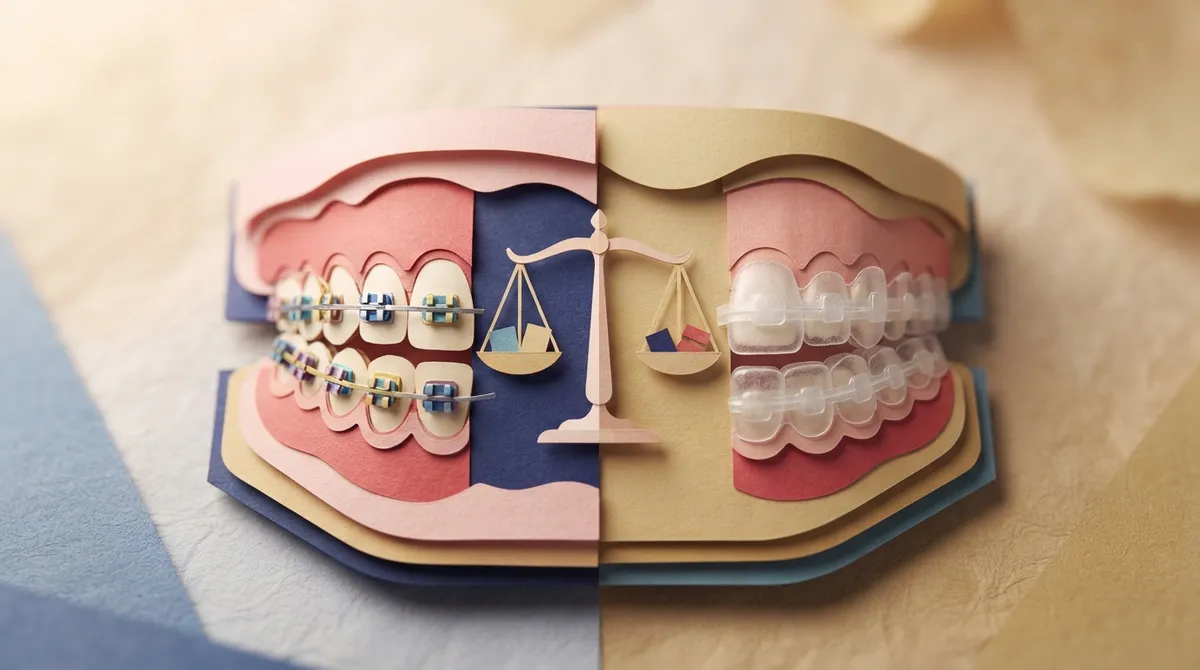
Choosing between braces and clear aligners can feel like picking a new phone. Both work well, both have fans, and everyone you know has an opinion. The good news is that you do not have to guess. When it comes to braces versus clear aligners, the best choice depends on your bite, your teeth, and your daily habits, not on trends.
Maybe you are a parent thinking about your child’s first treatment. Maybe you are a teen who wants a great smile before graduation. Or maybe you are an adult who had braces years ago and now sees some shifting. Each of you has different needs, and that is perfectly normal.
In this friendly guide, we will walk through how each option works, where each one shines, and what research says in 2026. We will keep it simple and honest. By the end, you will know which questions to ask at your visit and feel ready to take the next step.
How Braces and Clear Aligners Work
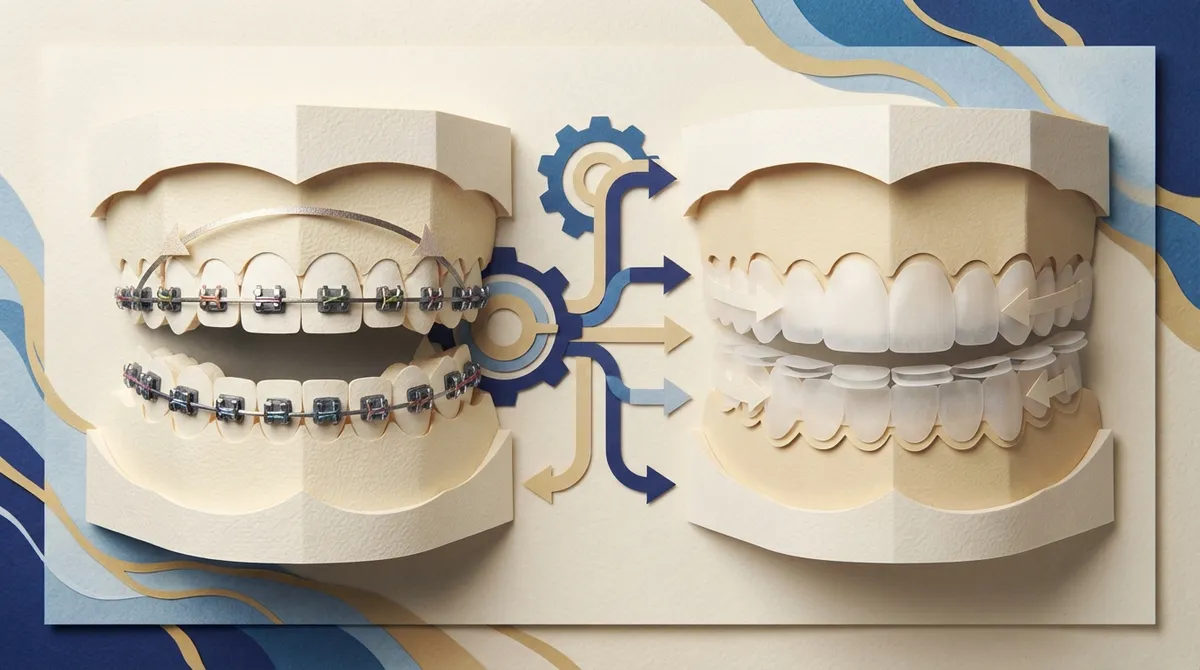
Both treatments do the same basic job. They apply gentle, steady pressure so teeth move into better positions. The tools they use are very different, though.
Braces: Fixed Brackets and Wires
Braces use small brackets bonded to your teeth. A thin wire connects the brackets, and your orthodontist adjusts it over time. Because braces stay on, they work around the clock. You do not have to remember to put anything in. Brockway Orthodontics offers both metal braces and ceramic (clear) braces. Ceramic brackets blend in more with your teeth, which many teens and adults like. If you want to compare those two styles, our guide to metal vs ceramic braces is a helpful read.
Clear Aligners: Removable Custom Trays
Clear aligners are custom-made plastic trays. Each set moves your teeth a little bit, and then you switch to the next set. The American Association of Orthodontists says aligners are generally worn at least 22 hours a day. Each set is typically worn for 1 to 3 weeks, depending on your plan. At our practice, we offer Spark™ Clear Aligners, a more affordable option than many well-known brands. You can learn more in our post on how removable aligners straighten teeth.
Braces vs. Clear Aligners at a Glance
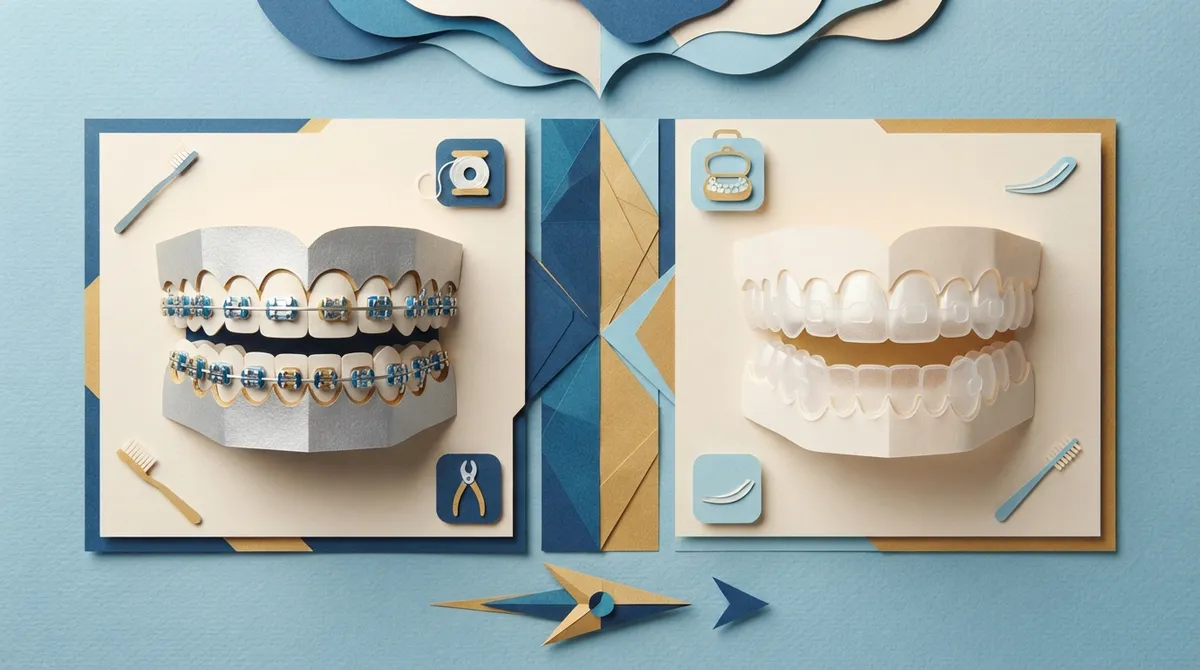
Here is a quick side-by-side look. Keep in mind that every smile is different, so your own plan may vary.
| Feature | Braces | Clear Aligners |
|---|---|---|
| How they stay on | Bonded to teeth | Removable trays |
| Look | Metal or ceramic brackets | Nearly invisible |
| Wear time | Always on | At least 22 hours a day |
| Eating | Some foods to avoid | Remove trays to eat |
| Cleaning | Extra care around brackets | Brush and floss as usual |
| Best for | Wide range, including complex cases | Many mild-to-moderate cases |
| Relies on patient habits | Less | A lot |
What the Research Says in 2026
You may have heard that one option is faster or better. The truth is more balanced. Let us look at what recent studies found.
- Non-extraction cases: A 2025 review of 15 trials with 1,084 patients found no significant difference in treatment quality or length between aligners and fixed braces.
- Extraction cases: The same review found better treatment quality with fixed braces when teeth needed to be removed to make space.
- Movement accuracy: A 2024 umbrella review of 16 reviews reported aligner movement accuracy between 55% and 82%, depending on the movement and the case.
- Speed: Some older reviews found shorter aligner treatment, but newer evidence does not support a universal speed claim.
In plain words, both can work very well. The key is matching the tool to your teeth. If speed is your main question, we explored it further in braces vs. clear aligners: which works faster.
When Clear Aligners May Be a Great Fit
Aligners are popular for good reasons. They suit many people, especially when the movements needed are not too complex.
Mild-to-Moderate Crowding or Spacing
Aligners often handle mild-to-moderate crowding and gaps nicely. If your main goal is closing small spaces or fixing a bit of overlap, aligners may be a strong choice. See our look at braces or aligners for spacing for more detail.
A Busy, Image-Conscious Schedule
Adult professionals often love how discreet aligners are. You can take them out for a big meeting photo or a dinner with clients. Teens and young adults like them for graduations and big social events, too.
Easier Brushing and Flossing
Because you remove the trays, brushing and flossing feel normal. That is a real plus for health-conscious patients who want to keep gums and teeth in top shape.
- Remove trays for meals and any drink other than water.
- Brush before putting trays back in.
- Clean trays daily, using cool water, not hot.
Hot water can warp plastic, which is why we wrote about why hot water can damage clear aligners.
When Braces May Be the Better Choice
Braces have been trusted for decades, and they remain a smart pick in many situations.
Complex Bite Problems
Fixed braces can give strong control over tooth movement. That matters for tricky bite corrections, rotated teeth, or cases that need extractions. If you want to understand one common concern, read how braces help with fixing a deep overbite.
Patients Who Might Forget Trays
Aligners only work when they are in your mouth. Younger patients, or anyone with a hectic life, may find that hard. With braces, treatment keeps moving even on busy days. That is a big reason many parents choose braces for kids and younger teens.
Fewer Daily Decisions
With braces, you do not have to track hours or remember a case. You simply follow food and cleaning rules and show up for visits. For some families, that simplicity is a relief.
Comfort, Lifestyle, and Daily Life
Let us be honest about the day-to-day. Neither option is perfectly effortless, but both are very doable.
Soreness and Adjustment
Both braces and aligners can cause some pressure or soreness as teeth move. That is a normal sign that things are working. It usually eases within a few days. Our post on truths about braces pain explains what to expect.
Food and Drink
With braces, you avoid sticky, hard, and crunchy foods that can break brackets. With aligners, you can eat what you like, but you must take the trays out and clean up before putting them back. Check out what you can eat with braces for ideas.
Sports and Music
Active teens may prefer to remove aligners for games and use a mouthguard. Others find braces fine with a proper guard. We can help you plan for whatever your family loves to do.
Cost and Treatment Time
Many people ask, “Which one costs less?” The honest answer is that it depends. Cost is shaped by how complex your case is, how long treatment lasts, and the type of appliance. Neither option is always cheaper.
The best move is to get a personal quote after an exam. Our guide on clear aligners vs. braces cost breaks down what shapes your price. We also offer flexible options, and you can read about braces payment plans for Clearwater families to see how monthly budgeting can work.
As for time, no honest orthodontist can promise one option is always faster. Your timeline depends on your teeth, your bite, and how well you follow the plan. For braces, see how long you have to wear braces.
How to Choose: A Simple 5-Step Process
If you feel stuck, try this easy path. It keeps the focus on you, not on hype.
- Name your goals. Do you want straighter teeth, a better bite, or both? Write them down.
- Be honest about habits. Can you wear trays about 22 hours a day? If that sounds tough, braces may suit you better.
- Think about visibility. How important is a discreet look? Aligners and ceramic braces both offer low-profile options.
- Get a full exam. An orthodontist should check your teeth, bite, and gums. The AAO describes an in-person exam and records, such as X-rays and photos, as part of planning.
- Compare plans, not promises. Ask about expected time, cost, upkeep, and what retainers you will need.
For a deeper walk-through, see our post on how to choose between clear aligners and braces.
Which Option Fits Which Person?
Every person is unique, but here are some common patterns we see at our practice.
- Parents of children and teens: Braces are often a reliable pick for younger patients who may not keep up with removable trays. Aligners can work for responsible teens with the right bite. Our guide on mistakes parents make can help you avoid common slips.
- Teens and young adults: If you want a discreet look for events, aligners or ceramic braces may appeal. Just be ready for the wear-time commitment with aligners.
- Adult professionals: Aligners fit many busy schedules. Ceramic braces are another low-profile choice if you prefer a fixed option.
- Relapse patients: If your teeth shifted after past treatment, a small touch-up may be possible with aligners. More complex shifts may need braces. Read about relapse warning signs to see if this sounds like you.
- Health-conscious patients: Easier cleaning with aligners can be a plus, but gum health matters either way. Our team will plan around your needs.
Do Not Forget About Retainers
Here is a point many people miss. Whether you choose braces or aligners, you will need retainers afterward. Teeth can drift back, even years later. Your orthodontist will recommend a retainer type and a wear schedule for your case.
Fixed and removable retainers each have pros and cons. Learn more in our comparison of fixed vs. removable retainers, and our tips on caring for your dental retainer. A little daily care protects the smile you worked hard to get.
Why Families Trust Brockway Orthodontics in Clearwater
At Brockway Orthodontics, we offer metal braces, ceramic braces, and Spark™ Clear Aligners, so we can match the treatment to you, not the other way around. Dr. Brockway takes time to listen to your goals and explain your options in a clear, friendly way.
We also use modern tools like digital impressions and 3D imaging. That means no messy molds and more precise planning. In certain cases, same-day treatment may be possible for busy families. If you are curious about who you will meet, learn about the Brockway orthodontist in Clearwater, FL. You can also see what patients say when you visit us on Google — Brockway Orthodontics.
For extra background on choosing a provider, the Florida Association of Orthodontists shares helpful resources. The American Dental Association also offers trusted guidance on oral health. And if you want to dig into the science, the comparison of treatment effectiveness between clear aligners and fixed appliances is a good place to start.
Final Thoughts: The Best Choice Is the One That Fits You
So, braces versus clear aligners: which wins? The honest answer is that neither wins every time. Aligners offer discretion and easy cleaning for suitable cases. Braces offer steady control for many cases, including some complex ones. Your own bite, goals, and habits decide the best fit.
The easiest way to find out is to talk with an orthodontist who will look at your teeth and walk you through the options with no pressure. Ready to take the first step? Book your appointment online and let us help you find the right path to a smile you love. Prefer to chat first? You can also contact us with any questions.
FAQs
Q: Are braces or clear aligners better for my teeth?
A: Neither is better for everyone, and that is okay! Aligners work well for many mild-to-moderate cases, while braces can offer strong control for complex bites. A quick exam with an orthodontist is the best way to find your match.
Q: How many hours a day do I need to wear clear aligners?
A: The American Association of Orthodontists says aligners are generally worn at least 22 hours a day. You only take them out to eat, drink anything but water, and clean your teeth. Each set is usually worn for 1 to 3 weeks, based on your plan.
Q: Do braces or clear aligners work faster?
A: Research does not show one is always faster. A 2025 review found no significant difference in treatment time for non-extraction cases. Your own timeline depends on your teeth, your bite, and how well you follow your plan.
Q: Which is easier to clean: braces or clear aligners?
A: Aligners are usually easier since you take them out to brush and floss like normal. Braces stay on, so you need a little extra care around the brackets and wires. Don’t worry, our team will show you simple tricks to keep your smile healthy either way.
Q: Will I need a retainer after braces or clear aligners?
A: Yes, retainers matter after either treatment because teeth can shift over time. Your orthodontist will suggest the right type and a wear schedule for your case. Wearing it as directed helps protect the smile you worked hard for.
Our Service Area