Key Takeaways
-
Custom aligner fit starts with accurate data: an intraoral scan or scanned mold creates a digital model of your teeth, and every later step builds on it, so small scanning errors can carry through every tray.
-
Your orthodontist, not software alone, reviews and approves the treatment plan, which maps a sequence of small tooth movements and creates a separate digital model for each stage.
-
Most trays are thermoformed: a 3D-printed model is made for each stage, a clear plastic sheet is heated and formed over it, then the tray is trimmed and polished for comfortable gumline edges.
-
A well-fitting tray snaps on snugly and sits fully against the teeth, with mild pressure for a day or two; persistent pain, a tray that won't seat, or cracks mean you should call your orthodontist rather than force it.
-
Aligners are typically worn at least 20 hours a day per FDA guidance, since insufficient wear prevents trays from working as planned and can make the next tray fit poorly.
-
Digital plans don't guarantee exact tooth movement, so regular checkups let your orthodontist catch lagging teeth and order refinements or plan adjustments early.
Ever wonder how a thin piece of clear plastic ends up matching your teeth so closely? It can feel like a little bit of magic. But there is no magic here, just careful science, smart software, and a lot of human know-how. Whether you are a parent looking at options for your teen, a busy professional who wants a discreet fix, or someone returning for a second round of treatment, understanding how custom clear aligner trays are made to fit can help you feel more confident about the process.
The short version is this: your orthodontist builds a digital copy of your teeth, plans every small movement on a computer, and then creates a series of trays that match each step. Each tray is made for your mouth and no one else’s.
In this friendly guide, we will walk through each stage, from your first scan to the moment a fresh tray clicks into place. We will also cover what affects fit, what to do if a tray feels off, and why professional supervision matters so much. Grab a cup of coffee, and let’s dig in!
What Makes a Clear Aligner Tray Custom?
A custom clear aligner tray is a prescription orthodontic device. It is shaped from a digital model of your own teeth, not pulled from a stock size chart. That is what separates it from a one-size-fits-all mouthguard.
Each tray covers the tooth surfaces and is designed to match a planned tooth position for one stage of treatment. Think of it like a staircase. Your teeth start at the bottom step, and each tray moves them up one small step toward the finish line.
Here is what makes the process truly personal:
- Your scan: The starting point is a digital model of your exact tooth shapes and bite.
- Your plan: A clinician decides which teeth should move, how far, and in what order.
- Your stages: Every step gets its own model and its own tray.
- Your follow-up: Checkups confirm the trays are doing their job.
So when someone asks how custom clear aligner trays are made to fit, the answer begins with one word: data. The more accurate the starting data, the better the fit.

Step 1: The Exam and Records Visit
Before any tray is made, a dentist or orthodontist needs to decide whether aligners are the right choice for you. This is a clinical decision, and software does not replace it.
At your first visit, your orthodontist will usually:
- Review your dental and medical history.
- Examine your teeth, gums, and bite.
- Take X-rays or photos when they are clinically helpful.
- Talk with you about your goals, like closing gaps, fixing crowding, or improving your bite.
This step matters more than many people realize. Healthy gums and teeth are the foundation for any orthodontic treatment. If a cavity or gum issue needs care first, your team will let you know. Some bite problems are also better treated with braces or another approach, and an honest evaluation helps you avoid wasted time and money.
Curious what the first appointment looks like? Our guide on what to expect at your first orthodontist appointment walks through it in detail. You can also learn what makes someone a clear aligner candidate before you book.
Step 2: Capturing a Digital Model of Your Teeth
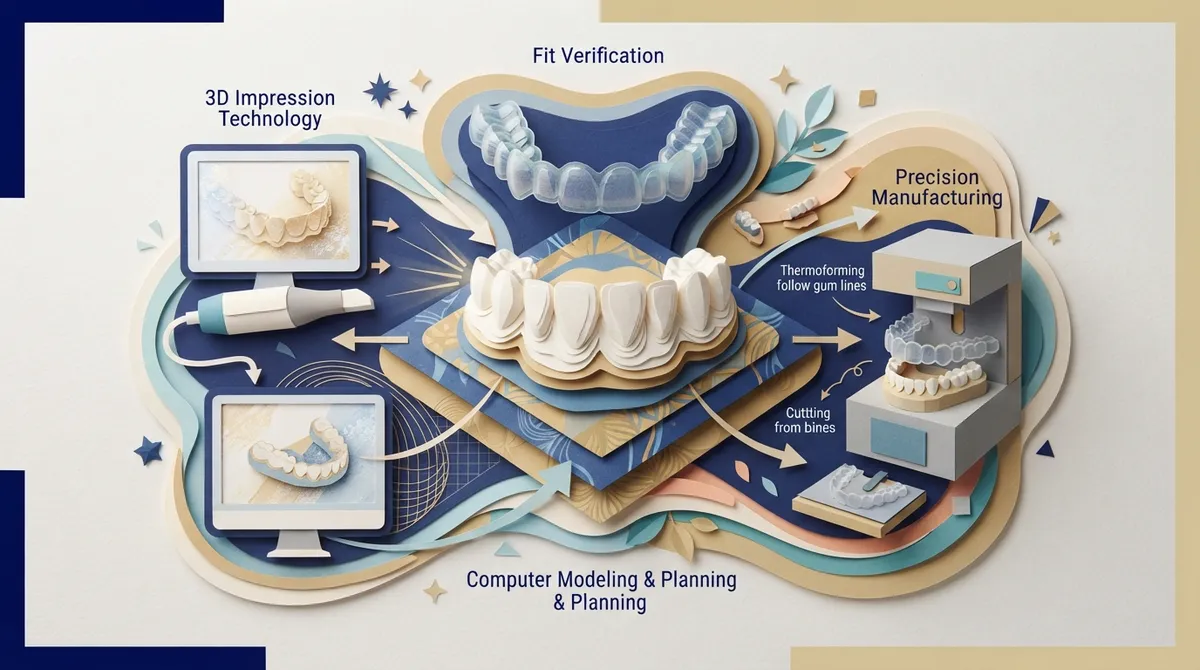
Next comes the part many patients love: no goopy trays. Most modern offices use an intraoral scanner, a small wand that moves around your mouth and captures thousands of images. Software stitches them into a detailed 3D model of your teeth and gums.
If a physical impression is used instead, that mold can be scanned to create the same kind of digital file. Either way, the end goal is a precise digital copy of your smile.
Why does this matter for fit? Because every later step builds on this model. A small error here can carry through to every tray. That is why careful scanning, a dry and clear view of the teeth, and a skilled operator all make a difference.
If you want to know more about the technology, take a look at 10 facts about Medit intraoral scanning for ortho and 7 digital impression scanner facts Clearwater families trust. At Brockway Orthodontics, digital impressions replace messy molds, so your visit stays comfortable and quick.
Step 3: Planning Every Tooth Movement
Now your orthodontist turns that digital model into a treatment plan. Treatment-planning software maps out a sequence of small tooth movements, then creates a separate digital model for each stage.
This is where the clinician’s training really shines. The software can suggest movements, but your orthodontist reviews, adjusts, and approves the plan. Teeth do not move in a straight line like pieces on a game board. Roots, bone, gums, and your bite all play a part.
Attachments and Other Helpers
Some teeth are tricky to move with plastic alone. In those cases, the plan may include small tooth-colored bumps called attachments. These give the tray something to grip, so it can guide a tooth more precisely. Other features, like small cutouts or elastics, may also be added depending on your case.
Not sure what attachments look like? Read are aligner attachments noticeable for a clear answer.
How Many Trays Will You Need?
The number of stages depends on how complex your case is. A mild gap might need fewer trays, while heavy crowding or a bite change may need more. Your orthodontist will share a plan and timeline up front, and may adjust it as you go.
Step 4: Making the Trays
Once your plan is approved, it is time to manufacture the trays. There are two main routes, and it helps to know the difference.
Thermoforming Over Printed Models
This is the most common method. Here is how it works:
- A 3D printer makes a separate physical dental model for each treatment stage.
- A clear thermoplastic sheet is heated until it is soft.
- The sheet is formed tightly over each model.
- It cools and hardens into the shape of that stage.
- The tray is separated from the model, trimmed, and finished.
The trimming and polishing step is important. A tray needs smooth edges that sit comfortably near the gumline without rubbing. A 2022 review describes this conventional workflow as producing sequential models, now commonly by 3D printing, followed by thermoforming, trimming, and polishing.
Direct 3D Printing
A newer route skips the sheet. Instead, the aligner itself is printed directly from a digital file. This is a separate fabrication method, and the materials and finishing steps must be safe for use inside the mouth. Researchers are still studying how this approach compares with traditional thermoforming.
| Feature | Thermoformed Trays | Direct 3D-Printed Trays |
|---|---|---|
| How it is made | Plastic sheet formed over printed models | Aligner printed straight from a digital file |
| Models needed | One printed model per stage | Not required for the aligner itself |
| Finishing | Trimmed and polished | Post-processed and cleaned |
| How common | Most widely used | Newer and still developing |
No matter which method is used, the goal is the same: a tray that matches the planned tooth position for its stage.
What Materials Are Aligner Trays Made From?
Aligners are made from clear, medical-grade plastics, often thermoplastic materials designed to be strong yet slightly flexible. The material needs to apply gentle, steady pressure, resist cracking, and stay clear. Materials used inside the mouth also need to be appropriate for intraoral use.
Hot water can warp these plastics, which is why care matters. If you are curious, see why hot water can damage clear aligners and our simple guide to cleaning clear aligners.
How a Tray Should Feel When It Fits
Here is a question we hear all the time: “My new tray feels tight. Is that normal?” Often, yes. A tray is designed to sit just ahead of where your teeth are now, so mild pressure for the first day or two is common.
A well-fitting tray should:
- Snap on snugly and sit fully against your teeth.
- Feel firm but not painful.
- Cover the teeth without large gaps near the gumline (small gaps at certain spots can happen early on).
- Not rub sharply on your cheeks, lips, or tongue.
You should call your orthodontist if you notice persistent pain, bite changes, a tray that will not seat as directed, or a crack or sharp edge. Do not force a tray into place. Forcing can cause problems, and our article on why not to skip ahead to a new aligner tray explains why patience pays off.
Why a Perfect Digital Plan Still Needs Monitoring
Here is an honest truth: a digitally planned fit does not guarantee teeth will move exactly as predicted. Bodies are not computers! Bone density, tooth shape, and how consistently you wear your trays all affect the result.
Research backs this up. A 2009 study, summarized in a 2024 systematic review, reported a mean accuracy of 41% for Invisalign anterior tooth movements. That is one study’s result, not a rule for every aligner, every movement, or today’s systems. But it shows why checkups matter. Teeth sometimes lag behind the plan, and your orthodontist can fix that with a refinement or a plan adjustment.
That is also why some treatments need extra trays. Learn more in refinement aligners vs. the original set, and see how to keep clear aligners on track with monitoring.
Wear Time Makes a Big Difference
The FDA’s patient guidance says aligners are typically worn at least 20 hours a day, or as directed by your treating clinician. It also notes that changing to the next aligner commonly happens every one to two weeks, though your orthodontist’s schedule should always win. A tray that does not get worn enough cannot do its job, and the next tray may not fit the way it should.
Why Professional Supervision Matters
Clear aligners are prescription devices for a reason. A dentist or orthodontist can spot problems that a box in the mail cannot, such as unintended tooth movement, bite changes, gum trouble, or a case that is better suited to braces.
Quick reasons to keep a professional in your corner:
- They check your gums and teeth before and during treatment.
- They confirm each stage is tracking the plan.
- They adjust the plan when your teeth move differently than expected.
- They help you finish with a stable, healthy bite.
Thinking about going it alone? Compare the pros and cons in 7 key differences: at-home aligners vs. professional orthodontics.
Who Are Custom Aligners Good For?
Custom aligners suit many different people, which is part of their charm:
- Teens and young adults who want a discreet option before graduation, prom, or big life events.
- Adult professionals who need something that fits a busy schedule and meetings without metal.
- Parents who want a clear picture of what their child’s treatment involves.
- Relapse patients whose teeth shifted after earlier treatment and who want a fresh, personalized plan.
- Health-conscious patients who want a removable option that makes brushing and flossing easier.
Not sure whether aligners or braces fit better? Our comparisons of clear aligners vs. braces and how to choose between them in 2026 can help. For teens in particular, 5 mistakes parents make choosing braces or aligners for teens is a handy read.
Caring for Your Trays So They Keep Fitting
A tray that fits well on day one can lose its edge if it is mishandled. A few easy habits protect your investment:
- Remove trays before eating or drinking anything but water.
- Brush and floss before putting them back in.
- Clean trays daily with a soft brush and lukewarm water.
- Store them in their case, never wrapped in a napkin.
- Keep them away from heat, pets, and pockets.
Many people also ask whether to hold onto old trays. It depends on your plan, so read how to decide whether to keep previous aligner trays. And once treatment ends, retainers keep your results in place. See why you still need retainers after Invisalign for the full story.
Clear Aligners at Brockway Orthodontics
At Brockway Orthodontics, Dr. Brockway takes the time to listen to your goals before recommending anything. We offer Spark™ Clear Aligners as a more affordable alternative to Invisalign, along with metal braces and ceramic (clear) braces, so you can choose what truly fits your life. Our modern technology, including digital impressions and 3D imaging, helps us plan your treatment with care, and in certain cases we can offer same-day treatments to keep things simple for busy families.
Want to see what other patients think? Read what our Clearwater community says and visit us on Google — Brockway Orthodontics. You can also learn more about Spark™ Clear Aligners or read about Dr. Brockway here.
For general information on oral health and orthodontic care, the American Dental Association and the Florida Association of Orthodontists are trusted resources. The FDA also publishes patient guidance on clear dental aligners.
Ready to Find Out If Custom Aligners Are Right for You?
Now you know how custom clear aligner trays are made to fit: a careful exam, a precise digital scan, a clinician-guided plan, and trays crafted for each stage, all backed by regular checkups. It is a thoughtful process, and it works best when you have a caring professional guiding you.
Whether you are thinking about aligners for yourself or for your child, we would love to meet you. Book appointment online for a free consultation, or contact us with any questions. Your best smile is closer than you think!
FAQs
Q: How are custom clear aligners made from a dental scan?
A: Your orthodontist uses your scan to build a digital model, then plans a series of small tooth movements on a computer. Most often, a 3D printer makes a model for each stage, and a clear plastic sheet is heated and formed over it. The tray is then trimmed and polished so it sits comfortably on your teeth.
Q: Are clear aligners 3D-printed or thermoformed?
A: Great question! Most are thermoformed, meaning a clear plastic sheet is shaped over 3D-printed models. Some makers now print the aligners directly, which is a newer and separate method. Your orthodontist can tell you which approach your trays use.
Q: How should a new aligner tray fit?
A: A new tray should snap on snugly and sit fully against your teeth, with mild pressure for a day or two. If it will not seat fully, feels painful for days, or rubs sharply, call your orthodontist instead of forcing it. They can check whether something needs a quick adjustment.
Q: How many hours a day should clear aligners be worn?
A: The FDA says aligners are typically worn at least 20 hours a day, or as your dentist or orthodontist directs. Your exact schedule is personal to you, so follow your clinician’s instructions. Consistent wear helps each new tray fit and work the way it was planned.
Q: Why do clear aligners need orthodontist supervision?
A: Aligners are prescription devices, and a digital plan does not guarantee teeth will move exactly as predicted. Regular checkups help catch problems like unwanted tooth movement or bite changes early. Your orthodontist can also tell you if braces or another option would work better for your smile.
Our Service Area