Key Takeaways
-
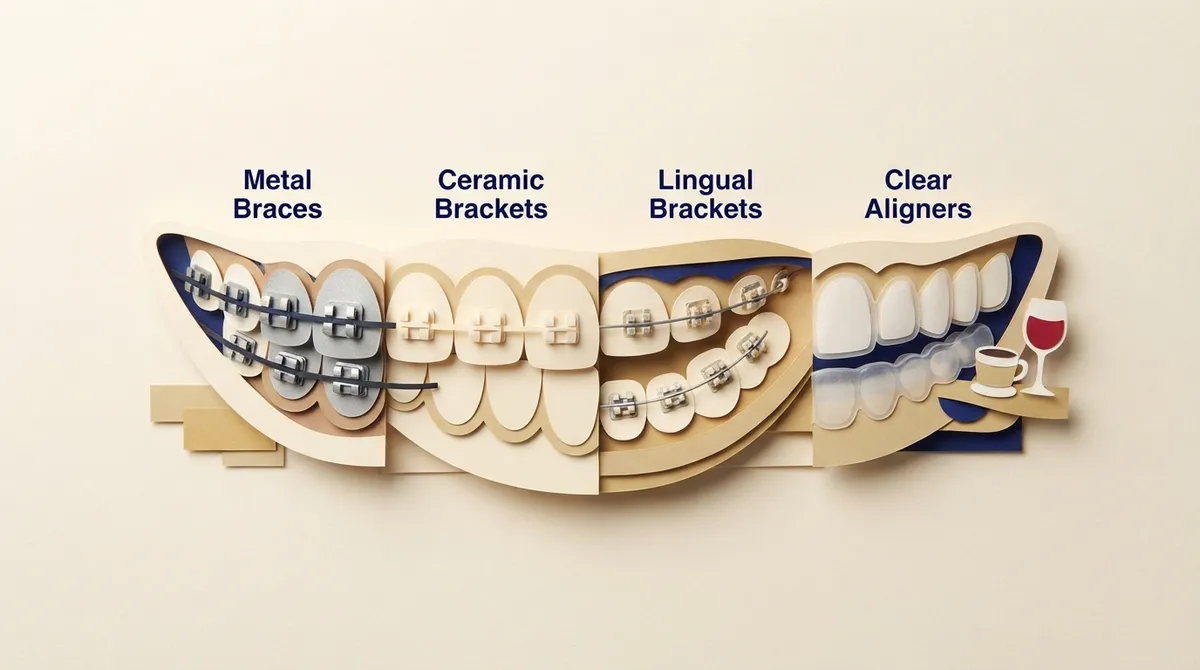
Metal braces are the most noticeable option, while ceramic braces are less obvious, lingual braces sit hidden behind teeth, and clear aligners offer subtle removable trays.
-
No standardized rating exists for orthodontic visibility, so terms like 'virtually invisible' are qualitative; viewing distance, lighting, and your own anatomy all change how noticeable treatment is.
-
The least visible option isn't always the best fit, since clinical needs and bite problems may require braces, so an orthodontic evaluation should guide your choice.
-
Clear aligners generally must be worn about 22 hours a day, and fewer wearing hours can slow treatment, so consistency matters if you choose removable trays.
-
Ceramic braces and clear aligners can discolor from coffee, tea, and red wine, so remove aligners before drinking anything but water and limit staining foods.
Picture this: you’re ready to finally straighten your smile, but you’re worried about how it will look while you do it. Maybe you have a big presentation coming up. Maybe it’s prom, graduation, or a wedding. Or maybe you just don’t love the idea of everyone noticing your teeth the moment you smile. If that sounds familiar, you’re in good company, and your question is a great one.
Comparing visibility of orthodontic treatments is one of the smartest first steps you can take. Some options show more than others, and some hide almost completely. But here’s the friendly truth: the least visible choice isn’t always the best fit for your teeth. In this guide, we’ll walk through how to compare each option, what makes an appliance more or less noticeable, and how to pick a path that matches both your goals and your bite. Let’s make this feel easy.

What Does “Visibility” Really Mean in Orthodontics?
When we talk about visibility, we mean how noticeable an appliance is during everyday life. Think casual conversation, smiling for photos, and laughing with friends. It isn’t a science with a perfect scale. In fact, no standardized numerical rating compares the visibility of metal, ceramic, and lingual braces with clear aligners. Descriptions like “virtually invisible” are qualitative, not guarantees.
Several things change how visible your treatment looks:
- Viewing distance: Someone across the room sees far less than someone chatting with you up close.
- Lighting and reflections: Glossy surfaces can catch the light differently.
- Appliance design: Brackets, wires, trays, and attachments all look different.
- Extras like elastics or attachments: These small add-ons can make a treatment a bit more noticeable.
- Your own anatomy: Tooth size, shape, and how much of your gums show when you smile all play a part.
Keep these in mind as we compare each option. They help you set realistic expectations from the start.

How to Compare Visibility of Orthodontic Treatments: A Step-by-Step Approach
Here’s a simple way to work through your options without feeling overwhelmed.
- Decide how much visibility matters to you. Be honest. Is it a top priority, or just a nice bonus?
- Learn the four main options. Metal braces, ceramic braces, lingual braces, and clear aligners each hide differently.
- Think about your lifestyle. Do you play a wind instrument, speak in public, or have a big event coming up?
- Ask what your teeth actually need. Your bite and tooth movements may limit your choices.
- Book an evaluation. An orthodontist can tell you what’s possible and what to expect.
Let’s dig into each option so you can fill in step two with confidence.
Metal Braces: The Most Noticeable Option
Traditional metal braces are the most visually conspicuous of the common choices. The brackets and wires sit on the front surfaces of your teeth, and they stay in place for the whole treatment. There’s no taking them out for photos.
But here’s the cheerful side of things: modern metal braces are smaller and more comfortable than the ones your parents may remember. Many teens love them because they can choose colorful elastics to show off their personality. Some people even find that fun and confidence-boosting rather than something to hide.
If you’re curious about a slightly more polished look, take a peek at Rhodium Braces: A Discreet Metal Braces Option. And if you want a deeper side-by-side, our guide on Metal vs Ceramic Braces: Which Is Right for You? (2026) breaks it down further.
Ceramic Braces: Blending In With Your Smile
Ceramic braces use tooth-colored or translucent brackets, so they’re generally less noticeable than metal braces. They blend with your natural tooth shade, which makes them popular with adults and teens who want a more subtle look while still using fixed braces.
That said, they aren’t invisible. The brackets and wire can still be seen, especially up close. Ceramic components can also discolor depending on the materials used and exposure to foods and drinks, so a little extra care goes a long way.
Many adults love this middle-ground choice. If that sounds like you, you might enjoy 14 Things Adults Should Know Before Choosing Ceramic Braces.
Lingual Braces: Hidden Behind Your Teeth
Lingual braces are attached to the tongue-facing side of your teeth. From the front, they’re largely hidden, which is why they’re sometimes called a “secret” option. If you want the strength of fixed braces without the front-facing look, they can be appealing.
There are trade-offs to know about. Lingual braces require specialized expertise, and they may affect tongue comfort or speech while you adjust. Availability and suitability also vary from patient to patient. If you’re intrigued, our article Incognito Braces: The Discreet Way to Straighten Teeth is a helpful place to start, and a conversation with your orthodontist will tell you whether they fit your case.
Clear Aligners: Subtle Trays You Can Remove
Clear aligners are transparent, removable trays. They’re often described as nearly or virtually invisible, but it’s more accurate to say they’re very subtle. Up close, you may notice a slight shine or see small tooth-colored bumps called attachments that help guide tooth movement.
Other things can make aligners a bit more apparent, such as staining from certain drinks, reflections, or elastics when they’re part of treatment. Good cleaning habits help keep trays looking fresh. Our guide on How to Clean Clear Aligners: A Simple 2026 Guide shares easy daily tips.
At Brockway Orthodontics, we offer Spark™ Clear Aligners, a more affordable alternative to Invisalign. Curious how they work? Check out How Do Removable Aligners Straighten Teeth in 2026? for a friendly walkthrough.
Visibility Comparison at a Glance
Here’s a quick snapshot to help you compare. Remember, these are relative descriptions, not guarantees.
| Treatment | How Noticeable? | Where It Sits | Removable? | Things That Can Affect Visibility |
|---|---|---|---|---|
| Metal braces | Most noticeable | Front of teeth | No | Bracket size, wire, colored elastics |
| Ceramic braces | Less noticeable, still visible | Front of teeth | No | Wire color, possible discoloration |
| Lingual braces | Hidden from the front | Back of teeth | No | Viewing angle, speech adjustment |
| Clear aligners | Subtle transparent trays | Over the teeth | Yes | Attachments, staining, reflections, elastics |
Why the Least Visible Option Isn’t Always the Best One
It’s tempting to pick whichever choice hides best and call it a day. But your smile deserves a plan built around your teeth, not just appearances. Clinical needs matter a lot here.
For example, clear aligners aren’t suitable for every case. Braces may be recommended for some complex tooth movements or bite problems. Aligners also depend on you. The American Association of Orthodontists notes that aligners are generally worn at least 22 hours a day, with each set typically worn for one to three weeks. Wear instructions can vary by your orthodontist, so always follow your own plan.
If you wear aligners fewer hours than recommended, your treatment can slow down, and that can mean a longer path to your goal. Fixed options like braces keep working around the clock, which some people actually prefer. Our comparison guide Which Is Right for You: Clear Aligners vs Braces? goes deeper on this trade-off.
Tailoring Your Choice to Your Life Stage
Different people care about different things, so let’s look at a few common situations.
For Parents of Children and Teens
If you’re helping a younger patient choose, think about responsibility. Fixed braces can be a great fit for kids who might misplace removable trays. Teens who want a discreet look may enjoy aligners if they can wear them consistently. Our post Braces vs. Clear Aligners for Kids: Which Is Right? can guide your family conversation.
For Teens and Young Adults
Big milestones like graduation or prom can make visibility feel extra important. It’s worth talking with your orthodontist about timing. Learn more in How to Choose the Right Braces as a Young Adult in 2026.
For Adult Professionals
If you work in a client-facing role, a subtle option can feel more comfortable. Many adults choose ceramic braces or clear aligners for that reason. See Why Are Invisible Braces for Adults So Popular in 2026? to see what’s driving the trend.
For Retreatment Patients
If you’ve had braces before and your teeth have shifted, you may be nervous about starting again. Take heart, because many options are available. Our guide on 9 Adult Orthodontic Retreatment Options for a Shifted Smile (2026) can help you explore what’s possible.
Practical Tips to Make Any Treatment Less Noticeable
Whichever option you choose, a few habits can help your appliance blend in even more.
- Keep your teeth sparkling clean. Plaque and stains draw the eye to brackets and trays.
- Brush after meals. This is especially helpful with ceramic braces and clear aligners.
- Limit staining foods and drinks. Coffee, tea, and red wine can discolor ceramic parts and aligner trays.
- Remove aligners before drinking anything but water. This keeps trays clearer for longer.
- Follow your orthodontist’s wear schedule. Consistency keeps your treatment moving on time.
Good daily care also protects your gums and enamel, which matters just as much as how your smile looks. For braces wearers, How to Brush Teeth With Braces and Keep Your Smile Healthy has simple step-by-step help.
Questions to Ask at Your Orthodontic Consultation
When you meet with an orthodontist, bring your visibility concerns right to the table. Here are a few questions that can help:
- Which options could realistically treat my bite and tooth position?
- How noticeable would each option be for my specific teeth?
- Will I need attachments or elastics, and how would they show?
- How will each option affect my speech and comfort?
- What happens if I don’t wear removable trays as directed?
- How long might each option take?
A friendly, honest chat will help you feel confident in your decision. For more ideas, see 13 Questions to Ask at an Orthodontic Consultation (2026) and How to Prepare for Your Orthodontist Consultation Clearwater.
Why a Personal Evaluation Matters
Photos and descriptions only go so far. The only way to know how visible your treatment will be is to have your teeth evaluated. Dr. Brockway takes time to listen to your worries and your hopes for your smile, so you feel comfortable and informed from start to finish. Our practice uses digital impressions instead of messy molds and 3D imaging to plan treatment precisely, which helps you see what to expect. We offer Spark™ Clear Aligners, metal braces, and ceramic (clear) braces, so there’s something for every smile.
If you’d like to hear from our patients, you can visit us on Google — Brockway Orthodontics and see what our Clearwater families have to say. You can also stay connected with the practice through the Brockway Orthodontics Facebook page. For general guidance on oral health, the American Dental Association is a reliable resource.
Ready to Find Your Most Comfortable Option?
Comparing visibility of orthodontic treatments is really about finding the balance between how you want to look and what your teeth need. Metal braces are the most noticeable, ceramic braces are less obvious, lingual braces hide behind your teeth, and clear aligners offer subtle, removable trays. Each one has real strengths, and the right choice is the one that fits your goals, your lifestyle, and your bite.
You don’t have to figure this out alone. Book your appointment online and let Dr. Brockway walk you through your options in a warm, no-pressure visit. Prefer to chat first? Contact us and our friendly team will be happy to help. Your confident smile is closer than you think!
FAQs
Q: Which orthodontic treatment is least noticeable?
A: Lingual braces are largely hidden from a frontal view, and clear aligners are subtle transparent trays. Which one is truly least visible depends on your teeth, your appliance design, and how close someone is standing. The best way to know is to ask your orthodontist what would work for your smile.
Q: Are clear aligners really invisible?
A: They’re often called nearly or virtually invisible, but not literally invisible. Up close, you might notice a little shine, staining, or small tooth-colored attachments. Most people find them very discreet in everyday conversation, though.
Q: Are ceramic braces less visible than metal braces?
A: Yes, ceramic braces are generally less noticeable because the brackets match your tooth color. The brackets and wire can still be seen up close, and ceramic parts can discolor depending on what you eat and drink. A little extra care helps them stay looking their best.
Q: Are clear aligners suitable for every orthodontic problem?
A: Not always. Some complex tooth movements or bite problems may be better treated with braces, so an orthodontic evaluation is important. Aligners also need to be worn about 22 hours a day, so they work best when you can stick with the schedule.
Q: Do clear aligner attachments make treatment more visible?
A: They can, a little. Attachments are small tooth-colored bumps that help aligners move your teeth, and they may be noticeable when someone looks closely. Most people still find the overall look pretty subtle.
Our Service Area