Key Takeaways
-
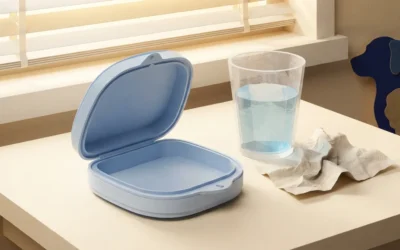
Always put your removable retainer back in its case the moment you take it out, since it should only ever be in your mouth or its case, never on a counter, napkin, or nightstand.
-
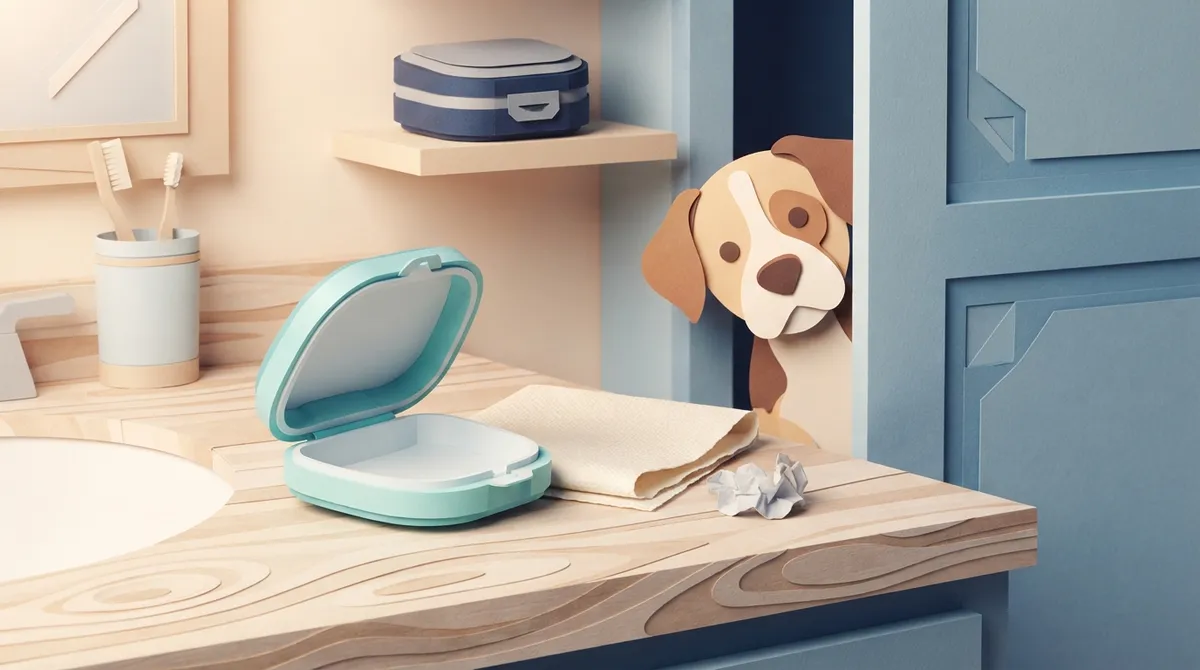
Store the closed retainer case in a drawer, cabinet, or high shelf your pet cannot reach, because a determined dog can carry and chew through a case left within reach.
-
Retainers carry your saliva scent, which dogs and cats find irresistible, so keeping the retainer out of their sight and reach removes the main temptation.
-
If your pet chews your retainer, do not wear it if it is cracked, bent, or sharp, and do not force it in; call your orthodontist right away because teeth can start shifting quickly.
-
If your pet swallows part of a retainer, call your veterinarian promptly, do not induce vomiting or pull anything out yourself, and seek urgent care if your pet is choking or struggling to breathe.
-
Households with pets that repeatedly target retainers may benefit from asking your orthodontist about a fixed bonded retainer, which stays attached to the back of the teeth and cannot be chewed off.
Picture this: you wake up, reach for your retainer, and it’s gone. Then you spot your dog in the corner, looking very proud of himself. If this sounds familiar, you are definitely not alone. Pets and retainers are a surprisingly common (and costly) combination.
Here’s the funny part. Your retainer smells like you, and to a curious dog or cat, that scent is hard to resist. A chewed retainer is more than a silly story. It can leave you with a damaged appliance, shifting teeth, and a replacement bill nobody wants.
The good news? Keeping retainers safe from pets is simple once you build a few easy habits. In this friendly guide, we’ll cover why pets love retainers, nine practical ways to protect yours, and exactly what to do if the worst happens. Whether you’re a parent helping a teen, a young adult juggling a busy life, or a grown-up finishing a second round of treatment, these tips will help you protect the smile you worked so hard to earn.
Why Pets Are Drawn to Retainers
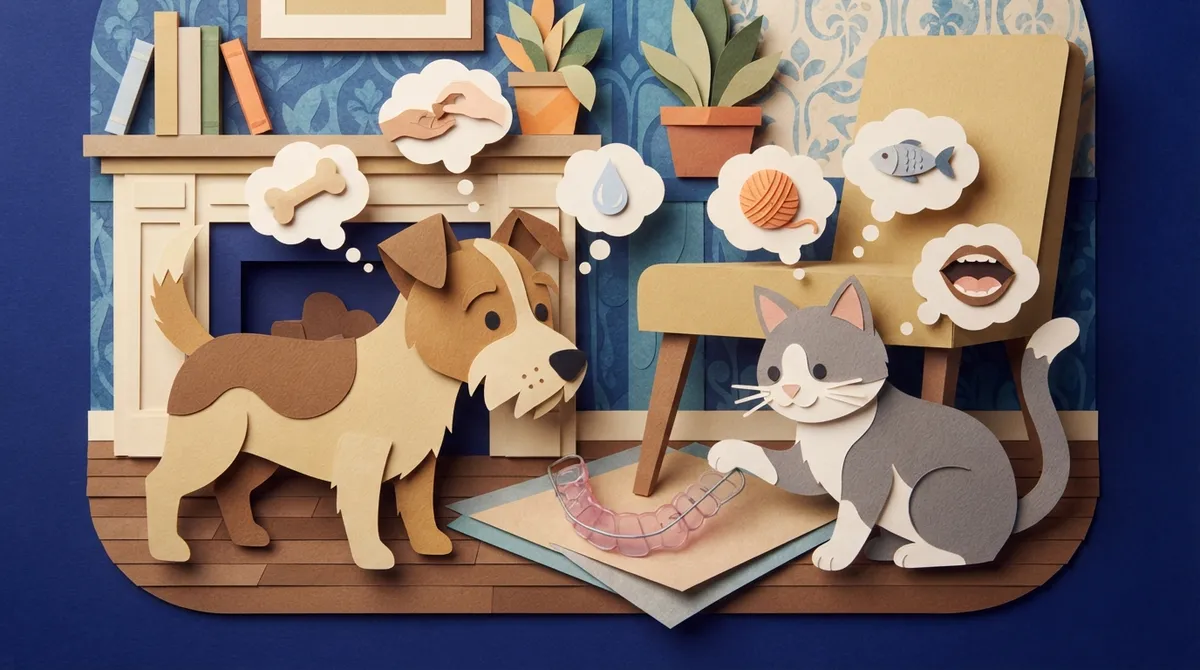
Retainers don’t look like a snack, but your pet isn’t fooled by looks. The American Association of Orthodontists (AAO) notes that dogs in particular may be attracted to the scent of saliva on removable retainers. To your pup, a retainer is basically a warm, smelly chew toy that belongs to their favorite human.
Cats can get curious too. They love batting small objects off tables and carrying them around. A retainer left on a nightstand or bathroom counter looks like the perfect plaything.
Here are the most common reasons retainers go missing or get chewed:
- Saliva scent: Your retainer carries your smell, which pets find comforting or interesting.
- Easy access: Nightstands, couches, and counters are within reach of most pets.
- Fun texture: Plastic and acrylic feel good to chew, especially for puppies and teething dogs.
- Small and portable: Cats and small dogs can carry a retainer away in seconds.
Understanding the “why” makes the “how” much easier. Let’s get into the habits that work.

9 Easy Habits for Keeping Retainers Safe From Pets
1. Use the Case Every Single Time
This is the golden rule. The AAO advises that a removable retainer should be in one of two places: your mouth or its case. Nowhere else.
The moment you take your retainer out, pop it right into the case. Do not set it on a napkin, wrap it in tissue, or leave it on the counter “just for a minute.” That one minute is all a determined dog needs.
2. Pick a Sturdy, Clean Case
Not all cases are equal. Choose a hard, snap-shut case that closes securely. Flimsy cases can pop open when a pet bats them around.
Rinse and dry the case regularly. A clean case smells less like you (and less like dinner), which makes it a bit less tempting. If your case cracks or the lid gets loose, replace it right away. It’s a tiny cost compared to a new retainer.
3. Store the Case Out of Reach
A case protects the retainer, but it isn’t pet-proof. A determined dog can carry a case across the house and chew right through it.
Store it somewhere your pet cannot reach, such as:
- A closed drawer in your bedroom or bathroom
- A shut medicine cabinet or vanity cupboard
- A high shelf your pet cannot jump to
- A zippered pouch inside a closed backpack
The key word is closed. A case sitting on an open nightstand is still an invitation.
4. Keep the Bedroom Door Closed at Night
If you wear your retainer at night, you probably take it out first thing in the morning, right when pets are most active and most interested in you. Build a morning routine: take the retainer out, case it, and put the case away before your pet gets excited about breakfast.
Closing the bedroom or bathroom door while you handle your retainer is an easy extra layer of protection, especially for puppies and kittens.
5. Never Wrap Your Retainer in a Napkin
Orthodontists hear this story constantly. A retainer gets wrapped in a napkin at lunch, tossed on the tray, and thrown away by accident. Pets can do the same kind of damage at home by grabbing napkins and tissues with that scent on them.
If you take your retainer out while eating, case it. No napkins, no pockets, no “I’ll remember where I put it.”
6. Set a Simple Routine for Teens
Parents, this one’s for you. Teens are busy, and retainers are easy to forget. Help your teen build a “mouth or case” habit by:
- Choosing one permanent spot for the retainer case, like a bathroom drawer.
- Placing a small reminder note on the mirror for the first few weeks.
- Making the case part of the nightly routine, right after brushing.
- Checking in gently for the first month until the habit sticks.
A little teamwork now can save you from a stressful replacement later. Our guide on helping teens keep track of retainers has even more easy habits to try.
7. Provide Your Pet With Better Chew Options
A bored pet is a chewing pet. Give your dog plenty of safe chew toys, and make sure they get regular exercise and attention. A tired, happy dog is far less likely to go hunting for your retainer.
Cats often do well with puzzle feeders and interactive play. If your pet seems extra interested in your belongings, talk with your veterinarian about healthy ways to redirect that energy.
8. Take Extra Care When Traveling or Visiting
Pets at a friend’s house, a hotel, or Grandma’s place can be unpredictable. Always keep your retainer case in a zipped bag or a closed drawer, and never leave it on a bed, couch, or floor. A new environment means new smells, and new smells mean more curiosity.
9. Clean Your Retainer the Right Way
A freshly cleaned retainer carries less scent than one covered in saliva and buildup. Gently brush your retainer with a soft-bristled brush and water, or use a cleaning solution your orthodontist recommends. Keep it away from hot water and heat, which can warp some materials. Cleaning will not repair chew damage, but good hygiene helps your smile and your retainer last longer.
Want to go deeper on daily care? Check out how to care for your dental retainer the right way and these cleaning retainers mistakes to avoid.
Quick Reference: Safe vs. Risky Retainer Spots
Sometimes a simple chart says it best. Use this table as a quick reminder of where your retainer should and should not be.
| Location | Pet Safety Level | Why |
|---|---|---|
| In your mouth | Safest | Exactly where it belongs while you wear it |
| Closed case in a shut drawer | Very safe | Pets cannot see, smell, or reach it |
| Closed case on a high shelf | Safe | Works if your pet cannot jump or climb |
| Closed case on a nightstand | Risky | Dogs and cats can knock it down and carry it off |
| Open on a counter or table | Very risky | Easy to grab, chew, or lose |
| Wrapped in a napkin or tissue | Very risky | Looks like trash and smells like you |
| On the floor or couch | Very risky | Pets will find it quickly |
What to Do If Your Pet Chews Your Retainer
Even careful people have accidents. If your pet gets hold of your retainer, stay calm and follow these steps.
- Check on your pet first. Make sure your pet is okay and that no pieces are missing.
- Inspect the retainer. Look for cracks, bends, sharp edges, or missing pieces.
- Do not wear a damaged retainer. A cracked, bent, or sharp retainer may not fit correctly and could hurt your mouth.
- Do not force it into place. Squeezing a bent retainer onto your teeth can irritate your gums or even push teeth the wrong way. Learn more in our post on why you should not force an ill-fitting retainer.
- Call your orthodontist right away. Teeth can start shifting quickly without a properly fitting retainer, so do not wait.
Your orthodontist can tell you whether the retainer can be repaired or whether you need a replacement. If you are wondering about costs, our guides on how to budget for retainer price after braces and retainer cost facts can help you plan.
What If Your Pet Swallowed Part of the Retainer?
This is the scary one, so let’s take it step by step. If you think your pet swallowed any part of a retainer, contact your veterinarian promptly for advice.
Here is what to keep in mind:
- Do not induce vomiting unless a veterinarian tells you to.
- Do not try to pull out anything from your pet’s mouth or throat on your own.
- Seek urgent veterinary care if your pet is choking, struggling to breathe, vomiting repeatedly, or seems distressed.
- Bring the damaged retainer (or what’s left of it) to the vet so they know the materials involved.
Your pet’s safety comes first. Once your furry friend is taken care of, reach out to your orthodontist about a replacement.
Why a Fast Replacement Matters
It’s tempting to wait and see, especially if replacing a retainer feels like a hassle. But teeth are surprisingly quick to move after treatment. Without the retainer your orthodontist prescribed, teeth can slowly drift back toward their old positions.
That is true for everyone, from teens finishing their first round of braces to adults who already invested in a second treatment. If you are curious about what happens, read can teeth move with a retainer, or see what to do in our post on I lost my retainer: what to do next.
Acting quickly can protect your results, your time, and your budget. A new retainer is far less expensive than starting treatment all over again.
Choosing a Retainer That Fits Your Lifestyle
If you have a pet who just can’t stay away from your retainer, it may be worth asking about your options. Some patients do well with a fixed (bonded) retainer, which stays attached to the back of the teeth and cannot be chewed off by a pet. Others prefer removable options for easier cleaning.
Every smile is different, and the right choice depends on your teeth, your habits, and your goals. Explore the pros and cons in fixed vs. removable retainers, and learn more about fixed bonded retainers.
At Brockway Orthodontics, Dr. Brockway takes time to listen to your lifestyle, whether that includes a rambunctious puppy, a busy school schedule, or a demanding career. Together, you can pick the retainer that works for you and your whole household, furry members included.
Final Thoughts
Pets are family, and retainers are an investment in your smile. With a few small habits, you can enjoy both without worry. Remember the golden rule: mouth or case, every time, and keep that case somewhere your pet can’t reach.
If your retainer gets chewed, lost, or damaged, don’t wait it out. Reach out to your orthodontist quickly so your teeth stay right where you want them. And if you ever have a question about your retainer, our friendly team is here to help. You can also visit our Brockway Orthodontics location on Google to see what our Clearwater patients say about their care.
For general oral health guidance, the American Dental Association is a trusted resource, and you can find more about orthodontic care through the Florida Association of Orthodontists.
Ready to protect your smile for the long haul? Book an appointment online or contact us to talk with Dr. Brockway about the best retainer plan for your family.
FAQs
Q: Why are dogs attracted to retainers?
A: Dogs have a super sense of smell, and your retainer is covered in your saliva scent. To your pup, it smells like you, which makes it extra interesting to sniff, carry, and chew. The good news is that a closed case in a closed drawer takes the temptation away!
Q: How can I keep my retainer safe from my dog or cat?
A: Put your retainer in its case the moment it comes out of your mouth, then store the case in a closed drawer or cabinet your pet cannot reach. Never leave it on a nightstand, counter, couch, or wrapped in a napkin. It’s a simple habit that saves a lot of stress.
Q: Can I still wear a retainer that has bite marks or cracks?
A: It’s best not to. A cracked, bent, or sharp retainer may not fit correctly and could irritate your mouth or fail to hold your teeth in place. Call your orthodontist right away so they can tell you whether it needs to be repaired or replaced.
Q: What should I do if my pet swallowed part of my retainer?
A: Call your veterinarian promptly for guidance, and please do not try to induce vomiting or remove anything yourself unless a vet tells you to. If your pet is choking, struggling to breathe, vomiting repeatedly, or seems distressed, head to urgent veterinary care right away.
Q: How quickly should I contact my orthodontist after losing or damaging a retainer?
A: As soon as possible! Teeth can begin shifting without the retainer you were prescribed, so waiting can undo your hard work. A quick call lets your orthodontist get you back on track before small changes become bigger ones.
Our Service Area