Key Takeaways
-
Overlapping front teeth are usually caused by crowding, meaning the teeth lack enough room in the dental arch, and causes often combine inherited jaw and tooth size, eruption problems, and early or late baby tooth loss.
-
A full orthodontic assessment should look at your bite, jaw relationship, and how upper and lower teeth meet, since a smile that looks only slightly crooked can have a deeper cause.
-
Many crowded smiles can be treated without extractions, using limited arch development or interproximal reduction (removing a very small amount of enamel) depending on the severity of crowding.
-
Braces and clear aligners can both treat overlapping teeth, but aligners require consistent daily wear, while braces handle some complex rotations more predictably.
-
Retainers are essential after treatment, because teeth can drift back and overlap again if retainers are not worn as prescribed, and relapse is often fixable with a fresh evaluation.
-
Bonding or veneers only change how teeth look and do not correct tooth position or bite, so an orthodontic evaluation is a smart first step before choosing cosmetic fixes.
If you have ever caught your reflection and noticed one front tooth tucked slightly in front of its neighbor, you are in very good company. Overlapping front teeth are one of the most common reasons people walk into an orthodontist’s office. They can make a smile feel uneven, make flossing a puzzle, and leave you wondering what it would take to fix them.
The good news is that overlapping front teeth are very treatable at nearly any age. The better news is that you do not have to guess your way through it. This guide answers the biggest overlapping front teeth and treatment questions in plain, friendly language. We will cover why overlap happens, how orthodontists plan a fix, whether braces or clear aligners are the better match, and how to keep your results for life.
Whether you are a parent noticing crowding in your child’s smile, a teen thinking about prom photos, an adult who finally wants a change, or someone whose teeth have started to shift after earlier treatment, there is something here for you.
What Are Overlapping Front Teeth?
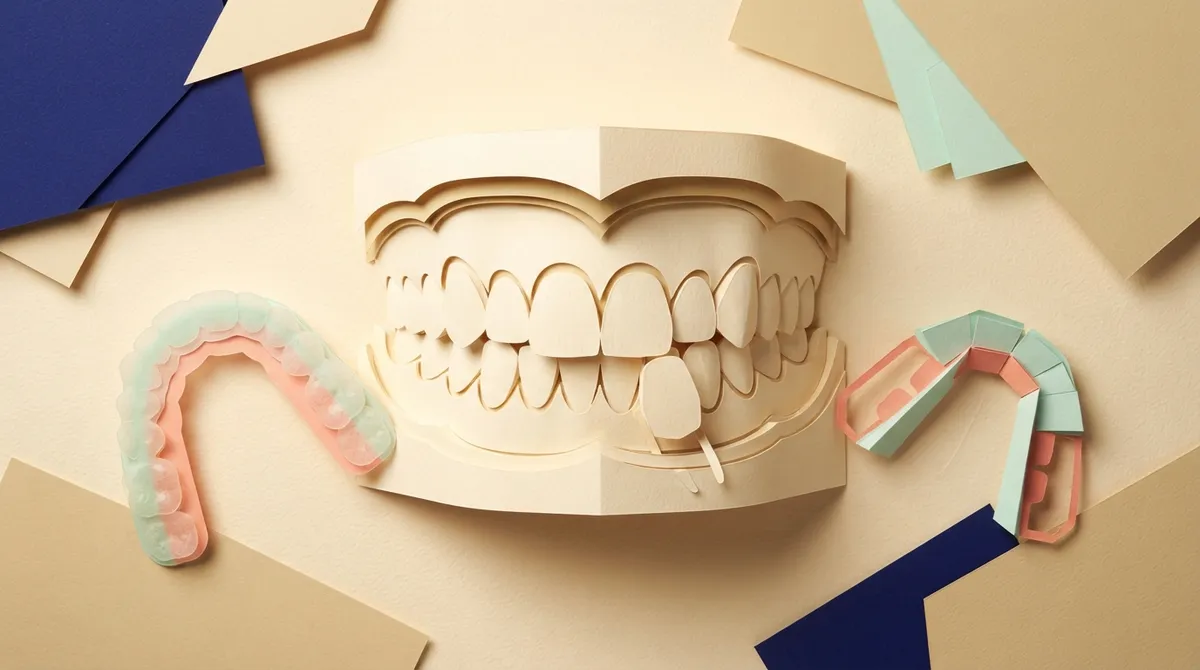
Overlapping front teeth are usually a form of dental crowding. In simple terms, the teeth do not have enough room in the dental arch to line up side by side. So they twist, tilt, or slide in front of or behind one another to squeeze in.
The front teeth get noticed most, because they are the first thing people see when you smile. But the overlap you can see is only part of the story. A full orthodontic assessment also looks at your bite, your jaw relationship, and how your upper and lower teeth meet. A smile can look “just a little crooked” while the real cause sits deeper in the bite or jaw.
If you want a deeper look at the basics, our guide on spacing versus crowding in orthodontics explains how these two common patterns differ.
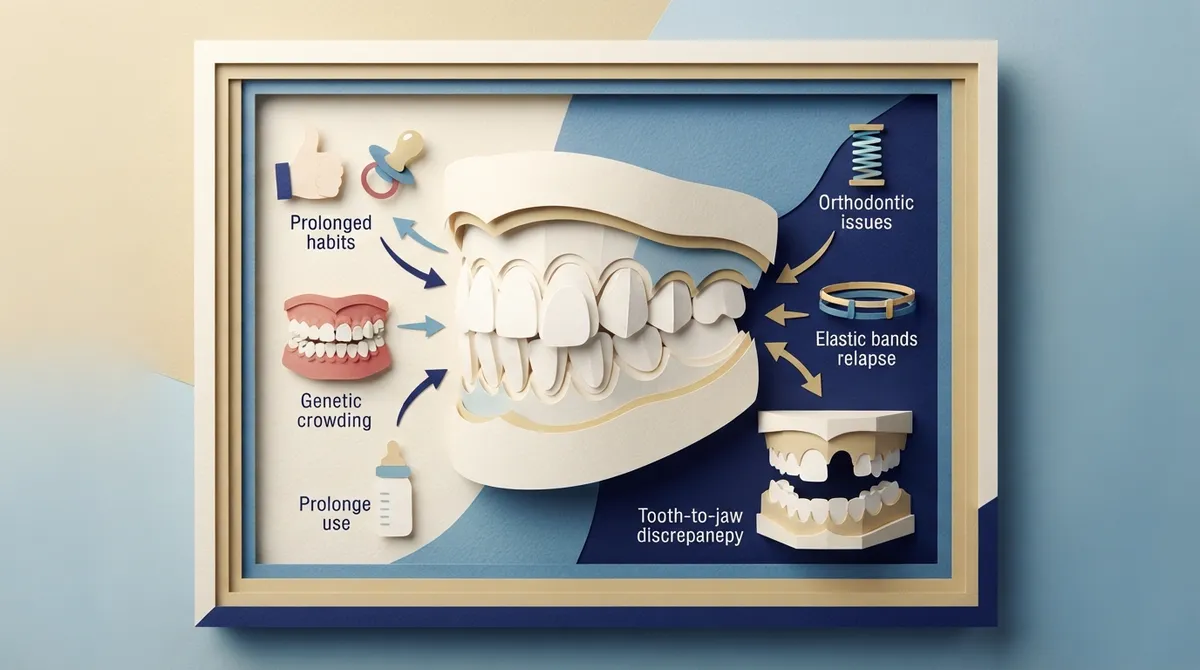
Why Do Front Teeth Overlap?
There is rarely one single cause. Most of the time, a few factors work together. Here are the most common ones:
- Tooth size versus space: If your teeth are a bit too large for your jaw, or your jaw is a bit too small for your teeth, there is simply not enough room.
- Inherited traits: Tooth size, jaw size, and bite patterns often run in families. If a parent had crowding, you may too.
- Teeth erupting out of position: Sometimes a permanent tooth comes in off track and ends up tucked behind or in front of its neighbor.
- Early or late loss of baby teeth: Losing a baby tooth too soon can let nearby teeth drift into the gap. Losing one too late can push the adult tooth to come in crooked.
- Extra teeth: A spare tooth takes up space that the others need.
- Relapse after earlier treatment: Teeth that were once straight can drift back, especially if retainers were not worn as directed.
For parents, our article on what causes crowding in children’s developing teeth goes into even more detail, and overlapping permanent teeth in children covers what to expect as adult teeth arrive.
Can Overlapping Teeth Cause Problems Beyond Looks?
Many people think overlap is only a cosmetic concern. For some, that is true. But crowded and overlapping teeth can also make daily care harder.
- Harder to clean: Tight overlaps create spots where a toothbrush and floss struggle to reach. Plaque can build up there.
- Gum health concerns: When plaque lingers, gums can become irritated or inflamed.
- Uneven wear or chewing: If the bite is affected, some teeth may take more pressure than others.
- Confidence: Many patients tell us they hide their smile in photos. Feeling good about your smile matters.
Overlap does not automatically mean you will have cavities or gum trouble. But it can make good hygiene take more effort. That is one more reason many people choose to straighten their teeth.
How Do Orthodontists Plan Treatment for Overlapping Teeth?
Fixing overlapping front teeth is mostly about two steps: first, make or manage space, and second, move the teeth into a healthier alignment. The details depend on your unique smile.
Step-by-Step: What a Typical Plan Looks Like
- A full evaluation. Your orthodontist reviews your teeth, bite, jaw, gums, and dental history. Records such as digital scans, photos, and sometimes X-rays help build a complete picture.
- A diagnosis. The team figures out how much crowding there is, what is causing it, and whether the bite or jaw plays a role.
- A space plan. The orthodontist decides how to create the room needed for the teeth to line up.
- Choosing the appliance. Braces, clear aligners, or a combination are matched to your needs and goals.
- Active tooth movement. Teeth are gently guided into position over time, with regular checkups.
- Retention. Retainers help hold your new smile in place after treatment.
Curious how a first visit works? Our guide to what to expect at your orthodontic consultation walks through it step by step.
How Do Orthodontists Make Room for Crowded Teeth?
This is one of the most common questions we hear, and it is a good one. Depending on the case, space can be gained in a few different ways.
| Space Option | What It Means | Often Considered When |
|---|---|---|
| Limited arch development | Gently widening the arch so teeth have more room | The arch is narrow or the crowding is mild to moderate |
| Interproximal reduction (IPR) | Carefully removing a very small amount of enamel between selected teeth | Mild crowding where a little space is enough |
| Extraction | Removing selected teeth to create room | Crowding is more significant, or the bite and profile call for it |
Here is the reassuring part: not every crowded smile needs extractions. Many patients are treated without removing any teeth. The right choice depends on a full assessment, not a one-size-fits-all rule.
Braces or Clear Aligners for Overlapping Front Teeth?
Both can treat many cases of overlapping teeth. The best choice comes down to your smile, your bite, your age, and your lifestyle. At Brockway Orthodontics in Clearwater, we offer metal braces, ceramic (clear) braces, and Spark™ Clear Aligners, so we can match the option to the person instead of the other way around.
| Factor | Braces | Clear Aligners |
|---|---|---|
| Appearance | Metal is visible; ceramic blends in more | Nearly invisible |
| Removable? | No, always working | Yes, but must be worn as directed |
| Complex tooth movements | Often very predictable | Works well for many cases; some need extra help |
| Eating | Some food limits | Remove to eat, then brush before putting back in |
| Compliance needed | Lower | Higher, consistent daily wear is key |
Some complex movements, like turning a badly rotated tooth, may be more predictable with braces or a mix of both. Aligners work best when you wear them as directed. If you are comparing, these guides can help: 4 ways to choose braces or aligners for crowded teeth and braces vs. clear aligners: which fits you best.
What About Treatment for Kids and Teens?
Parents often ask whether they should wait or act early when they spot overlapping front teeth. The answer depends on the child.
Orthodontic organizations commonly recommend a first check-up by about age 7. That does not mean every child needs treatment then. It simply gives the orthodontist a chance to watch growth and spot anything that might benefit from early care. In some children, a narrow upper jaw or a tooth that is erupting out of position may be worth addressing sooner. In many others, the best plan is simply to monitor.
If you want to learn more, take a look at age 7 vs. waiting: when should a child see an orthodontist and how to ask the right questions about early treatment.
For teens, treatment is often a great fit, since all the permanent teeth have usually arrived. Teens often love the discreet look of clear aligners or ceramic braces, especially before big events like graduation. Our list of 12 questions teens should ask their orthodontist is a handy pocket guide.
What If You Are an Adult With Overlapping Teeth?
It is never too late. Adults make up a big part of orthodontic patients, and many of them are busy professionals who want a fix that fits their life. Clear aligners and ceramic braces are popular because they are discreet in meetings and photos.
Adult treatment may also include checking gum health first, since healthy gums and bone support tooth movement. If you have crowns, bridges, or other dental work, your orthodontist will plan around them. For more, see is orthodontics for adults in Clearwater right for you.
What If Your Teeth Overlapped Again After Braces?
This happens more than people think. If you had braces years ago and your front teeth have started to crowd or overlap again, you may be dealing with relapse. Teeth can shift over time, especially if retainers were not worn as prescribed.
The good news is that relapse is often very fixable, and many cases are shorter than the first round of treatment. A fresh evaluation will show how far things have moved and which option makes sense. Our article on orthodontic relapse warning signs can help you spot the clues early.
Do Bonding or Veneers Fix Overlapping Teeth?
Cosmetic options like bonding or veneers can change how teeth look. They may reshape a tooth’s edge or hide small flaws. But they do not fix the root problem of tooth position or bite. If the teeth are crowded and the bite is off, covering them up can leave those issues in place.
That is why an orthodontic evaluation is a smart first step. It helps you learn whether orthodontic treatment, restorative care, or a mix of the two is the best path. Some patients straighten their teeth first and then add cosmetic touches to finish the look.
How Long Does Treatment Take?
This is where we want to be honest with you. There is no single number that fits everyone. Treatment time depends on how much crowding you have, how your teeth need to move, your bite, your age, and how closely you follow your plan.
Mild overlap may take less time than a case with heavy crowding and bite issues. If you use aligners, wearing them as directed makes a real difference. If you use braces, keeping your appointments and avoiding broken brackets helps keep things on track. For more, see 6 things that decide braces treatment time and how treatment length affects orthodontic costs.
Why Retainers Matter So Much
Think of retainers as the “keep it” step. After your teeth move, the bone and gum tissue around them need time to settle. Without retainers, teeth can drift back, and the overlap can return.
- Wear them as prescribed. Your orthodontist will tell you how often and for how long.
- Keep them clean and safe. A broken or lost retainer should be replaced quickly.
- Ask about options. Removable and bonded retainers each have pros and cons.
- Plan for the long term. Many patients wear retainers for years, often just at night.
Our guide on how to care for your dental retainer the right way and our comparison of fixed vs. removable retainers can help you choose and protect yours.
Can You Fix Overlapping Teeth Without Braces?
People often search for “natural” or at-home ways to fix overlapping teeth. Here is the honest answer: teeth do not straighten on their own, and do-it-yourself shortcuts can cause real harm to teeth and gums. Moving teeth safely takes a professional plan and regular monitoring.
If you want to avoid traditional metal braces, you still have options, such as ceramic braces or clear aligners, if you are a good candidate. Learn why professional guidance matters in DIY smile fixes vs. finding an orthodontist.
What Does Care Look Like at Brockway Orthodontics?
At Brockway Orthodontics, Dr. Brockway takes the time to listen to your concerns and your goals before recommending anything. Our Clearwater, Florida team explains your options in a friendly, easy-to-follow way, so you know exactly what to expect.
We also use modern technology to make your visits more comfortable. Digital impressions replace messy molds, and 3D imaging helps us plan your treatment with precision. In certain cases, we can even offer same-day treatments, which is a gift for busy families. Want to hear from neighbors? You can visit us on Google and see what our Brockway Orthodontics patients say.
For professional background on orthodontic care in our state, the Florida Association of Orthodontists is a helpful resource, and the American Dental Association offers trusted guidance on overall oral health.
A Quick Checklist Before Your Visit
Going in prepared makes your first appointment smoother. Here are a few things worth bringing or thinking about:
- A list of your top concerns, such as appearance, cleaning, or bite comfort.
- Your dental history, including past orthodontic treatment.
- Questions about timing, comfort, and cost.
- Any insurance details, so we can help you understand coverage.
Our 13 questions to ask at an orthodontic consultation is a great place to start.
Ready to Straighten Overlapping Front Teeth?
Overlapping front teeth are common, and they are very treatable. The right plan starts with understanding why your teeth overlap and what your bite and jaw are doing. From there, your orthodontist can choose the best way to make space, move your teeth, and keep your results.
If you have been wondering about overlapping front teeth and treatment questions of your own, we would love to help. Book your appointment online to meet Dr. Brockway and get answers made for your smile, or contact us with any questions first. Your smile journey can start with one friendly conversation.
FAQs
Q: What causes overlapping front teeth?
A: Most overlap comes from crowding, which means the teeth do not have enough room in the arch. Inherited jaw and tooth traits, teeth erupting out of position, early or late loss of baby teeth, extra teeth, and relapse after earlier braces can all play a part.
Q: Will I need teeth removed to fix crowded front teeth?
A: Not always! Many crowded smiles are treated without extractions, using options like limited arch development or interproximal reduction. Your orthodontist will decide after a full look at your teeth, bite, and goals.
Q: Are clear aligners effective for overlapping front teeth?
A: Yes, clear aligners can treat many cases of overlapping front teeth, especially when you wear them as directed. Some tricky movements may work better with braces or a combined approach, so an evaluation is the best way to know.
Q: Can overlapping teeth get worse with age?
A: They can. Teeth naturally shift over time, and crowding may become more noticeable, especially if retainers were not worn after earlier treatment. The sooner you get checked, the more options you may have.
Q: How do I keep my teeth from overlapping again after treatment?
A: Wear your retainers exactly as your orthodontist prescribes, keep them clean, and replace them if they break or no longer fit. Retainers are the key to helping your new smile stay put for years to come.
Our Service Area