Key Takeaways
-
Orthodontic records (history, exam, photos, digital scans, and selected X-rays) give your orthodontist the full picture needed to diagnose problems and build a treatment plan.
-
No single record tells the whole story: photos miss roots under the gums, and X-rays cannot show your goals, so each record fills a different part of the puzzle.
-
X-rays and CBCT scans should be selected for each patient's specific clinical question, not taken automatically, because radiation exposure must be justified.
-
A 1999 study of 70 adolescents found that the first plan, based on exam, impressions, and photos, matched the final plan in 93% of cases after X-rays were reviewed.
-
Digital scans can replace plaster casts for treatment planning, offering a quicker and more comfortable way to study how your upper and lower teeth fit together.
-
Records are taken before, during, and after treatment, so the starting set provides a baseline to track progress and document final results for retainer care.
Have you ever sat in an orthodontist’s chair while they snapped photos, scanned your teeth, and maybe sent you for an X-ray, and wondered, “What is all this for?” You are not alone. Parents, teens, and adults ask us this all the time. The short answer is that your records are the roadmap. Understanding how orthodontic records inform a treatment plan can help you feel calm, informed, and ready to say yes to care that fits you.
Think of it like planning a trip. You would not start driving without knowing where you are, where you want to go, and what roads are open. Records show us where your teeth, bite, and jaws are right now. They also help us pick the safest, smartest route to your goals.
In this friendly guide, you will learn what records are, what each one shows, and how we turn them into a plan that fits you or your child. At Brockway Orthodontics, we believe knowledge makes the whole journey easier. Let’s dive in.
What Are Orthodontic Records?
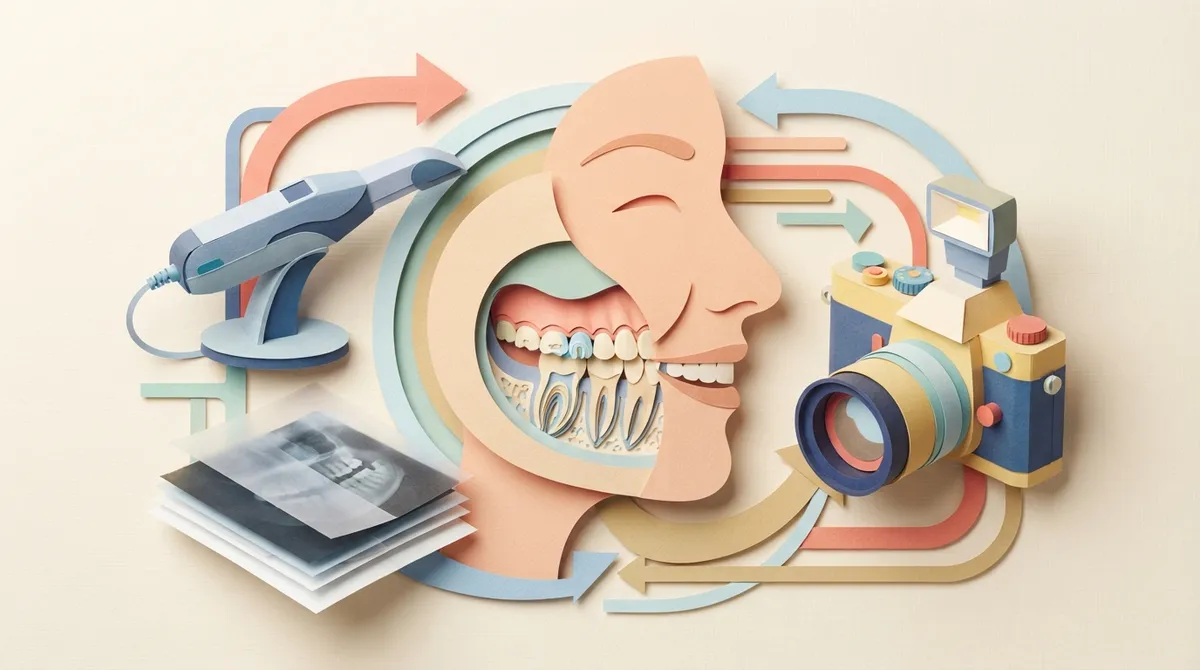
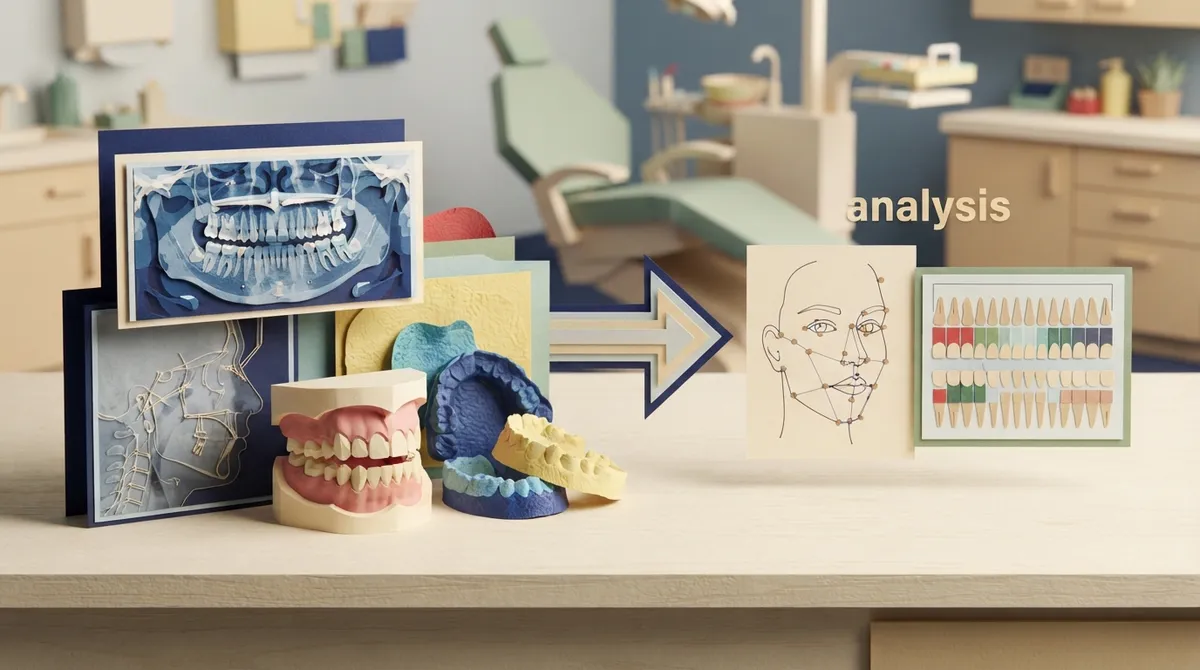
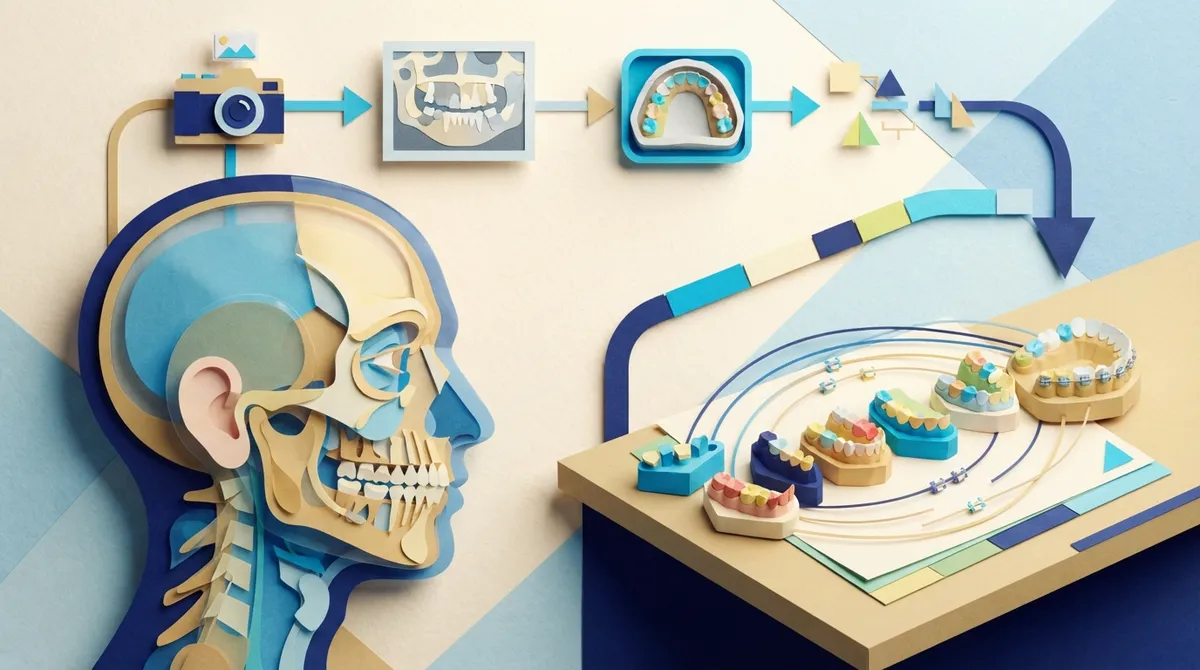
Orthodontic records are a set of information about your teeth, bite, jaws, and overall oral health. They are collected before treatment starts. Together, they give your orthodontist a full picture so a diagnosis can be made with confidence.
Records usually include several pieces:
- Your medical and dental history
- A hands-on clinical exam
- Photographs of your face and teeth
- Digital scans or models of your teeth
- X-rays or other images, only when they are needed
No single piece tells the whole story. A photo cannot show roots under the gums. An X-ray cannot tell us what worries you most about your smile. Each record fills in a different part of the puzzle.
Why Records Matter Before Treatment Begins
Records do three big jobs. First, they help us diagnose the problem. Second, they help us compare treatment options and choose goals. Third, they give us a starting point, so we can see how far your smile has come later.
Here is a fun fact that shows why careful records are worth it. In a 1999 study of 70 adolescents, the first treatment plan, made from an exam, impressions, and photos, matched the final plan in 93% of cases after X-rays were reviewed. The authors still stressed that X-rays should be chosen for each patient, not taken automatically. That tells us records work best when they are thoughtful, not excessive.
For a deeper look at how all this fits together, you may enjoy how to build an orthodontic treatment plan that works.
How to Read Each Type of Record
Let’s walk through each record the way we would with a patient. Once you know what each one is for, the process feels much less mysterious.
Step 1: Your History and Clinical Exam
This is where we start, and it is the part images can never replace. We talk with you about your concerns, goals, and habits. We ask about medical and dental history, and we check your gums, bite, jaw movement, and facial balance.
For kids and teens, we also look at growth and development. A child who still has baby teeth needs a different plan than a teen with all permanent teeth. Our team often explains why orthodontists review your dental history, because past cavities, injuries, or habits can shape the plan.
This is also your time to speak up. Do you want a discreet option? Do you have a big event coming up? Your goals count as much as any scan.
Step 2: Photographs of Your Face and Teeth
We take pictures of your smile from several angles. Some are close-ups of your teeth. Others show your face in profile and straight on. They may feel a bit like a school photo day, but they are very useful.
Photos show us how your teeth line up, how your bite looks, and how your lips and face balance. They help us communicate clearly with you. They also let us compare “before” and “after” so you can see real progress. Our guide on what orthodontic before and after photos really show explains why they are so helpful.
Step 3: Digital Scans or Dental Models
Years ago, patients bit into trays of goopy material to make plaster casts. Today, many offices use a small handheld scanner that makes a 3D digital model of your teeth. It is quick, comfortable, and much less messy.
Models, whether plaster or digital, show how your upper and lower teeth fit together. They also reveal tooth positions, arch shape, symmetry, and how much room there is for every tooth. A systematic review found that digital models can replace plaster casts for treatment planning. That is great news for anyone who dreads the gag reflex.
We use modern tools at Brockway Orthodontics so your visit feels easy. You can read more about intraoral scanning for orthodontics and see what digital models show about tooth alignment.
Step 4: X-Rays and Other Images, Only When Needed
X-rays show what we cannot see in the mouth. They reveal tooth roots, supporting bone, and teeth that have not come in yet. They can also show impacted teeth, which are teeth stuck under the gums.
Here is the important part: not every patient needs every image. The type of imaging, and whether it is needed at all, should depend on your specific clinical question. Radiation exposure should always be justified, never automatic. We explain more in what orthodontic X-rays can help evaluate.
Here is a quick look at the common image types and what they are used for:
| Type of Image | What It Can Show | When It May Be Considered |
|---|---|---|
| Panoramic X-ray | A wide view of all teeth, jaws, and developing teeth | To check tooth development, missing or extra teeth, and overall layout |
| Intraoral X-rays | Close detail of individual teeth, roots, and nearby bone | When a specific tooth or area needs a closer look |
| Cephalometric X-ray | A side view of the skull, jaws, and teeth | To study jaw relationships and facial growth in selected cases |
| Cone-beam CT (CBCT) | A 3D view of teeth, roots, and bone | In selected cases, such as locating an impacted canine |
CBCT is a powerful tool, but it is not a routine add-on for everyone. Our article on when a CBCT scan makes sense in orthodontics goes into more detail.
How Records Turn Into a Treatment Plan
Once your records are gathered, your orthodontist studies them together. This is where the puzzle pieces click into place. The goal is to answer a few key questions.
- What is the problem? Is it crowding, gaps, an overbite, an underbite, a crossbite, or a mix?
- Is the cause in the teeth, the jaws, or both? This affects which tools will work best.
- Is there enough space? We check whether teeth need room created, or whether gaps need closing.
- Are there hidden issues? Impacted, missing, or extra teeth can change the entire plan.
- Which options fit your goals and life? Braces, clear braces, or aligners may all be on the table.
Then we sit down with you and talk it through. We share the findings in plain language, explain your options, and discuss the benefits and possible risks of each one. Our guide on how tooth movement goals shape appliance choice shows how that choice gets made.
Examples: How Records Shape Different Plans
Every smile is different, so records lead to different plans. Here are a few friendly examples that show the idea.
For a Child With Crowding
A parent might notice a child’s teeth look crowded. Records can show whether the jaw is too narrow, whether baby teeth are being lost early, or whether adult teeth are coming in off track. Sometimes the best move is to simply watch and wait. Other times, early treatment helps. Read about what causes crowding in children’s developing teeth and why early evaluation isn’t treatment.
For a Teen With a Bite Problem
A teen may have teeth that look fairly straight but a bite that does not close well. Models and photos show how the teeth meet. A side-view image may be used if jaw position is part of the question. Records help us see whether braces alone will do, or whether another approach is a better fit.
For an Adult Who Had Braces Before
Many adults come in because their smile has shifted. Fresh records let us compare today’s teeth to where they should be. We can see how much movement happened and decide on the best retreatment path. Our post on adult orthodontic retreatment options covers this in detail.
For a Health-Conscious Patient
If you have gum concerns or other dental needs, records help us coordinate with your dentist. We make sure your teeth and gums are healthy enough to move before we start. Learn why gum health matters before adult braces.
Do Records Look the Same for Everyone?
No, and that is a good thing. The research is clear that no single set of records fits every patient. A systematic review concluded that records should be chosen to match the case. It found that side-view cephalometric X-rays were not routinely needed for planning Class II bite problems, though it also noted that the evidence base was limited.
What does that mean for you? It means a careful orthodontist does not take every image for every person. Instead, they ask, “What do I need to know to treat this patient safely and well?” Then they gather only what helps answer that question.
How to Prepare for Your Records Visit
A little preparation can make your visit smooth and stress-free. Here are a few easy tips.
- Write down your goals. Note what bugs you most about your smile or your child’s smile.
- List health details. Bring medications, allergies, and past dental work.
- Bring past records if you have them. Recent X-rays from your dentist may save time. See what dental records to bring to an orthodontist.
- Ask questions. There are no silly ones. Our list of questions to ask at an orthodontic consultation can help.
- Brush before you come. Clean teeth make for better photos and scans.
You can also read what to expect at the first orthodontist appointment so there are no surprises.
Records Are Not Just for the Start
Here is something many people miss. Records are not a one-time thing. The first set gives us a baseline, a clear snapshot of where you began. Later, we may take new photos or scans to check progress. When treatment ends, we gather final records to confirm the results.
This habit helps in a few ways:
- It shows whether teeth are moving as planned.
- It lets us fine-tune the plan if needed.
- It documents your finished result so we can guide retainer wear and long-term care.
We cover this more in ways orthodontists track braces progress. And once your braces are off, retainers help protect your new smile.
What Happens at Brockway Orthodontics
At Brockway Orthodontics in Clearwater, Florida, we want records to feel easy, not scary. We use digital impressions instead of messy molds, and 3D imaging helps us plan with care. Dr. Brockway takes time to listen to your concerns and dreams for your smile, then explains what she sees in a clear, friendly way.
We offer metal braces, ceramic (clear) braces, and Spark™ Clear Aligners, an affordable clear aligner option. Your records help us match you to the choice that fits your bite, your goals, and your lifestyle. In some cases, same-day treatment may be possible, so you do not always need multiple visits.
Want to see what other families think? Visit us on Google — Brockway Orthodontics to read reviews from our Clearwater community.
Staying Informed With Trusted Sources
Good information helps you make good choices. For general oral health guidance, the American Dental Association is a respected resource. You can also learn about orthodontic care in our state through the Florida Association of Orthodontists. For the research behind record selection, the systematic review Records Needed for Orthodontic Diagnosis and Treatment Planning is a helpful read.
Ready for Your Roadmap?
Orthodontic records may seem like a lot of steps, but each one has a purpose. History and exam give context. Photos and scans capture your smile. X-rays reveal what lies beneath, only when truly needed. Together, they let your orthodontist create a plan built just for you, instead of guessing.
If you have been wondering whether treatment could help you or your child, we would love to meet you. Take the first step and book your appointment online. Prefer to talk first? Contact us and our friendly team will be happy to help.
FAQs
Q: What records does an orthodontist need before creating a treatment plan?
A: Most plans start with your medical and dental history, a hands-on exam, photos, and digital scans or models of your teeth. Imaging like X-rays is added only when it helps answer a specific question. The exact set depends on your needs, so it can look different from one patient to the next.
Q: Are X-rays always necessary before orthodontic treatment?
A: Not always! X-rays are chosen based on what your orthodontist needs to know, such as checking roots, bone, or teeth that have not come in yet. Radiation should be justified for each person, never taken just out of habit.
Q: Can digital dental scans replace traditional impressions or plaster models?
A: In most planning situations, yes. A systematic review found digital models can stand in for plaster casts for treatment planning. They are quick, comfortable, and let us study how your teeth fit together in 3D.
Q: When is a CBCT scan needed for orthodontic treatment?
A: A CBCT gives a 3D view of teeth, roots, and bone, and it can be helpful in selected cases, such as finding an impacted canine. It is not a routine test for every patient. Your orthodontist will only suggest it when it adds useful information.
Q: Why does an orthodontist take records before and after treatment?
A: Starting records give us a baseline so we can diagnose the problem and plan your care. Records taken later let us check progress and confirm your final results. Together, they help protect your smile for the long run.
Our Service Area