Key Takeaways
-
Retainers are made only after your orthodontist confirms active tooth movement is complete, since a retainer built from the wrong tooth positions would hold teeth in the wrong place.
-
Refinement aligners are a normal extra step if small tooth details need polishing; do not skip ahead on your own, because retention starts only after refinement is finished.
-
Wear schedules vary: many orthodontists start with near full-time wear (around 22 hours a day) and later switch to nighttime wear, but a 2026 review found no evidence for one best schedule.
-
Retention is usually long term, since teeth can drift years after treatment; nighttime wear for at least the first year is a common example, but your orthodontist sets your plan.
-
Remove removable retainers for meals and drinks other than water, avoid hot water that can warp plastic, and store them in their case to prevent loss or damage.
-
If a retainer is lost, breaks, or feels increasingly tight, contact your orthodontist promptly rather than forcing it or going without, as teeth can start to shift.
You finished your last aligner tray. Your teeth look great. Now what? If you are asking how the transition from aligners to retainers works, you are in good company. It is one of the most common questions we hear from patients who are wrapping up clear aligner treatment.
Here is the friendly truth: finishing your aligners is a big win, but it is not the end of the story. Your teeth have just moved into new spots, and they need help staying there. That is the job of a retainer. Think of it like a freshly planted tree that needs a stake for a while before the roots settle in.
In this guide, we will walk you through each step of the switch. You will learn when it happens, what to expect at your visit, which retainer types exist, and how to wear and care for yours. We wrote this for parents, teens, busy professionals, and adults who may be back for a second round after their teeth shifted. Let’s get started.
What the Transition From Aligners to Retainers Really Means
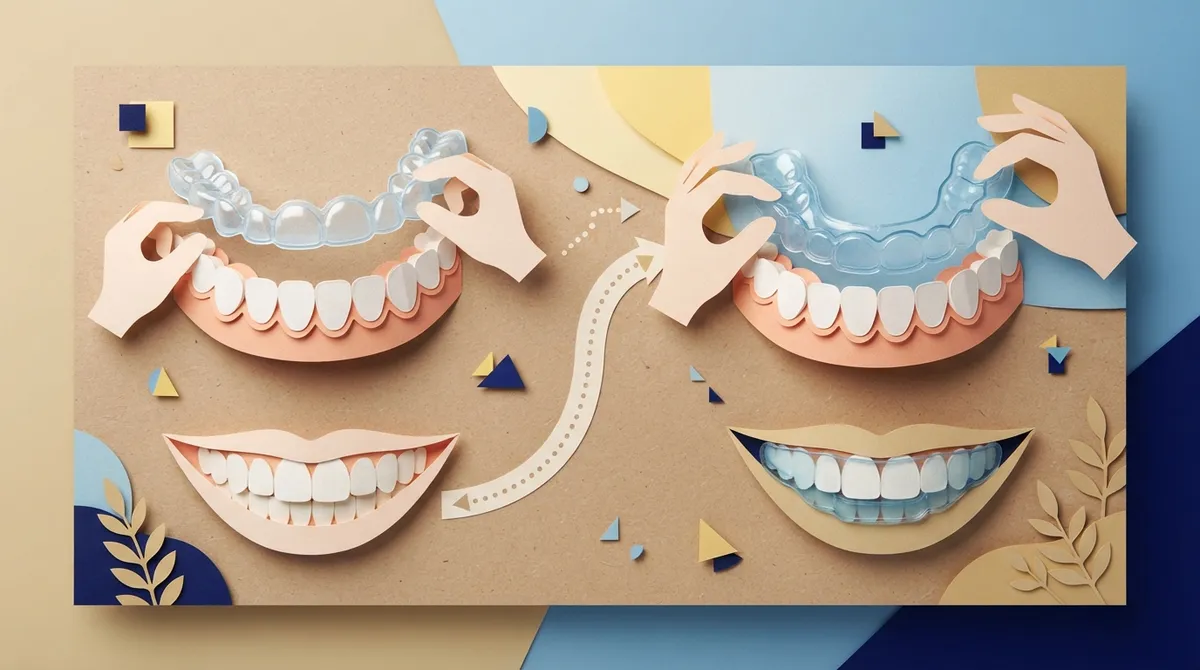
The transition is the shift from moving your teeth to holding them still. Aligners are active. You switch trays in a set order, and each one nudges your teeth a little further. A retainer is passive. It has one job: keep your teeth where they ended up.
That is why the two feel different. A new aligner tray feels snug and a bit sore at first because it is pushing. A retainer should feel gentle. It simply fits your final tooth positions. If you want a refresher on the active part of treatment, our guide on how removable aligners straighten teeth explains the whole process.
The transition is not a single moment. It is a short series of steps that your orthodontist guides. Let’s look at them one by one.
The Step-by-Step Transition Timeline
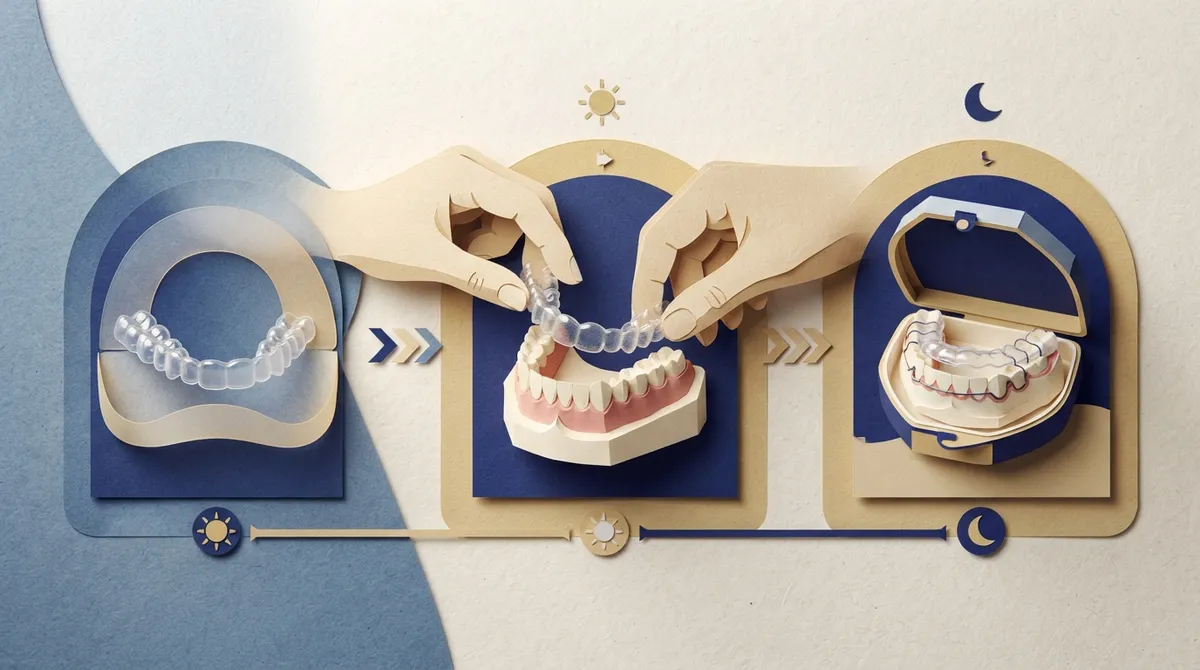
Every patient is a little different, but most people follow a path like this:
- Final aligner tray. You wear your last numbered tray as directed.
- Progress check. Your orthodontist confirms active tooth movement is complete.
- Bite and position review. The team checks how your teeth fit together and where each tooth sits.
- Possible refinement. If a few teeth need fine-tuning, you may get extra aligners first.
- Retainer scan or impression. Your final tooth positions are captured to make a custom retainer.
- Retainer delivery. You receive your retainer along with your wear schedule.
- Follow-up visits. Your orthodontist checks the fit and your teeth over time.
Notice that the retainer is made after the orthodontist is happy with the result. That order matters. A retainer built from the wrong tooth positions would hold teeth in the wrong place.
Step 1: Confirming That Active Treatment Is Done
The transition begins when your orthodontist confirms your teeth have reached their planned positions. At this visit, the team looks closely at your bite and tooth alignment. They compare what they see with your treatment plan.
Modern offices use digital tools to make this check precise. At Brockway Orthodontics in Clearwater, we use digital impressions and 3D imaging, so there are no messy molds. If you are curious about the technology, our article on intraoral scanning for orthodontics shows how a quick scan captures every detail.
Please do not skip this check, even if your smile already looks perfect to you. Small bite details can hide in plain sight, and your orthodontist is trained to spot them.
Step 2: Do You Need Refinement Aligners First?
Sometimes the answer is yes, and that is completely normal. Refinement aligners are a short extra set of trays that polish the last small details. Maybe one tooth did not rotate quite enough. Maybe a tiny gap needs closing.
Refinement does not mean something went wrong. Teeth do not always follow the digital plan exactly. If you are wondering why more trays can be part of the plan, read refinement aligners versus the original set.
Here is the simple rule: retention starts only after refinement is finished. Your orthodontist will tell you which path you are on. Please do not decide on your own to skip ahead, because that can leave small issues unfixed. Our post on why not to skip ahead to a new aligner tray explains the risks.
Step 3: Getting Your Custom Retainer Made
Once your teeth are where they belong, your orthodontist captures the final positions. This is usually done with a digital scan, though some practices still use impressions. The scan is used to craft a retainer that fits your exact smile.
You might wonder what to do with your last aligner while you wait. In some cases, your orthodontist may have you wear your final aligner temporarily until the retainer is ready. Other times they give different directions. Follow your own instructions here, because the right answer depends on your case. It can also help to decide whether to keep previous aligner trays as a backup, and your orthodontist can guide you on that.
Timing varies too. Some offices can deliver certain retainers quickly. If you are in a hurry, ask about same day retainers in Clearwater and whether that fits your situation.
Retainer Types: Which One Will You Get?
There is more than one kind of retainer. The best choice depends on your results, your risk of shifting, your oral hygiene habits, and how well you can stick to a removable schedule. Here is a quick comparison.
| Retainer Type | How It Works | Pros | Things to Watch |
|---|---|---|---|
| Clear vacuum-formed (Essix style) | A clear plastic tray that covers your teeth | Nearly invisible, familiar feel after aligners | Can crack or warp; must be worn as directed |
| Hawley | Acrylic plate with a wire across the front teeth | Durable, adjustable by your orthodontist | More noticeable; may feel bulky at first |
| Fixed (bonded) wire | A thin wire glued behind some teeth | Works around the clock, nothing to remember | Needs careful cleaning; check for damage |
Many aligner patients love clear retainers because they feel so similar to aligner trays. You can learn more in our guide to plastic retainers. If a fixed wire sounds appealing, read about the fixed bonded retainer.
Still not sure which to pick? Our comparison of fixed versus removable retainers breaks down the trade-offs in plain language.
How Often Should You Wear Your Retainer?
This is the question everyone asks, and here is the honest answer: it depends on you. Research does not point to one perfect schedule for every aligner patient. A 2026 systematic review of 16 studies found that most of the evidence covered only 12 to 24 months. It concluded there is not enough evidence to name the best wear schedule or duration, especially after clear aligners.
In everyday practice, many orthodontists use a two-phase plan:
- Early phase: near full-time wear, often around 22 hours a day, taking it out only to eat, drink anything but water, and clean.
- Later phase: part-time wear, usually at night.
Other clinicians prescribe nighttime wear from day one. Both approaches are used. Your orthodontist picks the plan that suits your case, so your written instructions always come first. If your friend has a different schedule than you do, that is normal. We explain the reasons in why retainer schedules differ between patients.
How Long Will You Need Retainers?
Here is the part many people do not expect: retention is generally long term. Teeth can drift after treatment, even years later. The American Association of Orthodontists notes that many patients need extended retainer use. National Health Service guidance in the UK commonly describes nighttime wear for at least the first year, with some services suggesting alternate nights after that. Protocols differ from clinic to clinic, so treat these as examples, not rules.
Why so long? Right after treatment, the tissues that hold your teeth are still adapting. Over the longer term, teeth can still move as we age. A retainer is a small daily habit that protects a big investment. Our article Retainers for Life goes deeper on this idea, and how long you need to wear retainers covers typical timelines.
A Note on Honesty and Habits
The same 2026 review reported that in one five-year trial, 72% of participants said they had stopped or seldom wore their removable retainers. That is one study, not a measure of everyone. But it shows how easy it is to slip. If you are worried about forgetting, tell your orthodontist. A fixed retainer might suit you better.
Daily Retainer Care: Simple Habits That Protect Your Smile
Good care keeps your retainer fresh, comfortable, and working. Here are the basics for a removable retainer:
- Take it out for meals and for any drink other than water.
- Clean it as your orthodontist directs, using gentle soap and a soft brush.
- Avoid hot water, since heat can warp plastic. See why hot water can warp retainers.
- Store it in its case whenever it is not in your mouth.
- Keep it away from pets, who love to chew them.
For a fresh-start routine, try our simple daily guide to cleaning clear retainers. If you are heading out of town, these travel retainer care tips can save your trip.
With a fixed retainer, the rules change a bit. You will brush and floss carefully around the wire, and you will check it now and then for damage or loose spots. Our guide to caring for a permanent retainer shows you how.
What If Something Goes Wrong?
Life happens. Retainers get lost, cracked, or tucked into a napkin at lunch. Here is how to handle common problems:
- Lost or broken retainer. Call your orthodontist right away. Do not leave it out for a long stretch, because teeth can start to move.
- Retainer feels tight. A little snugness after a few days off can be normal, but do not force it. A retainer that feels increasingly tight may mean your teeth have moved, and that needs professional advice.
- Retainer hurts. Stop and check in with your orthodontist rather than pushing through the pain.
- Fixed wire feels loose or sharp. Make an appointment so it can be checked and repaired.
If you are in this spot now, these guides can help: what to do if you lose your retainer, steps to take when your retainer breaks, and why you should not force an ill-fitting retainer.
Tips for Different Readers
For Parents of Kids and Teens
Teens are busy, and retainers get lost easily. Set up a simple routine, like a case that lives on the nightstand. Praise the habit, not just the smile. Our post on helping teens keep track of retainers has easy ideas.
For Busy Adults
Nighttime wear fits neatly into a packed schedule. Keep a spare case at work and one in your bag. If you stopped wearing your retainer years ago and your teeth moved, you are not alone. Many adults come back for a second look, and our guide to orthodontic relapse warning signs can help you spot the clues.
For Health-Conscious Patients
If you have gum concerns, tell your orthodontist before choosing a retainer. A removable one can be easier to clean around. A fixed wire needs extra care. The right match protects both your teeth and your gums.
Budgeting for Your Retainers
Retainers are a small cost compared with treatment, but it helps to plan, especially since you may need replacements over the years. Prices vary by type and practice. Our guides on how much a teeth retainer costs and how to budget for retainer price can help you plan ahead.
Why Local, Personal Care Makes the Transition Easier
The switch from aligners to retainers goes smoothest when you have a team that listens. Dr. Brockway takes the time to explain each step in simple terms, so you know exactly what to expect. Brockway Orthodontics serves Clearwater, Florida with Spark™ Clear Aligners, metal braces, and ceramic braces, so families can stay with one trusted practice from start to finish.
Want to hear what other patients say? You can visit us on Google and read Brockway Orthodontics reviews. For broader oral health guidance, the American Dental Association is a trusted resource, and you can find professional standards through the Florida Association of Orthodontists. For general retainer facts, the American Association of Orthodontists retainer FAQ is also helpful.
Wrapping Up: Your Smile Deserves a Plan
Let’s recap how the transition from aligners to retainers works. Your orthodontist confirms active movement is done. You may complete a short refinement round. A custom retainer is made from your final tooth positions. Then you follow a wear schedule and keep wearing your retainer long term to protect your results.
The best retainer plan is the one made for you, so lean on your orthodontist’s instructions over anything you read online, including this article. If you are finishing aligners, planning to start, or wondering whether your teeth have shifted, we would love to help. Book your appointment online or contact our friendly team to talk through your retainer options. Your smile worked hard to get here, so let’s keep it that way.
FAQs
Q: When do I switch from my last aligner to a retainer?
A: You switch after your orthodontist confirms active tooth movement is complete and any needed refinement is done. Then they take a scan or impression of your final tooth positions to make your retainer. Some patients wear their last aligner for a short time while the retainer is made, so follow your own instructions.
Q: Do I need refinement aligners before getting retainers?
A: Sometimes, and that is very normal. Refinement aligners are a short extra set that fixes small details, like a tooth that needs a bit more rotation. Your orthodontist decides this at your progress check, and retainers begin only after refinement is finished.
Q: How many hours a day should I wear my retainer after clear aligners?
A: It depends on your case. Many orthodontists start with near full-time wear, often around 22 hours a day, then move to nighttime wear. Others prescribe nights from the start. Research has not found one best schedule, so follow your orthodontist’s plan.
Q: How long do I need to wear retainers after aligner treatment?
A: Most people benefit from long-term retainer use because teeth can shift years after treatment. Common guidance includes nighttime wear for at least the first year and then ongoing or alternate-night wear. Your orthodontist will tailor the plan to you.
Q: What should I do if my retainer feels tight, breaks, or gets lost?
A: Contact your orthodontist promptly instead of forcing it or going without for a long time. A retainer that feels more and more tight may mean your teeth have moved. Quick action usually keeps small shifts from becoming bigger ones.
Our Service Area