Key Takeaways
-
Lower front teeth crowd mainly because tooth size and jaw size don't match, leaving too little room for teeth to align, and this mismatch is often inherited.
-
Crowding can appear in adults who never had braces, since the dental arch can gradually shorten or narrow over the years, causing slow new overlap.
-
Wisdom teeth are not a proven cause of lower front crowding; a systematic review found no clear association, so removal shouldn't be done solely to prevent it.
-
Crowding can return after braces (relapse), and studies suggest only about 30-50% of patients keep satisfactory alignment at 10 years, so consistent retainer wear is essential.
-
In growing children, lower front crowding may improve on its own as the jaw grows, so early evaluation and monitoring are often better than immediate treatment.
-
See an orthodontist if crowding is worsening, cleaning feels harder, your bite changes, or teeth shift after past treatment, since early intervention is usually easier.
Have you ever looked in the mirror and noticed your lower front teeth starting to overlap or twist? You are not alone. Many people spot this change in their teens, in their thirties, or even decades after braces. It can feel confusing, especially if you took good care of your teeth. The good news is that there are clear reasons why lower front teeth can become crowded, and understanding them is the first step toward a calm, informed decision.
Lower front teeth, called incisors, are small and sit in a tight curve. That curve leaves little room for error. When space runs short, teeth have nowhere to go but sideways, forward, or backward. In this friendly guide, we will walk through the most common causes, how age and past braces play a role, what the research says about wisdom teeth, and when it is smart to see a specialist. Whether you are a parent watching your child’s smile grow in, a teen planning for a big event, or an adult wondering what changed, you will find useful answers here.
What Does Crowding of the Lower Front Teeth Actually Mean?
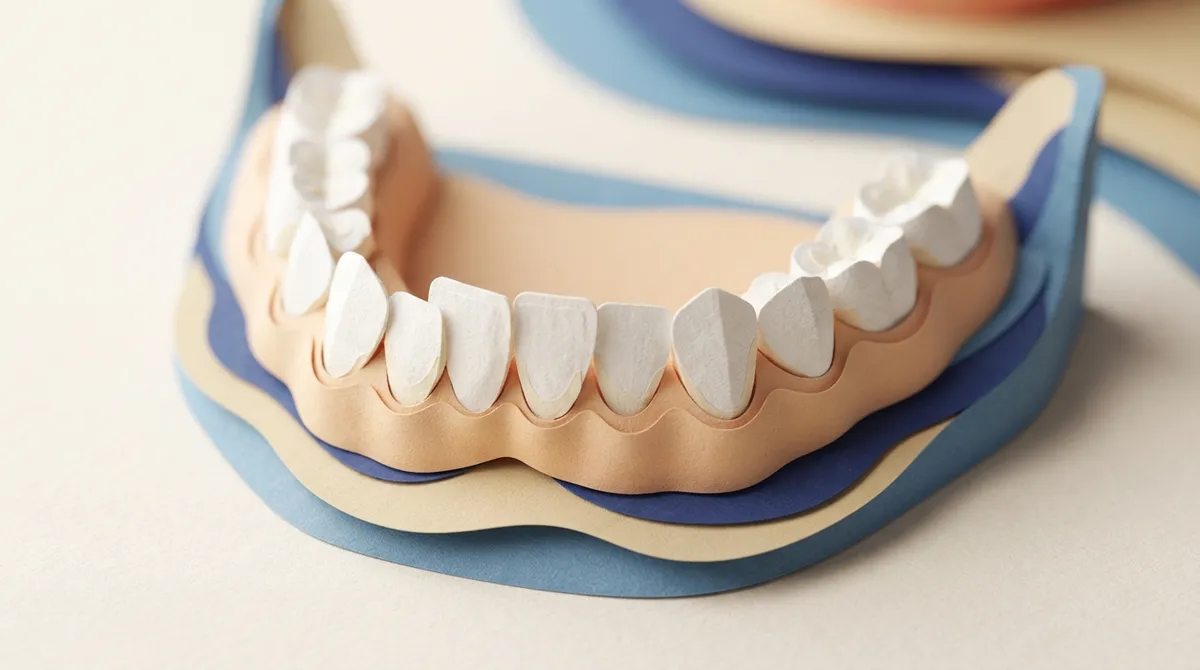
Crowding happens when there is not enough room in the jaw for all the teeth to line up neatly. The teeth may overlap, rotate, or sit slightly in front of or behind their neighbors. The lower front area is where most people notice it first, because those teeth are narrow and the space is tight.
Orthodontists often describe crowding as a space problem. The teeth are one size, and the jaw offers a different amount of room. When the two do not match, crowding follows. Mild crowding may look like a slight twist in one tooth. More moderate or severe crowding can mean several teeth overlap noticeably.
How common is it? Studies give a range, and the numbers depend on age and how researchers measure. One 2023 systematic review of children reported a prevalence of 53.4% of lower-incisor crowding in mixed dentition (the stage when baby and adult teeth are both present). A 2025 research article states that more than 40% of people generally have moderate-to-severe lower-incisor crowding. These are broad estimates that vary by population, so please treat them as a general picture rather than a rule. The takeaway is simple: crowded lower front teeth are very common.
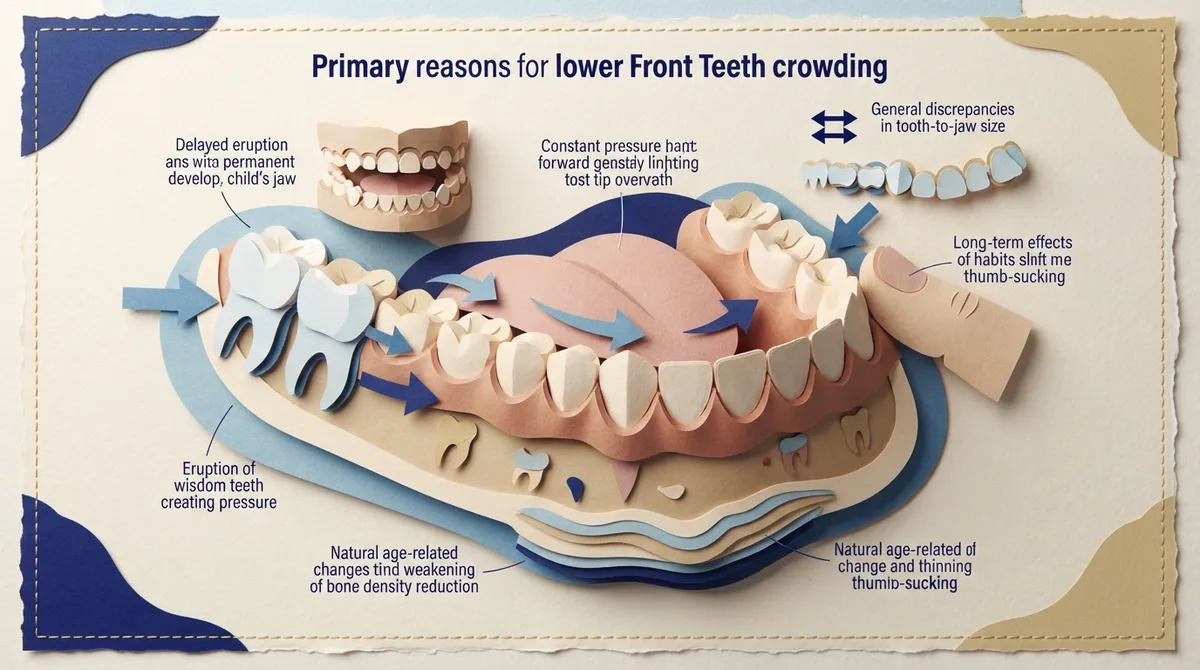
The Main Reasons Why Lower Front Teeth Can Become Crowded
There is rarely one single cause. Crowding often comes from several influences working together. Here are the most common ones in plain language.
- Tooth size and jaw size do not match. If your teeth are a bit larger, or your jaw a bit smaller, there is less room to spare.
- Family traits. Tooth size and jaw shape can run in families, so crowding can too.
- Baby tooth changes. The timing of baby teeth falling out and adult teeth coming in can affect space.
- Gradual changes with age. The dental arch can slowly shift over the years.
- Movement after braces. Teeth can drift from their corrected spots, especially without steady retainer wear.
- Muscle balance. The tongue, lips, and cheeks all press on the teeth, and that balance can influence position.
Researchers also point to growth patterns, tooth dimensions, and changes in the supporting bone. No single factor explains every case. That is why a careful exam matters, which we will cover below.
Tooth Size and Jaw Size: The Space Puzzle
Think of your lower jaw like a parking lot and your teeth like cars. If the cars are slightly too big for the lot, someone ends up parked at an angle. This mismatch between tooth size and jaw size is one of the most common underlying factors in crowding.
You cannot see this mismatch just by looking at a smile. It is measured with a clinical exam, photos, and often digital scans or X-rays. That is part of why two people with similar-looking crowding may need very different plans.
Genetics and Family Patterns
If a parent or sibling had crowded lower teeth, you may be more likely to have them too. Inherited differences in tooth size and jaw dimensions can set the stage early in life. This is not anyone’s fault, and it is not caused by something you did wrong.
Genetics do not decide everything, though. Growth, habits, and tooth loss can all add to or soften what you inherit.
How Childhood Changes Affect Lower Front Teeth
Many crowded lower smiles begin to show during childhood. Between roughly ages 6 and 12, kids lose baby teeth and gain adult ones. It is a busy time in the mouth, and the lower front teeth are often the first adult teeth to arrive.
Adult incisors are larger than the baby teeth they replace. That alone can make a young smile look temporarily crowded. In some children, this improves on its own as the jaw grows. A 2023 systematic review reported that spontaneous improvement in lower-incisor crowding during the shift from mixed to permanent teeth may reach 4.62 mm, with the evidence described as moderate. This finding applies to growing children and should not be applied to adults.
When Baby Teeth Are Lost Too Early or Too Late
Timing matters. If a baby tooth is lost too early, neighboring teeth can drift into the gap and take up space meant for the adult tooth. On the other hand, a baby tooth that stays too long can block the path of the adult tooth. The adult tooth may then come in behind it or off to the side.
If your child has an adult tooth growing in behind a baby tooth, our guide on retained baby teeth questions parents ask can help you understand what to watch for. You can also read more about why early loss of baby teeth matters for smiles.
A Quick Note for Parents
Parents often ask whether crowding in a 7- or 8-year-old needs action right away. Sometimes it does not. Sometimes a simple check shows that monitoring is enough. An early visit is about gathering information, not about starting treatment. Our article on why early evaluation isn’t treatment explains this well. For a deeper look at young smiles, see what causes crowding in children’s developing teeth.
Why Crowding Can Show Up Even If You Never Had Braces
Many adults are surprised when their lower front teeth begin to overlap in their twenties, thirties, or later. They never had braces, and their teeth looked fine in school photos. So what changed?
The dental arch is not frozen in place. Over the years, the arch can change in length, depth, or width. When the arch gets a little shorter or narrower, the lower incisors have less room. The result can be new crowding or crowding that slowly gets worse.
This slow drift is why a person can notice a small twist one year and a bigger overlap a few years later. It is common, it is gradual, and it is usually not a sign that something is wrong with your health. It is simply how teeth and jaws behave over time.
If this sounds like you, you may enjoy our overview of why bottom teeth shift most without a retainer, and our guide on 7 reasons teeth shift with age.
Can Crowding Come Back After Braces?
Yes, it can. This is often called relapse. After braces or aligners, teeth want to move back toward where they started. Retainers hold them in place while the bone and gums settle into the new positions.
If retainers are not worn as prescribed, teeth can slowly shift. The lower front teeth are especially likely to show it. The Cochrane review on relapse of the lower front teeth reported that satisfactory alignment was kept by about 30% to 50% of orthodontic patients at 10 years and about 10% at 20 years. These numbers come from the review’s included studies and retention practices, so they should be read in that context. Still, they show why long-term retainer care matters.
Not every shift after braces is relapse, though. Natural age-related changes can happen too. That means relapse is not the only explanation, and it is not always your fault. A quick exam can help sort out which is which.
Retainer Choices That Help Protect the Lower Front Teeth
Many orthodontists use a fine bonded wire behind the lower front teeth, a removable clear retainer, or both. The right choice depends on your teeth, your habits, and your gum health. You can compare your options in our guide on fixed vs. removable retainers or learn how a fixed bonded retainer keeps your smile straight for life.
If you are curious about the schedule, see why retainer schedules differ between patients. And if you already have a retainer, our tips on how to care for your dental retainer keep it working well.
Do Wisdom Teeth Cause Lower Front Crowding?
This is one of the most common beliefs about crowding. Many people have heard that wisdom teeth push the front teeth forward. It sounds logical, but the research does not back it up as a general rule.
A systematic review found no clear association between lower wisdom teeth and lower-incisor crowding after orthodontic treatment. In other words, the evidence does not support removing wisdom teeth only to prevent front-tooth crowding. There can be other good reasons to remove wisdom teeth, such as pain, infection, or damage to neighboring teeth, but crowding of the front teeth is not usually one of them.
If someone has told you that your wisdom teeth are to blame, it is fair to ask for a closer look. Your dentist and orthodontist can review your X-rays and talk through what is really happening in your mouth.
Everyday Forces That Can Nudge Teeth
Your teeth sit in a balance between the tongue on the inside and the lips and cheeks on the outside. Light, steady pressure from these muscles can influence how teeth rest. If that balance shifts, teeth can slowly respond.
Other factors can play a role in some people, such as long-term oral habits, gum health, or the way the upper and lower teeth meet. The literature discusses these influences, but they do not point to one single cause for any one person. This is why an exam that looks at the whole picture is so valuable.
Your bite can also be part of the story. If you want to understand how crowding relates to how your teeth fit together, read what is spacing versus crowding in orthodontics and why dental misalignment happens.
Quick Comparison: Common Causes at a Glance
| Cause | Who It Often Affects | What It Looks Like | What Helps |
|---|---|---|---|
| Tooth-jaw size mismatch | All ages, often runs in families | Overlap or twisting of lower incisors | Orthodontic evaluation and alignment |
| Baby tooth timing changes | Children, ages about 6 to 12 | Adult tooth behind or beside a baby tooth | Monitoring or early guidance |
| Age-related arch changes | Adults, even those who never had braces | Slow, gradual new overlap | Check-up, alignment, retention |
| Relapse after braces | Past braces or aligner patients | Teeth drifting from corrected spots | Retainer wear, retreatment if needed |
| Muscle and habit forces | Varies by person | Tilted or shifting teeth | Assessment of the cause |
When Should You Have Lower Crowding Checked?
Not every case of crowding needs treatment. Some mild crowding is stable and simply worth watching. Still, it is smart to book a visit if any of these sound familiar.
- Your teeth are changing. New or worsening movement over weeks or months deserves a look.
- Cleaning feels harder. Overlapping teeth can trap plaque and make brushing and flossing tricky.
- You had braces before. Shifting after treatment may be relapse and is often easy to address early.
- Your child is losing teeth on an unusual schedule. Early or late loss can affect space.
- Your bite feels different. Changes in how your teeth meet can point to more than simple crowding.
- You feel self-conscious. Wanting a smile you love is a perfectly good reason to ask questions.
For a quick self-check, our article on the 5 signs you need an orthodontist for crowded teeth is a great place to start. If your shifting teeth worry you, 9 clues your teeth are moving can help you spot the early signs.
What Happens at an Orthodontic Assessment?
An orthodontic visit is friendly and low pressure. The goal is to understand why your teeth crowded and whether treatment is a good fit. An orthodontist can tell crowding apart from other causes of tooth movement and look at the bigger picture.
Here is what a typical assessment may include:
- A review of your dental and orthodontic history, including past braces and retainer habits
- A look at your bite, tooth size, and jaw dimensions
- A check of tooth eruption in children and teens
- A look at gum and bone health, which matters for tooth movement
- Photos, digital scans, or X-rays when they are needed
At Brockway Orthodontics, we use modern tools such as digital impressions instead of messy molds and 3D imaging to plan with care. You can learn how that works in our guide to how digital impressions beat traditional molds. Dr. Brockway takes time to listen to your goals and explain your options in a clear, easy way, so you always know what to expect.
How Is Crowding of the Lower Front Teeth Treated?
Treatment is personal, and the right path depends on your age, your teeth, and your goals. In many cases, one of these approaches fits.
Monitoring
If crowding is mild and stable, or a child is still growing, your orthodontist may simply watch and re-check. This is a real and valid plan, not a brush-off.
Braces
Braces can handle a wide range of crowding, including more complex cases. We offer metal braces and ceramic (clear) braces. If you are weighing the look and feel, see metal vs. ceramic braces to compare them.
Clear Aligners
Many teens and adults like the discreet look of clear aligners. We offer Spark™ Clear Aligners, a more affordable option to other brands. You can read more about what Spark clear aligners are, or see how braces and clear aligners compare for crowded lower teeth in adults.
Retention
Once teeth are straight, retainers help keep them there. Good retention is the quiet hero of every lasting smile. Our post on why your smile needs retainers for life explains the reasoning in a friendly way.
If you want help choosing, which teeth straightening options fit your smile walks through the choices step by step. Prefer to start from a past treatment? Our page on adult orthodontic retreatment options for a shifted smile covers what to expect if your teeth have moved after braces.
Simple Habits That Support Straighter Lower Teeth
You cannot change your genetics, but you can protect your results and your gum health. A few small habits go a long way.
- Wear your retainer as directed. This is the single best way to protect a straight smile.
- Keep up with brushing and flossing. Crowded teeth trap more plaque, so extra care helps.
- Attend regular dental check-ups. Your dentist can spot changes early.
- Replace a broken or loose retainer quickly. A damaged retainer cannot hold teeth in place.
- Tell your orthodontist about new shifts. Small movements are often easier to fix than big ones.
Local, Family-Friendly Care in Clearwater
At Brockway Orthodontics, we celebrate families. We care for teens getting their first braces, parents who want a discreet option, and adults who never imagined they would think about alignment again. Dr. Brockway has a real love for our Clearwater community, and she works hard to make every visit comfortable and clear.
If you would like to see what neighbors say about us, read our reviews and visit Brockway Orthodontics on Google. To learn about the care you can expect, you can also meet Dr. Brockway. For general information about oral health, the American Dental Association is a helpful resource, and the Florida Association of Orthodontists shares useful guidance on orthodontic care across the state. Our team also keeps our community updated on Facebook.
Ready to Understand Your Own Smile?
Now you know why lower front teeth can become crowded: a mix of tooth and jaw size, family traits, childhood tooth changes, slow shifts with age, and movement after braces. Wisdom teeth are not a proven general cause, and crowding is very common. Most importantly, you have options, and you do not have to figure it out alone.
If you have noticed your lower teeth shifting, or you are a parent wondering about your child’s growing smile, we would love to help you get clear answers. Book an appointment online to meet our team, or contact us with any questions. Let’s find the right plan for your smile together.
FAQs
Q: Why are my lower front teeth becoming crowded as I get older?
A: The dental arch can change slowly over the years, getting a little shorter or narrower. That leaves less room for the lower front teeth, so they may overlap or twist even if you never had braces. It is common, and a quick orthodontic check can tell you if it is worth acting on.
Q: Do wisdom teeth cause crowding of the lower front teeth?
A: Wisdom teeth are often blamed, but a systematic review found no clear link between lower wisdom teeth and lower-incisor crowding after orthodontic treatment. The evidence does not support removing them just to prevent front-tooth crowding. Your dentist can still tell you if there are other reasons to remove them.
Q: Can teeth crowd again after braces, and how can retainers help?
A: Yes, teeth can drift from their corrected positions, which is called relapse, especially if retainers are not worn as prescribed. Retainers hold teeth in place while the bone and gums settle. Some shifting can also come from natural age-related change, so it is not always your fault.
Q: Can a child’s baby teeth falling out early cause crowding?
A: It can. If a baby tooth is lost too early, nearby teeth may drift into the space meant for the adult tooth. A baby tooth that stays too long can also block the adult tooth’s path, so timing really matters.
Q: When should lower front tooth crowding be evaluated by an orthodontist?
A: Book a visit if your teeth are moving or getting more crowded, if cleaning feels harder, or if you had braces and notice shifting. Parents should also check in if a child loses teeth early or late. An exam helps decide whether monitoring, treatment, or retention makes the most sense.
Our Service Area