Key Takeaways
-
Orthodontic planning starts with a diagnosis of your bite, teeth, gums, and jaws, not with a picture of the perfect smile.
-
Orthodontists plan three key factors for every case: space (whether there is room for all teeth), anchorage (which teeth stay put), and force (how much pressure and in which direction).
-
Different tooth movements are harder or easier to achieve: tipping is generally more predictable with clear aligners, while root control, rotations, and extrusion are trickier.
-
Digital setups and simulations are a guide, not a guarantee, so your orthodontist monitors progress and may rescan, adjust mechanics, or add aligners as needed.
-
Your daily habits matter: wearing aligners as directed, using elastics correctly, and keeping teeth clean help keep the plan on track and protect gums and roots.
-
Retention is part of the plan from the start, since teeth tend to drift back toward their old positions without retainers after treatment.
Ever wonder what happens behind the scenes before braces or aligners ever touch your teeth? You might picture an orthodontist simply pushing teeth into a straight line. The truth is much more thoughtful than that. Every smile has its own puzzle, and a good plan is the map that solves it.
Understanding how orthodontists plan tooth movement can help you feel calm and confident about treatment. It can also help you ask smart questions at your first visit. Whether you are a parent thinking about your child, a teen eager for a new smile, or an adult returning after relapse, this guide walks you through the process in plain language.
Here is the big idea: a plan starts with a diagnosis, not a picture of the perfect smile. From there, your orthodontist sets goals, chooses tools, and watches how your teeth respond. Let’s break it down step by step.

Why Planning Matters Before Any Tooth Moves
Teeth do not float in empty space. They sit in bone, surrounded by gums and ligaments, and they must fit with your jaws, lips, and face. Moving them without a plan is like renovating a house without blueprints.
A solid plan protects your gums, roots, and bite while building a smile you love. It also helps your orthodontist choose the right tool, whether that is braces, clear aligners, or a mix of both. At Brockway Orthodontics in Clearwater, Dr. Brockway takes time to listen to your goals before she ever talks about hardware.

Step 1: Gather the Right Records
Planning begins with information. Your orthodontist needs a full picture of your teeth, bite, and health. These records usually include:
- A clinical exam: checking your teeth, gums, jaw joints, and how you bite together.
- Photographs: face and mouth photos that show your smile and profile.
- Impressions or digital scans: a model of your teeth, often made with a quick, mess-free scanner. You can learn more in our guide to intraoral scanning for orthodontics.
- Radiographs (X-rays): images that show roots, bone, and teeth still under the gums.
Not every patient needs every type of imaging. Your orthodontist chooses images to answer specific clinical questions. For example, three-dimensional imaging is helpful in some cases but is not automatically needed for everyone. To see what these images can reveal, check out what orthodontic X-rays can help evaluate.
Step 2: Diagnose the Bite and Teeth
Next comes the detective work. Your orthodontist studies your records to understand what is going on and why. This is not about cosmetics alone. A good diagnosis looks at several things:
- Crowding or spacing between teeth
- How your upper and lower jaws relate to each other
- Overjet and overbite (how far the top teeth stick out or cover the bottom ones)
- The position of individual teeth and their roots
- Gum and bone health
- Your facial profile and smile
- Your personal goals and health history
If you are curious about bite terms, our article on the difference between overjet and overbite explains them simply. Gum health matters too, which is why many adults benefit from learning why gum health matters before braces.
Step 3: Set Clear Treatment Goals
Once the diagnosis is clear, your orthodontist decides where each tooth should end up. These are the desired final positions. The goals usually include a healthy bite, comfortable chewing, good function, and a smile that fits your face.
This is also where your voice counts. A teenager getting ready for graduation may care most about a fast, discreet fix. An adult professional may want a plan that fits a busy schedule. Sharing your goals helps shape a plan that feels like yours. For more on how timing and age affect planning, see how age affects orthodontic treatment planning.
Step 4: Plan the Movements and the Mechanics
Now your orthodontist figures out how to get teeth from point A to point B. Not all tooth movements are the same, and each one needs a different kind of force. Here is a quick look at the main types:
| Type of Movement | What It Means | Everyday Example |
|---|---|---|
| Tipping | The crown leans while the root pivots | Leaning a flagpole to one side |
| Bodily movement | The whole tooth, crown and root, shifts together | Sliding a chair across the floor |
| Rotation | The tooth turns around its long axis | Twisting a screw |
| Intrusion | The tooth moves up into the bone | Pressing a thumbtack in |
| Extrusion | The tooth moves out of the socket | Gently pulling a tooth into place |
| Root torque | The root moves while the crown stays steady | Tilting a tree trunk underground |
Your orthodontist also considers three big factors:
- Space: Is there enough room for every tooth? If not, space may be created by widening the arch, a small amount of polishing between teeth (interproximal reduction), or, in some cases, removing teeth.
- Anchorage: Which teeth or structures will stay put while others move? Think of it as the steady base that keeps unwanted movement in check.
- Force: How much pressure, and in which direction? Gentle, well-directed force works with your body, while too much can cause problems.
If crowding is your main concern, you may enjoy reading what causes crowding in developing teeth and the difference between spacing and crowding.
Step 5: Choose the Right Appliance
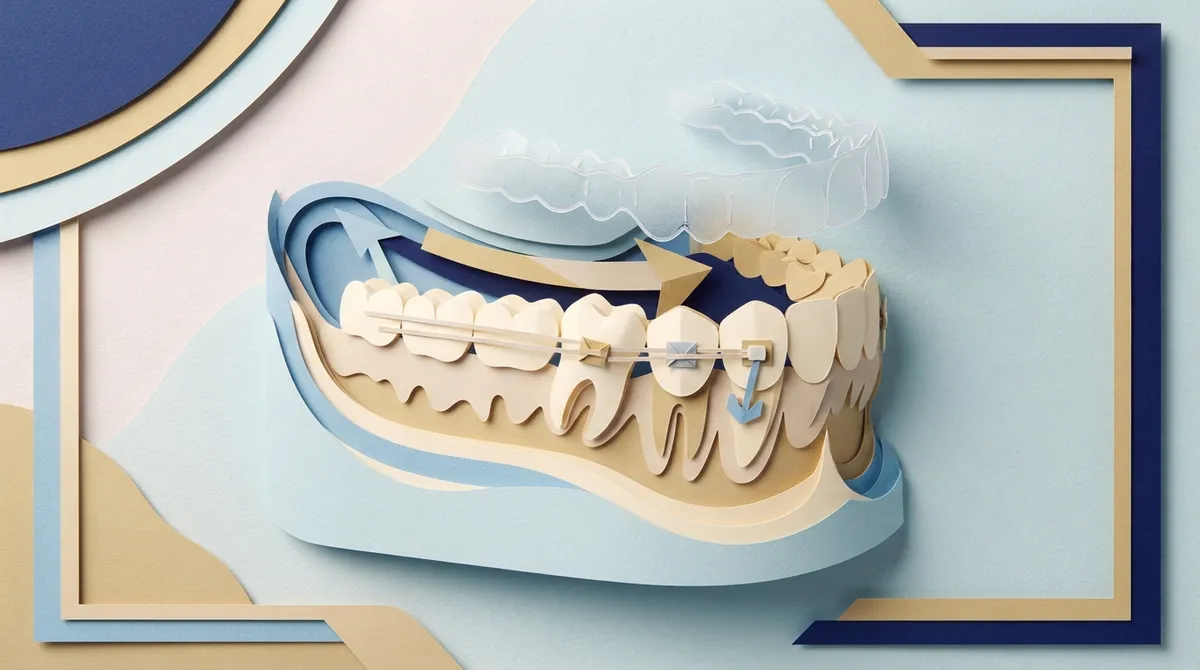
Braces and clear aligners apply force in different ways, but both rely on the same biology. Pressure on a tooth triggers your body to remodel the bone around it, a bit at a time. That is why teeth move steadily rather than all at once.
Your plan might use brackets and wires, a series of aligners, small tooth-colored attachments, elastics, or other helpers like expanders. The right choice depends on your diagnosis and the movements needed. Brockway Orthodontics offers metal braces, ceramic (clear) braces, and Spark™ Clear Aligners, a more affordable alternative to Invisalign.
Want to compare your options? These guides can help:
- Braces vs. Clear Aligners: Which Clearwater Choice Wins?
- How Do Removable Aligners Straighten Teeth?
- Palatal Expander Guide
Step 6: Use Digital Tools as a Planning Aid
Modern orthodontics uses digital scans and simulations to show a possible path for your teeth. You may see a little animation of your smile changing over time. It is exciting, and it is helpful for planning.
But here is an honest note: a digital setup is a plan, not a promise. Real teeth respond to real biology, so they do not always move exactly like the simulation. Your orthodontist watches your progress and adjusts when needed. That might mean changing the mechanics, taking a new scan, or ordering more aligners. This is normal, not a failure. You can read more in why refinement aligners are sometimes needed.
What the Research Says About Predictability
Studies on clear aligners show that some movements are easier to achieve than others. The numbers below come from specific studies and are not promises for any one patient. Results depend on the appliance, the case, and how each study was done.
| Study Finding | What It Suggests |
|---|---|
| 2017 study of one aligner system: about 73.6% average predictability overall | Most planned movement happened, but not all of it |
| Same study: tipping near 82.5%, rotation near 66.8% | Tipping is easier than rotating |
| 2014 review: about 30% accuracy for aligner extrusion | Pulling teeth down or out is harder to control |
| 2025 review: upper-molar distalization averaged about 61.1%, with very low evidence quality | Moving back teeth backward needs caution and monitoring |
The takeaway? Reviews generally find tipping more achievable than precise root control or torque. Rotations, especially of canines and premolars, and extrusion can be tougher. A 2020 review also found that aligners can give clinically acceptable results for certain incisor movements in mild to moderate cases. Because evidence is mixed and often limited, your orthodontist uses these findings as guidance, not guarantees.
Step 7: Plan for Risks and Healthy Habits
A responsible plan looks at what could go wrong, too. Your orthodontist considers your oral hygiene, gum condition, root and bone limits, and how well you can follow instructions. Risks such as root shortening (called root resorption) are discussed and monitored.
You play a big part here. Wearing aligners as directed, wearing elastics, and keeping teeth clean all keep your plan on track. Need a refresher? Try our tips on brushing with braces and common rubber band mistakes.
Step 8: Monitor Progress and Adjust
Planning does not stop when treatment starts. Your orthodontist checks how your teeth are responding at regular visits and tweaks the plan as needed. If a tooth is moving slower than expected, the approach can change. Learn how this works in ways orthodontists track braces progress, and see why checkups matter so much.
Step 9: Plan Retention From Day One
Here is something many people miss: the plan includes keeping your results. Teeth have a natural habit of drifting back, so retainers are part of the treatment, not an extra. Your orthodontist plans retention before the braces ever come off.
If you want to protect your investment, explore why retainers matter after braces and compare fixed and removable retainers. Anyone worried about shifting after past treatment may also find relapse warning signs useful.
A Quick Summary: The Planning Roadmap
- Collect records: exam, photos, scans, and the right X-rays.
- Diagnose the bite, teeth, gums, and facial balance.
- Set goals together with you.
- Plan movements, space, anchorage, and force.
- Pick the best appliance for your case.
- Use digital tools as a guide, not a guarantee.
- Review risks and healthy habits.
- Monitor progress and adjust as needed.
- Plan retention to keep your smile steady.
What This Means for Different Patients
Parents: Planning for kids also considers growth. An early look can spot problems while jaws are still developing. See when your child should first see an orthodontist.
Teens and young adults: Your lifestyle and goals matter. Questions like timing, comfort, and looks are part of the plan.
Adults and relapse patients: Gum health, past dental work, and earlier treatment all shape the plan. Many people are surprised to learn that adults can absolutely get braces.
Health-conscious patients: A good plan protects gums and bone first. Your orthodontist may work alongside your dentist to keep everything healthy.
Ready to See Your Own Plan?
Every smile is different, and a plan built just for you makes all the difference. Dr. Brockway is known for her caring, listen-first approach, plus modern tools like digital impressions and 3D imaging. You can also visit us on Google and read what Brockway Orthodontics patients say. For more background on professional standards, the American Dental Association and the Florida Association of Orthodontists offer helpful public resources, and a peer-reviewed overview of aligner efficacy in controlling tooth movement is available through the National Institutes of Health.
If you are curious how your teeth might move, we would love to meet you. Book your appointment online and let’s map out a smile plan together, or contact us with any questions.
FAQs
Q: What records does an orthodontist need before planning tooth movement?
A: Most plans start with a clinical exam, photos, a digital scan or impressions, and the right X-rays. Your orthodontist picks images to answer specific questions about your teeth, roots, and bite, so not everyone needs the same set.
Q: Can orthodontists predict exactly how teeth will move with clear aligners?
A: Not exactly, and that is okay! A digital setup is a helpful guide, but real teeth respond in their own way. Your orthodontist checks your progress and can adjust the plan, rescan, or add new aligners if teeth move differently than expected.
Q: Which tooth movements are hardest to achieve with clear aligners?
A: Research generally finds that tipping is easier, while precise root control, rotations of canines and premolars, and extrusion can be trickier. Your orthodontist may add attachments, elastics, or even suggest braces if your case needs more control.
Q: How do braces and clear aligners move teeth differently?
A: Braces use brackets and wires to guide teeth, while aligners use a series of custom trays that shift teeth in small steps. Both work by gently pressing on teeth so the bone around them can remodel over time.
Q: Why are retainers needed after orthodontic treatment?
A: Teeth like to drift back toward their old positions, so retainers help hold your new smile in place while the tissues settle. Retention is planned from the start so your hard work lasts.
Our Service Area